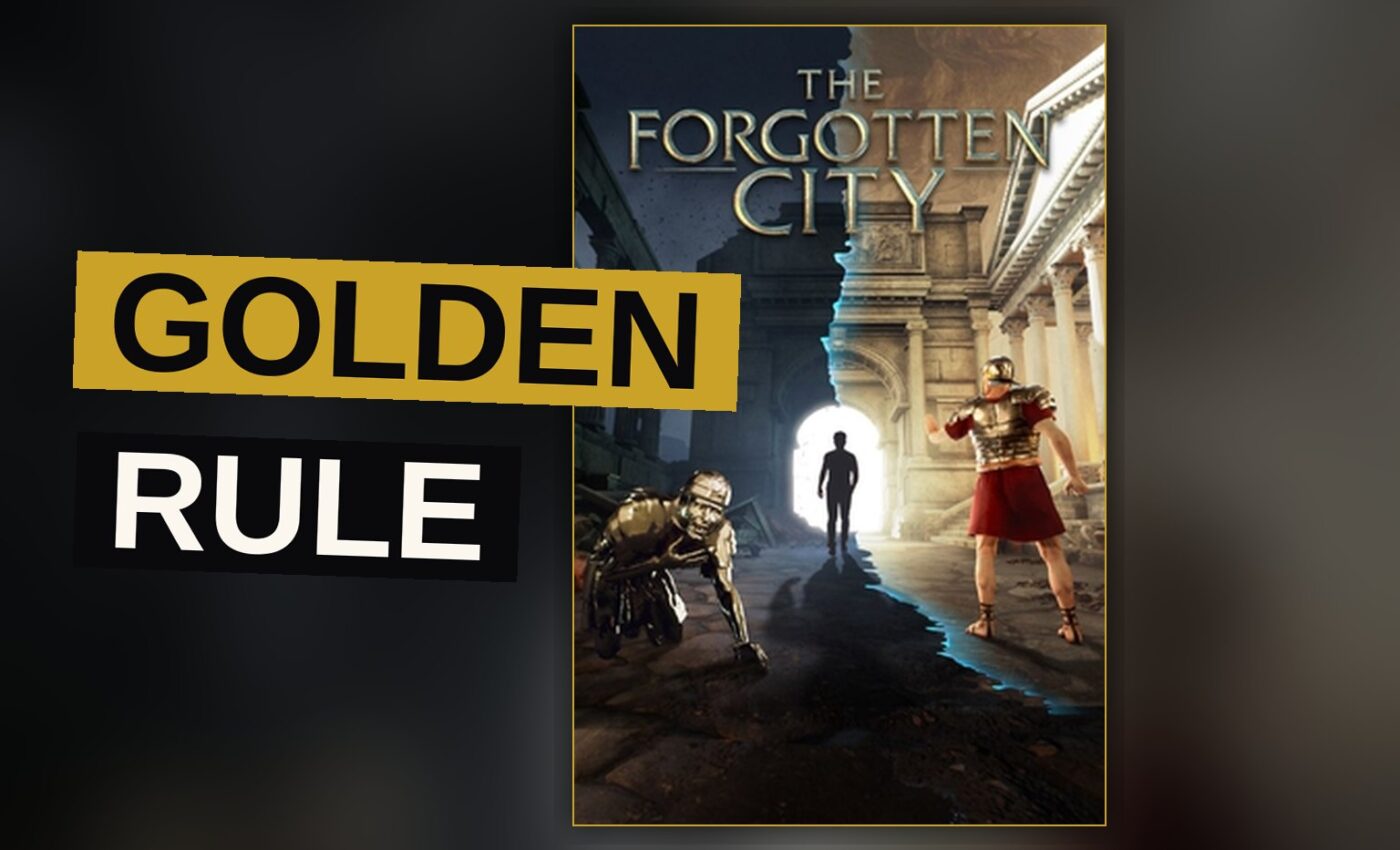
A time loop sends players back to ancient Rome, again and again, until every lie in the city runs out of places to hide. The Forgotten City is available on PC, PS4, PS5, Xbox One and Xbox Series X/S. It earns an 8.5 out of 10.
Trailer, via IGN.
The Golden Rule
The setup is simple. One person in the city sins, and the gods turn everyone to gold. A time loop lets the player relive the same day until the mystery gets solved.
That loop is the whole game.
Galerius and the Streets of Rome
The city itself carries the weight of the story. Streets, villas and a bathhouse are packed with citizens who each hold a piece of the puzzle. Galerius, a friendly farmer, becomes an early helper and a recurring presence across loops. He offers guidance rather than resistance, pointing players toward the magistrate Sentius when authority matters.
Conversations do the heavy lifting here, not combat. Players talk, listen, and talk again, gathering fragments of testimony that only make sense once compared against each other. The writing carries real weight, letting small character details pay off hours later.
The Loop as Puzzle Box
The time loop mechanic turns every solution into a chain reaction. Convince one person to change their behavior early in the loop, and the effects ripple outward, changing what other characters say or do later. Miss a window, and the loop resets, but nothing feels wasted, since each failed attempt hands over new information.
The pacing rewards patience. A player who rushes will miss context; a player who lingers will find connections between characters that recontextualize earlier conversations entirely.
Comparing the Threads
| Thread | Focus | Payoff |
|---|---|---|
| Sentius investigation | Political pressure, law in the city | Opens access to restricted areas |
| Bathhouse citizens | Personal secrets, small talk | Reveals motive and backstory |
| The golden rule mystery | Central mystery of the sin | Determines the ending reached |
Each thread interacts with the others, and the table above only scratches the surface of how tightly they weave together.
Endings Without Shortcuts
Multiple endings exist, and the game does not signal which one counts as “correct.” Choices about who to protect, who to expose and what deals to strike all shape the outcome. That ambiguity is a strength, not a gap in design.
The final stretch does ask players to hold a lot of information in their heads at once. Some of the late-game logic can feel dense, particularly for players who did not take detailed mental notes across earlier loops.
Performance Across Platforms
Across PC, PS4, PS5, Xbox One and Xbox Series X/S, the experience remains consistent. The game is dialogue-heavy and light on demanding visual effects, so the jump between console generations does not change much about how it plays or reads.
Load times on PS5 and Xbox Series X/S are faster than on PS4 and Xbox One, which matters given how often the loop resets. That difference is minor but noticeable during longer sessions.
A Short Game With Long Memory
Its short runtime is deceptive.
The Forgotten City rewards replay far more than its length suggests, since each loop adds another layer to a mystery that never repeats itself the same way twice.
Final Score
The Forgotten City succeeds because its central idea, a time loop tied to a moral mystery, gets treated with real rigor. The writing holds up under scrutiny, the city feels lived-in despite its small scope, and the branching endings avoid easy answers. Minor friction in the late game and dense information tracking keep it from perfection.
Get the Notebook.
The day's best stories and every fresh verdict, in plain English, in your inbox by seven. One email a day, no more.