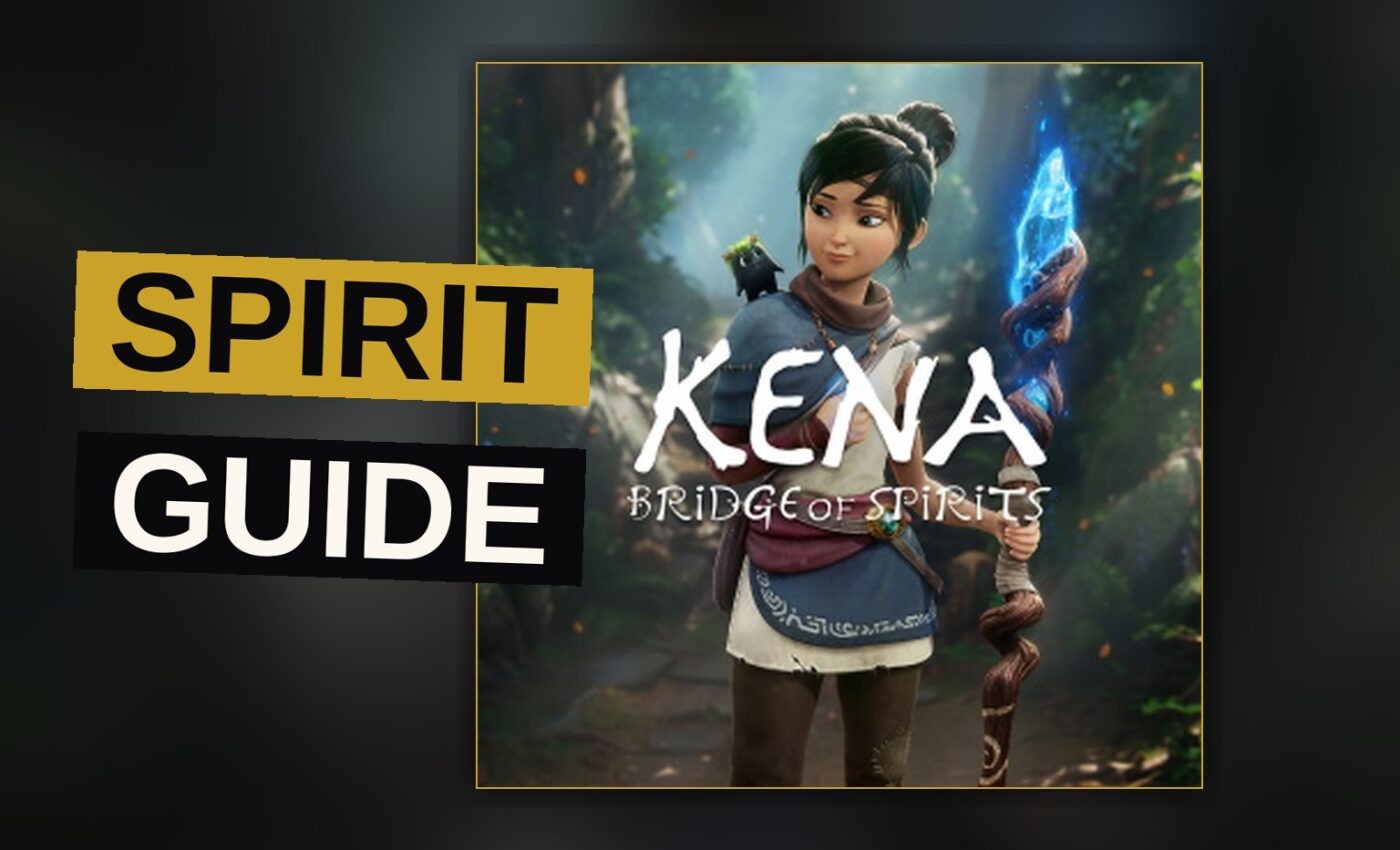
Ember Lab spent five years making commercials before it made a video game. Kena: Bridge of Spirits, the studio’s first original title, arrived in September 2021 for PlayStation 4, PlayStation 5 and PC, and it carries the polish of a team that knew exactly what it wanted to build. It scores 8.2 out of 10.
Trailer, via PlayStation.
A Spirit Guide and the Rot
You play as Kena, a young spirit guide voiced by Dewa Ayu Dewi Larassanti. She travels to an abandoned village in search of the sacred Mountain Shrine. The dead in this world can linger between the physical and spirit realms when they are traumatized or feel unfinished. Kena’s job is to understand what holds them and help them move on.
Her tools are a staff and a pulse ability. The staff handles light, heavy and charged attacks, and an upgrade turns it into a bow that can also act as a grappling hook or hit crystals to solve puzzles. The pulse works as a shield with its own health meter, and activating it before an enemy strikes stuns them. It also reveals clues and activates objects.
The Rot are the heart of it. These small spirit companions can be directed to move objects, take shapes or distract enemies. They only join a fight once you have built enough courage by dealing damage, and directing them in battle spends that courage. They can infuse arrows and bombs for stronger hits.
Taro, Adira and the Corruption
The masked spirit Kena meets on the road to the village is the cause of the corruption rotting the forest. He refuses her help and leaves. Former elder Zajuro, voiced by Vlasta Vrána, tells her she must free the trapped spirits before she can reach the shrine.
That sends her after Taro, a restless spirit voiced by Tod Fennell. His siblings Saiya and Beni, voiced by Sam Cavallaro and Joshua Vincent, are also trapped. Taro’s story is the game’s strongest stretch: a sickness killed their parents and spread through the village, he sought help from Rusu and was turned away, and on the journey home he watched the Mountain Shrine explode and wipe out everything.
Kena tells him to forgive himself. He embraces his siblings and their spirits move on. The Woodsmith Adira, voiced by Amber Goldfarb, is another thread the game pulls, and the structure holds because each spirit’s grief is specific rather than generic.
Gamelan Music and Balinese Roots
Composer Jason Gallaty built the score with Gamelan Çudamani, a Balinese ensemble, to make gamelan music that stays respectful to the culture. The art came together with Vietnamese animation studio Sparx, and the world draws on Eastern locations including Japan and Bali. That collaboration is not decoration. It gives the village and the forest a texture that most indie adventures never manage.
Development was led by brothers Mike and Josh Grier, who founded Ember Lab. The team shifted to creating an original video game after 2016, signed a console-exclusive deal with Sony Interactive Entertainment and grew to 15 core employees. The game showed at the Tribeca Film Festival in 2021, then hit PlayStation 4, PlayStation 5 and Windows that September after delays partly tied to the COVID-19 pandemic. Xbox One and Xbox Series X/S versions followed in August 2024.
Release Schedule
| Platform | Release |
|---|---|
| PlayStation 4 | September 2021 |
| PlayStation 5 | September 2021 |
| PC (Windows) | September 2021 |
| Xbox One | August 2024 |
| Xbox Series X/S | August 2024 |
Where It Stands
The combat is the part that will divide people. Courage management adds a real layer to fights, since you cannot simply lean on the Rot and must keep attacking to keep them in play. The pulse shield rewards timing, and the stun window for a well-read enemy attack is generous enough to feel fair. But the upgrade path from staff to bow spreads the toolkit thin in places, and puzzle-solving with the bow never asks much of you.
The Rot customization is a small joy. Hats are found by completing tasks or opening chests, then bought at the Rot Hat Cart with Gems collected around the world. It is a collectible system that respects your time.
What matters most is that Kena: Bridge of Spirits knows what it is. It is a story-driven action adventure about grief, and it treats its spirits as people with unfinished business rather than as obstacles. The Taro sequence earns its ending because the game did the work of showing you what he lost.
This is the part worth watching for Ember Lab. A first game this controlled, made by a team that came from commercials and grew to 15 core people, suggests the studio can go bigger without losing the restraint that makes this one work. The score, the art and the cultural collaboration are the real achievement here, not the combat loop. Kena: Bridge of Spirits is not the hardest game of 2021. It is one of the most considered.
Get the Notebook.
The day's best stories and every fresh verdict, in plain English, in your inbox by seven. One email a day, no more.