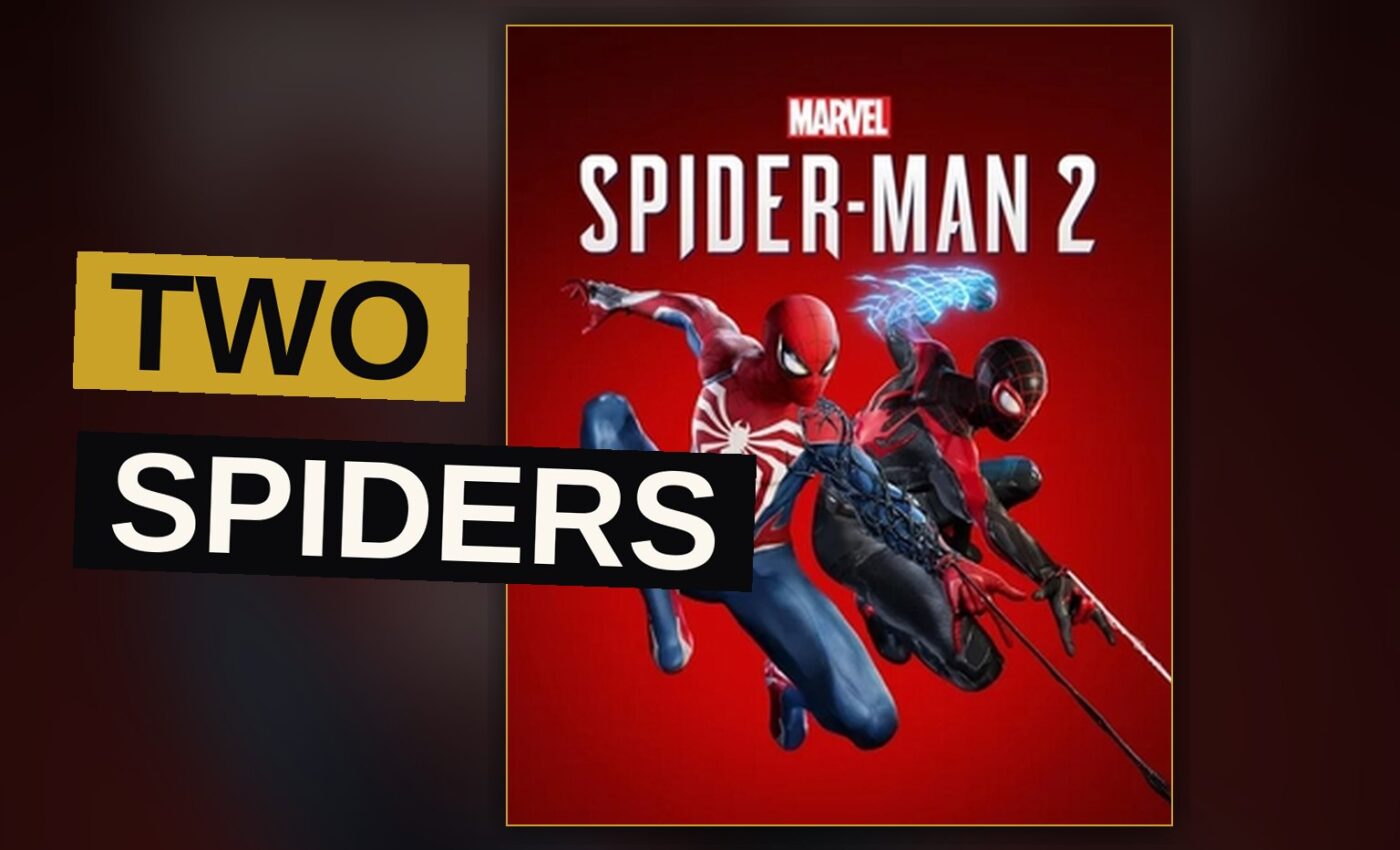
Marvel’s Spider-Man 2 arrives on PC and PS5 as a sequel built around two web-slingers who share the same city, the same villains, and occasionally the same crime scene. The game asks players to juggle Peter Parker and Miles Morales across a sprawling New York, and mostly pulls it off. It is a strong entry in the genre, even if it does not reinvent the formula.
Trailer, via PlayStation.
Peter Parker and Miles Morales Together
The central trick of Marvel’s Spider-Man 2 is simple: both characters can be controlled at once. Players switch between Peter and Miles mid-combat, mid-cinematic scene, and mid-cruise through the city. It sounds gimmicky on paper. In practice, it changes how the game feels.
Peter fights with brute force and weight. He throws punches that send enemies flying. Miles moves faster, webs enemies together, and favors agility over power. Switching between them in the middle of a fight lets players adapt to enemy types on the fly. A group of thugs? Peter. A swarm of small enemies? Miles. A boss with shields? Both.
Web Slinging Through New York
The city itself is the star. Marvel’s Spider-Man 2 adds new districts, new skyscrapers, and new views over familiar ground. Players swing between the Statue of Liberty, the Brooklyn Bridge, and the Hudson River with the same fluid motion that defined the original. The traversal systems hold up well. Swinging feels fast, and the game rarely forces players into awkward paths.
The game also introduces new ways to move. Players can ride cables, slide down walls, and zip across gaps. None of these tools replace the core swing mechanic. They sit alongside it as options, not replacements. That balance is smart.
Combat and Its Limits
Combat in Marvel’s Spider-Man 2 is competent but familiar. Enemies come in waves, and the game rewards players who mix combos, dodge, and environment takedowns. Boss fights are where the system shows its age. They rely on telegraphed patterns and repeated sequences rather than fresh design. Some encounters feel like they are waiting for the player to figure out the right button sequence rather than giving them a new challenge.
The game’s difficulty settings let players adjust how hard enemies hit and how much damage they take. That is a welcome addition for players who want a quick cruise through the story. It does not fix the underlying combat design, but it gives players some control over the pacing.
Story and Its Length
The plot follows Peter and Miles as they face a threat that puts both their lives in danger. The story leans heavily on character drama. Peter’s personal life is strained. Miles’ family situation looms over him. The game spends significant time on these threads, and the writing handles both characters with care.
The story drags in places. Side quests and fetch quests fill out the main plot, and some of them feel like padding rather than purposeful additions. The pacing dips in the middle stretch, where the game relies on familiar set pieces rather than new ideas. The ending wraps things up cleanly, but it does not land with the same weight as the best entries in the genre.
Performance on PC and PS5
Performance on both platforms is solid. The game runs at a smooth frame rate on PS5, and the PC version offers a range of settings for players with different hardware. Load times are short, which helps keep the flow of swinging and fighting intact.
The game does show its age in a few spots. Textures can look dated in certain areas, and some lighting effects fall short of what newer games offer. These are minor complaints against a game that otherwise holds up well.
What Works Best
- The dual-character switching mechanic, which gives players real choices in combat
- The expanded New York map, which adds new districts to explore
- The fluid web-swinging traversal, which remains the game’s standout feature
- The writing for both Peter and Miles, which treats their personal lives with care
What Falls Short
- The combat, which relies too heavily on telegraphed boss patterns
- The side content, which sometimes feels padded rather than essential
- The story pacing, which drags in the middle stretch
Marvel’s Spider-Man 2 is a confident sequel that knows what it wants to be. It succeeds at giving players two heroes to control and a city worth exploring. It falls short in combat design and story pacing. Taken together, the strengths outweigh the weaknesses.
The game earns an 8.2 out of 10.
Get the Notebook.
The day's best stories and every fresh verdict, in plain English, in your inbox by seven. One email a day, no more.