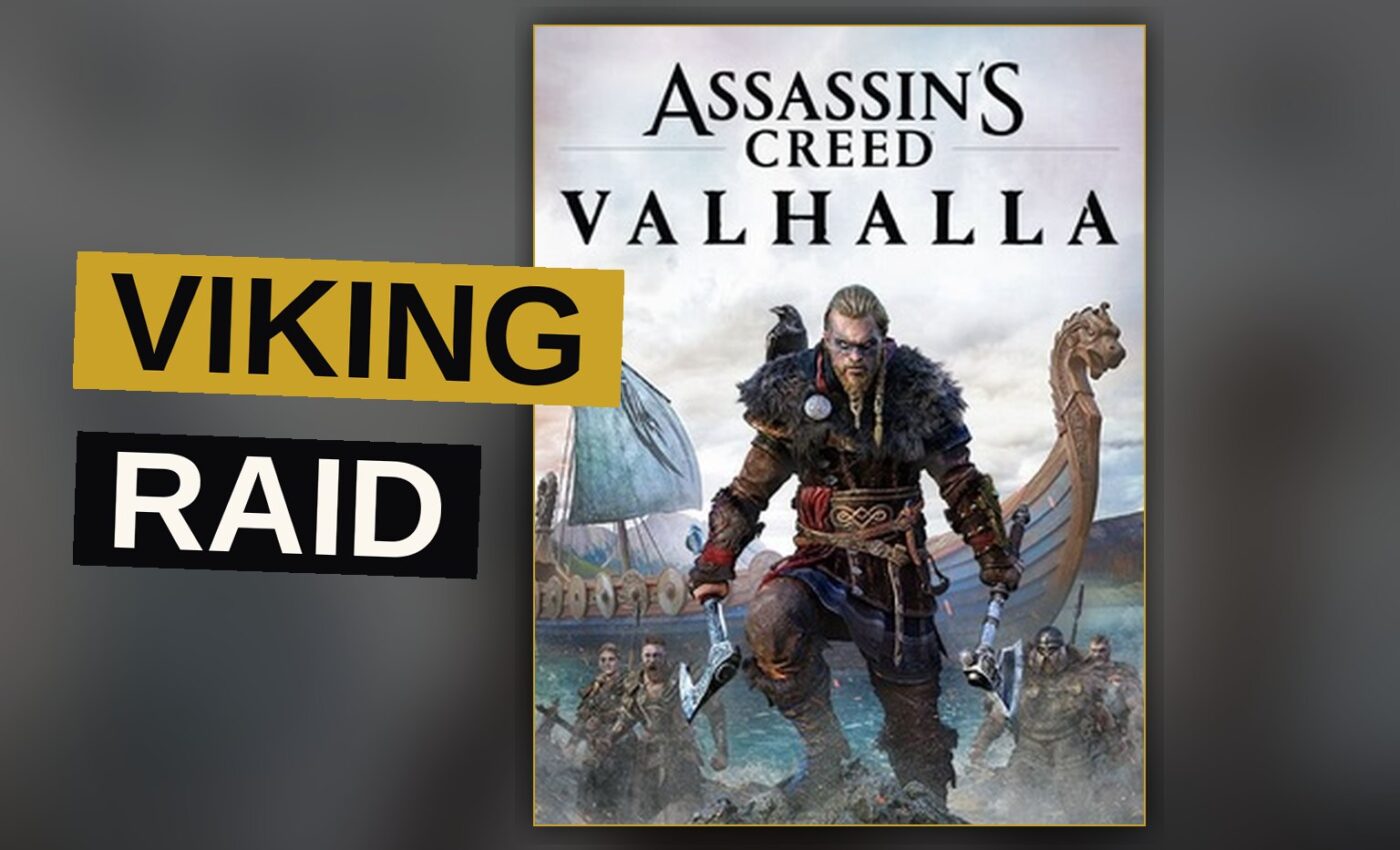
Assassin’s Creed Valhalla sends you across the North Sea with a clan that has run out of options. Ubisoft Montreal built the twelfth main entry in the series around Eivor Varinsdottir, a Viking raider who leaves Norway in 873 CE and spends the next several years fighting for a foothold in England. The game is large, patient and often beautiful, and it is the best the series has been since it started calling itself a role-playing game.
Trailer, via Assassin’s Creed.
Eivor Varinsdottir Leaves Norway
The setup is plain. Political pressure at home pushes Eivor and her adoptive older brother, Sigurd Styrbjornsson, to lead their clan toward Anglo-Saxon England. What they find is four kingdoms — Wessex, Northumbria, East Anglia and Mercia — that would rather they left. Wessex is ruled by Alfred the Great, who calls the Norsemen heathens and wants a single civilized England under his crown.
Eivor also runs into the warring sons of Ragnar Lothbrok and the Great Heathen Army, which means the political map never stays still for long. The game is set principally between 872 and 878 AD, and it treats that stretch as a campaign of alliances rather than a single war.
Raids, Longships and a Settlement
Valhalla is an action role-playing game built around main story arcs and optional side missions called “World Events.” You lead raids on selected locations using your longship, pulling in the riches and resources your settlement needs to grow.
That loop is the spine of the whole thing. You raid, you build, you gain political power, and the clan gets closer to something permanent. Combat has been reworked to let Eivor dual-wield almost any weapon, including shields, and the weapon list now includes flails and greatswords. Every piece of gear you collect is unique, which makes loot worth reading instead of sorting.
Odin Sight and a Raven Named Sýnin
The old Eagle Vision returns as “Odin Sight.” Eivor’s companion is a raven named Sýnin — Old Norse for “insight” — who scouts nearby areas and distant parts of the world before you commit to a fight. It is a familiar tool, and it still works.
Stealth gets more attention than it did in Odyssey. The “social stealth” idea from earlier games comes back: Eivor can pull down her hood and slip into crowds for cover, feign death, or use the raven to distract guards. A hidden blade is available. You can play Eivor as female or male, voiced by Cecilie Stenspil and Magnus Bruun, or let the game alternate between the two at key story moments.
Winchester, London and York
The world is the argument for the game. Explorable cities include Winchester, London and York, with parts of Norway and Vinland also in the mix, plus dreamscapes of Asgard and Jotunheim. England’s Dark Ages are rendered as a place worth crossing a freezing sea for, and the settlement you build gives all that raiding somewhere to land.
The modern-day frame is still here. Layla Hassan, Shaun Hastings and Rebecca Crane exhume a Viking raider’s remains in New England in 2020 and use the Animus to view the raider’s memories. Layla is struggling with the influence of the Staff of Hermes Trismegistus. It is the weakest thread in the game, as it has been for years.
A Three-Year Build With Fifteen Studios
Development began in 2017, around the release of Assassin’s Creed Origins, and Ubisoft Montreal led a three-year effort with help from fourteen other Ubisoft studios worldwide and Sperasoft. Several series veterans returned. Ashraf Ismail, creative director on Black Flag and Origins, was involved. Darby McDevitt was the lead writer on Black Flag and Revelations and co-writer of Unity. Jesper Kyd and Sarah Schachner composed the soundtrack.
That depth shows in the texture of the thing. It also explains the sprawl.
What Valhalla Gets Right, and What Drags
Here is the case for Valhalla at 8.5 out of 10. The dual-wield combat gives every encounter a decision to make, the settlement gives the raiding a purpose beyond numbers, and the England map is the most convincing open world Ubisoft has built. The shift toward stealth — crowds, hoods, feigned death — pulls the series back toward what its name promises.
The case against is the frame story. Layla’s arc has been running since Origins and Odyssey, and it still plays like an obligation rather than a payoff. The Isu lore, an advanced civilization predating humanity, keeps expanding without getting clearer.
Assassin’s Creed Valhalla follows Assassin’s Creed Odyssey, and the gap between them was short:
| Entry | Release year | Lead studio |
|---|---|---|
| Assassin’s Creed Origins | 2017 | Ubisoft Montreal |
| Assassin’s Creed Odyssey | 2018 | Not stated in source |
| Assassin’s Creed Valhalla | 2020 | Ubisoft Montreal |
Two main games in three years is a lot of Assassin’s Creed, and Valhalla carries the weight of that pace in its side content. The World Events are uneven, and the game rarely knows when to stop.
Still, the parts that matter hold. Ranked by what Valhalla does best:
- The settlement and raid loop, which turns resources into a reason to keep playing.
- Dual-wield combat, which finally makes weapon choice feel like a build decision.
- The England map, including Winchester, London and York.
- Social stealth, a returning idea the series should keep.
- The modern-day frame, which remains the weakest link.
Valhalla is available on Google Stadia, Xbox Series X|S, PlayStation 4, PlayStation 5, Xbox One and PC. It is single player, third person, and it will take a long time.
The verdict is straightforward. Assassin’s Creed Valhalla is the series finally committing to the role-playing direction it chose with Origins, and it earns the commitment through its world and its combat rather than its story. The Viking fantasy — raids, longships, a clan looking for a home — is the most coherent premise the franchise has had in years. The Layla material is the tax you pay for it.
Get the Notebook.
The day's best stories and every fresh verdict, in plain English, in your inbox by seven. One email a day, no more.