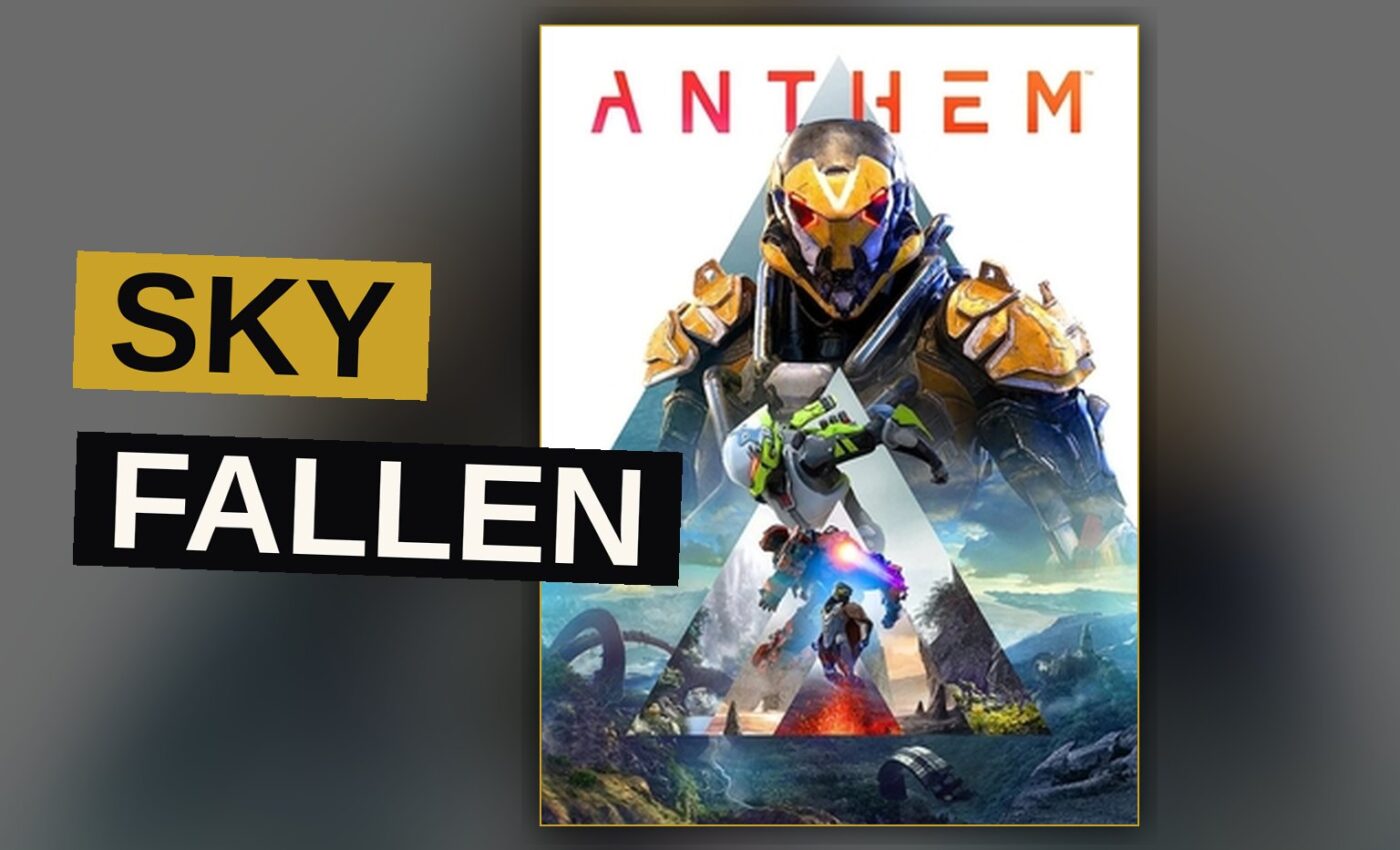
Anthem arrives on PS4, PC and Xbox One with a promise: a shared open world where four players fly together as armored heroes over a broken continent. The promise is partly kept. The execution falls short.
Trailer, via IGN.
The Flawed Flight
The biggest strength is also the biggest problem. Flying with friends through the open air feels great in brief moments. It is the reason Anthem exists. It is also the reason Anthem stumbles.
Players guide their armored hero across the sky, shooting down waves of enemies while flying freely. That freedom is rare in this genre. It is also where Anthem shows its seams.
The movement model is loose and forgiving. Players can drift, hover, and soar without much effort. That ease is a gift when you are exploring a new area. It becomes a crutch when the game asks for precision. Missions often require players to land, walk, and fight on foot. The transition rarely goes smoothly.
A Broken Continent
The setting is a broken planet, divided between warring factions and ruined cities. It is large, varied, and mostly empty. Players will roam its deserts and mountains without feeling the absence of life.
Anthem tries to fill the silence with side content. There are missions, collectibles, and random encounters scattered across the map. None of it holds the same weight as the core loops. The main story pushes players forward with little friction. The side content does not offer the same reward.
“The world is vast and beautiful, but it is missing people.”
That line sums up Anthem’s central failure. The world is built for four players, yet it rarely feels occupied. Side characters appear briefly, hand out quests, and disappear. The sense of a living world is thin.
Missions Under Pressure
The main missions are where Anthem shows its age. They are designed around group coordination, but the systems behind them feel dated. Objectives are unclear. Progress bars advance oddly. Missions sometimes stop working entirely.
The game asks players to work together, but its tools are weak. Voice chat is unreliable. The matchmaking system struggles to find groups. When everything lines up, a mission can be satisfying. When it does not, the frustration builds fast.
Technical Trouble
Technical issues are common across all three platforms. Load times are slow. Frame drops occur during busy fights. Some players report crashes and connection problems. These issues are not unique to Anthem, but they are frequent enough to sour extended play sessions.
On PC, the game supports customizable settings. That flexibility helps, but it does not fix the underlying instability. On PS4 and Xbox One, the performance limitations are visible. The game looks good in still shots. In motion, it struggles to keep pace.
What Remains
Anthem is not a lost cause. Its best ideas are worth returning to. The flying combat, when it works, is thrilling. The world, despite its emptiness, has moments of genuine beauty. The sense of adventure, even if thin, is there.
But Anthem never fully commits to any of it. The story rushes through its middle chapters. The pacing suffers. The villains are underwritten. The player characters themselves are barely developed beyond their gear and abilities.
The multiplayer design, built around shared adventures, is a bold choice. It is also a difficult one to pull off. Anthem leans on co-op play as its selling point, but the infrastructure does not always support it.
The Final Score
Anthem is a game of highs and lows, mostly lows. Its best ideas are buried under technical debt and half-baked systems. It is a game that promised more than it delivered, and the gap between the two is wide.