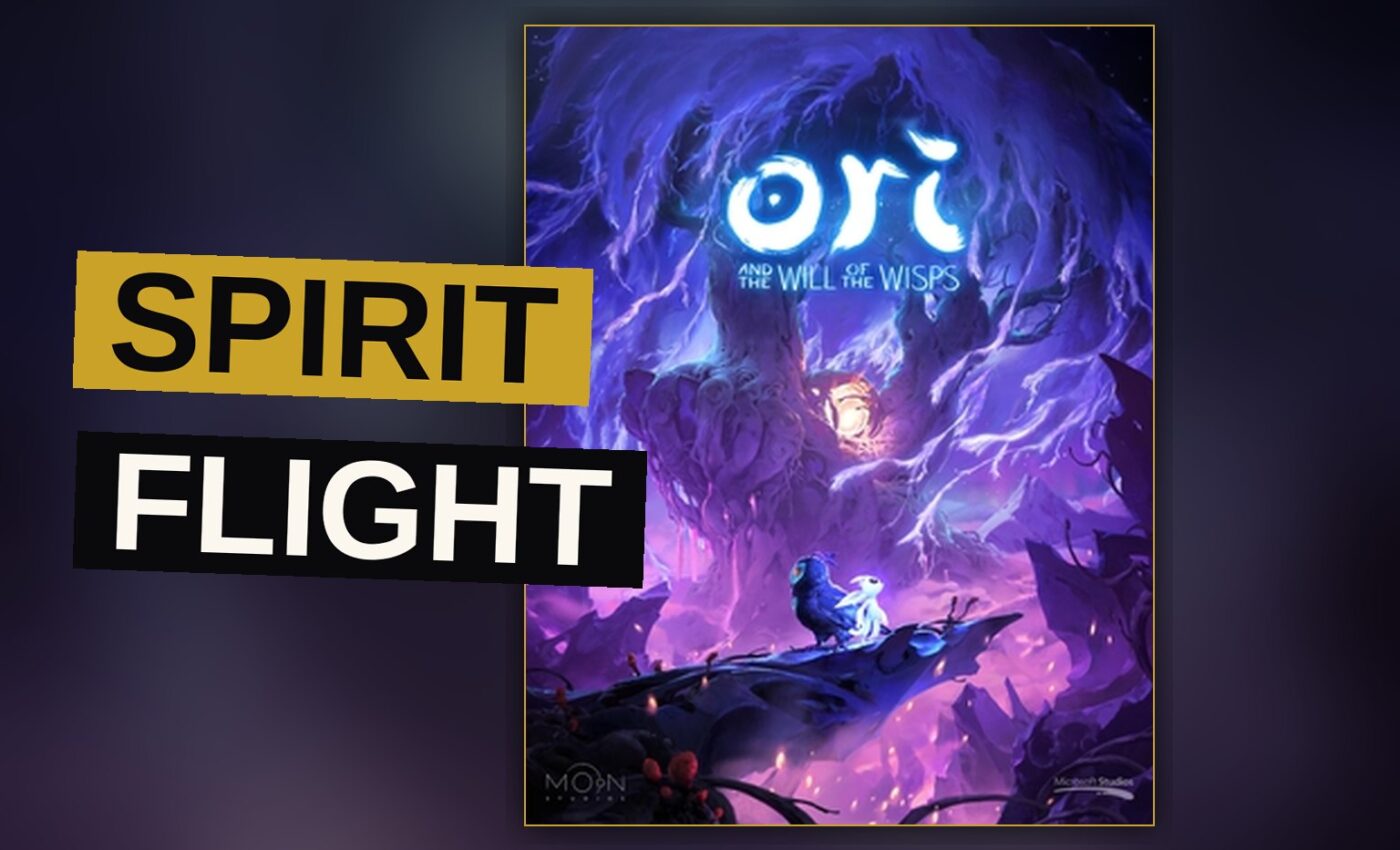
Ori and the Will of the Wisps arrives five years after Ori and the Blind Forest, and it does not waste its inheritance. Moon Studios has built a larger world, a deeper combat system, and a story that hits harder than its predecessor. The game earns its score through craft alone.
Trailer, via XBOX.
The World Beyond the Forest
The forest seen in Ori and the Blind Forest is gone. Ori and the Will of the Wisps takes place in a new region, and it is larger than anything in the first game. Areas connect through paths that only open once new abilities arrive.
Exploring never feels like a burden here. Fast travel points are placed with care, and the map fills in slowly enough that discovery stays part of the experience for most of the game.
A Water-Filled Cavern
One underground area stands out as one of the game’s best-designed sections. It combines platforming puzzles with a dim, water-filled look that contrasts sharply with the bright forests seen earlier in Ori and the Will of the Wisps.
The area also introduces a light-based tool that returns later, changed in form, in later stages. That pattern of return, rather than plain repetition, runs through the whole game.
The Combat System
Combat was a weak point in Ori and the Blind Forest. Ori and the Will of the Wisps fixes that with a full weapon wheel, charge attacks, and a fast dodge move that makes fights feel closer to an action game than a pure platformer.
Enemies hit harder this time. Some fights throw several enemy types at once, forcing players to switch weapons mid-battle rather than relying on one favorite tool.
That shift will not please everybody who played the first game.
Some players came to the series for platforming, not combat, and Ori and the Will of the Wisps leans further into fights than its predecessor did.
The Owl That Hunts Ori
A large owl serves as the game’s central antagonist and drives several of its most memorable sequences. Chase sections built around this owl strip away combat entirely and ask players to run, slide, and react at speed through crumbling settings.
These sequences borrow from the first game’s escape scenes but add more variation in obstacle types. They also raise the difficulty sharply compared to the rest of the game, which may test players expecting a gentler curve.
A Young Companion’s Flight
The bond between Ori and a young owl forms the center of the story in Ori and the Will of the Wisps. An early flight scene with this owl, done without combat or menus, sets the tone for what follows.
A small spirit character introduced later in the game adds a second thread to the story. The writing keeps dialogue plain, letting animation and music carry most scenes.
The Musical Score
The score for Ori and the Will of the Wisps matches the range of the world. Quiet piano passages sit next to full, sweeping music during boss fights, and the shifts between them land smoothly.
The sound design supports the platforming directly. Cues for dashes, wall jumps, and enemy attacks are distinct enough that skilled players can react to sound alone in fast sections.
Comparing the Two Games
| Feature | Ori and the Blind Forest | Ori and the Will of the Wisps |
|---|---|---|
| World size | Smaller, single forest | Larger, several linked regions |
| Combat | Limited, mostly avoidance-based | Full weapon wheel, charge attacks, fast dodge move |
| Central antagonist | A large hunting creature | A large hunting owl |
| Companion character | A single guiding spirit | A young owl and a smaller spirit |
| Difficulty curve | Steady | Sharper spikes in chase sections |
The table above shows the size of the jump between the two games. Ori and the Will of the Wisps is not a small update. It is a full expansion of nearly every system the first game set up.
Boss fights in Ori and the Will of the Wisps also run longer than those in Ori and the Blind Forest, with several phases and shifting attack patterns. That length pays off more often than not, though a few late fights repeat the same pattern for one phase too many.
Platforming remains the core of Ori and the Will of the Wisps, even with the added combat. Wall jumps, dashes, and strike attacks combine into chains that reward careful timing over pure speed. Players who master the full move set will find hidden paths and secrets that quick runs miss entirely.
The game’s map, while large, reads easily once key landmarks are unlocked. Markers show important points, side quests, and fast travel spots without crowding the screen. That clarity matters in a game this size, where getting lost could easily break the pacing.
Side quests add texture without stretching out the length. Delivering items to the small cast of characters ties back into the map design, since most requests send players toward areas they have not fully explored yet.
Not every addition lands. A late area meant to house side characters feels thin compared to the rest of the world, and its quests are shorter and less memorable than those found elsewhere in Ori and the Will of the Wisps.
Performance on Xbox One showed occasional hitching in busier areas, particularly during fights with many enemies at once. On PC and Xbox Series X/S, the game runs more smoothly. The Switch version, released later, trades some visual detail for its handheld form but keeps the core experience whole.
Ori and the Will of the Wisps closes its story with a scene that pays off the flight sequence from its opening hours. The ending does not rely on dialogue to land; the animation and score do the work, matching the rest of the game’s approach to its story.
What Ori and the Will of the Wisps proves, in the end, is that a small studio can grow a game’s scope without losing what made the first one work. It earns a final score of 8.9 of 10.