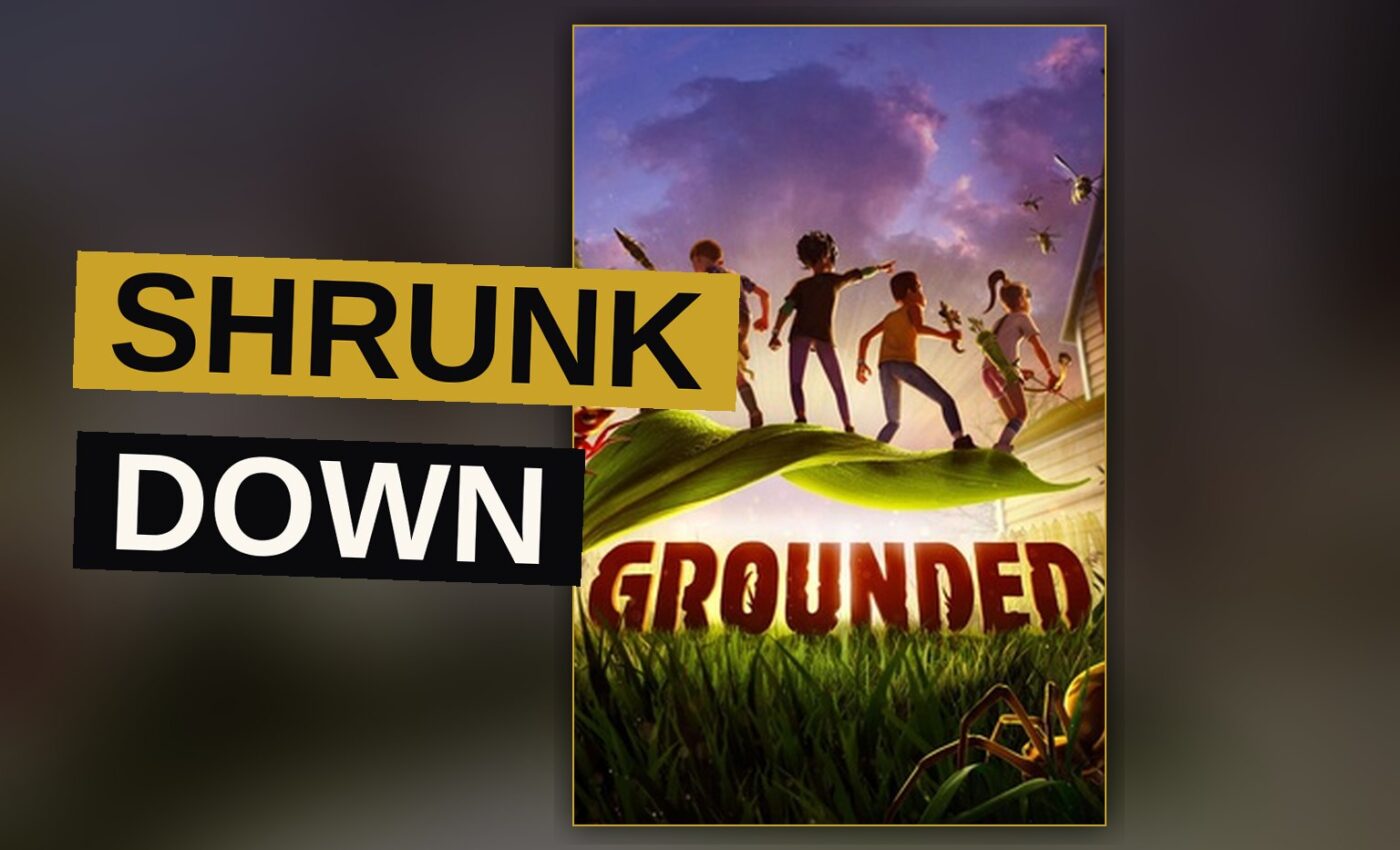
Grounded shrinks four players to the size of an insect and drops them into a garden. The game left early access in 2022 for Xbox One, Xbox Series X/S, PC, PS4 and PS5. It earns an 8.3 out of 10.
Trailer, via XBOX.
The Garden as Battlefield
The premise is simple. A group of teens is shrunk by a strange device, and staying alive means treating a lawn like a whole continent. Blades of grass rise like towers. A small pool of water becomes a lake. A short burst from a garden hose becomes a flood.
Every object in the yard is made again at insect scale, and that change is the game’s biggest trick. A discarded soda can becomes shelter. A pile of pebbles becomes a place to dig for stone. The care given to these small shifts makes moving through the world pay off, hour after hour.
Grass alone can take on many forms once the player is small enough to walk beneath it. What looks like a plain lawn from a normal view turns into a web of paths, ledges and hiding spots. The design leans on this shift again and again, and it rarely feels repeated or dull.
The garden holds more than open ground. A fallen leaf becomes a roof. A crack in the dirt becomes a tunnel. Each step forward asks the player to look at the yard in a new way, and the game keeps finding fresh angles on that idea. The result is a space that feels far larger than its real size, packed with places to study and reasons to move slowly.
Spiders, Ants, and Worse
Combat centers on bugs, and the bugs do not go easy on the player. Spiders wait in webs strung between grass stalks. Ants move in numbers and press an attack as a group. Mites, young grubs, and other small creatures each call for different tactics, and stepping into a fight without a plan ends runs fast.
Players gear up with weapons and body coverings made from gathered goods, a system that rewards searching the ground as much as fighting. The crafting web runs deep without turning into dull, repeated tasks. Common jobs include:
- Cutting grass stalks for fiber
- Digging pebbles for stone
- Pulling spider silk for stronger gear
- Gathering seeds and drops of food from small bugs
That range of tasks keeps the loop varied. It rarely feels like empty work.
Fighting off a spider for the first time is a real test of nerve, since the game gives the creature real weight and speed. Winning that fight, and turning the spider’s silk into new gear, is one of the small satisfactions the design leans on again and again.
The bugs also act like living things, not simple targets. Spiders move with a sense of purpose, hunting across the yard rather than waiting in one spot. Ants follow set paths between food and their nest, and a player who learns those routes can use them to stay clear or set up a strike. This behavior makes each meeting feel like a real event, not a scripted fight.
Later in the game, larger bugs appear that ask for more than a quick hit-and-run. These fights call for planning, the right gear, and a clear sense of when to pull back. The jump in challenge is sharp at times, but the game gives players the tools to meet it if they take the time to prepare.
Building Above the Grass
Base building sits alongside combat as a main pillar, and it shows real depth. Buildings can rise on grass stalks, sit inside hollow logs, or sit in tree branches, giving bases a tall, layered feel that the small-scale setting supports well. Players can set up guard points, storage, and crafting stations spread across a wide home base.
The building tools bend easily enough to support a small shelter or a large, spread-out home. That freedom asks players to try new designs and new ideas.
Some players will build a single tight base near their starting point. Others will spread camps across the whole map, linking them with paths and bridges built from gathered wood. Both approaches work, and the game gives no clear push toward one over the other.
The tall building options change how players think about defense. A base raised on a grass stalk sits out of reach of most ground bugs, but it asks for a steady supply of wood and fiber to keep growing. A base on the ground is easier to build and expand, but it draws more attacks. This trade-off keeps the building loop interesting well past the first few hours.
Building also feeds back into the rest of the game. A well-placed camp gives a safe spot to store goods and rest, cutting down on long walks back to a starting point. Players who build smart can turn the whole garden into a network of safe zones, each one tied to a different part of the map.
Four Players, One Garden
Grounded supports shared play for up to four people, and the game is clearly built around that shared setup. Splitting jobs among a group, one gathering, one fighting, one building, changes the feel of a session by a wide margin. Games built around staying alive rise or fall on how well they handle groups, and this one handles the load well.
Playing alone works too, though the garden feels far more dangerous without help close by.
The shared mode also changes how combat plays out. A group can draw a spider’s attention from one side while another player moves in from behind. One player can hold a line of ants while the rest strip the area for goods. These moves are hard to pull off alone, and they give the game a second layer of depth that solo play does not offer.
The game also handles the practical side of shared play well. Players can share access to storage and building projects, so no one feels left out of the work. Drops from bugs are split in a way that keeps the whole group moving forward. This care makes the shared mode feel like the way the game was meant to be played.
The Story Behind the Shrinking
A story thread runs beneath the systems built around staying alive, following why the teens were shrunk and who is behind it. The mystery unfolds slowly through clues left around the yard and recorded notes found along the way. It gives shape to what could otherwise be an open world with no clear aim.
The story never takes over the moment-to-moment work of staying alive, but it gives players a reason to keep pushing toward new ground.
Later sections of the story tie back to earlier clues in ways that reward players who read every note they find. The final answer, once it lands, gives real weight to hours spent gathering small details along the way.
The story also gives the setting a sense of purpose. The yard is not just a place to fight and build; it holds the remains of the people who came before, and their notes point toward the truth. Players who follow those threads will find a close that answers the main questions without leaving too much open.
The tone stays light even when the stakes rise. The teens talk like real young people, trading jokes and worries between fights. This keeps the game from feeling heavy, even when a spider is closing in or a base is under attack.
Leaving Early Access
Grounded spent time in early access before its 2022 launch, and that time shows in how finished the final release feels. Systems that could have felt half-built instead feel worked over and tuned. Software bugs, in the coding sense, are rare.
The move out of early access did not just add an end point. It added final areas, a clearer close to the game, and an answer to the story thread that had been building through the whole of development.
The early access period also gave the team a chance to hear from players and shape the game around real use. The result is a set of systems that feel tested and ready, not thrown together. This polish shows in small ways, from the way menus flow to the way the game guides new players without holding their hand.
The final release also smooths out the pacing. Early hours give players a gentle start, while later hours ask for real skill. The climb is steady for the most part, with only a few sharp turns near the end.
Where It Falls Short
Grounded’s reach means some corners feel thinner than others. Certain crafting steps ask players to walk back across ground they have already covered. Difficulty spikes late in the game can frustrate players who want a steady climb rather than sharp jumps. None of this weakens the core of the game, but the rough edges are there if a player looks for them.
How the game runs shifts a little across platforms, with load times and smoothness changing depending on the hardware in use.
Still, these are small complaints set against a game built with real imagination.
The walking problem shows up most in the middle of the game, when a player needs a rare good that only grows in one corner of the yard. The trip there and back can eat up time that could go toward building or fighting. The game does add fast travel points later, but they take a while to unlock.
The difficulty spikes also stand out. A player who has been moving at a steady pace can hit a bug that asks for far better gear than they have. The game does not always make clear what level of gear is needed before a fight, so some players will walk in unprepared and pay for it.
Grounded earns its standing through steady quality, strong ideas, and a setting few games have bothered to study this closely. Shrinking the player instead of building a giant world was a smart choice, and the design built around that choice mostly delivers on its promise. It stands as a strong entry among games built around staying alive.
Get the Notebook.
The day's best stories and every fresh verdict, in plain English, in your inbox by seven. One email a day, no more.