
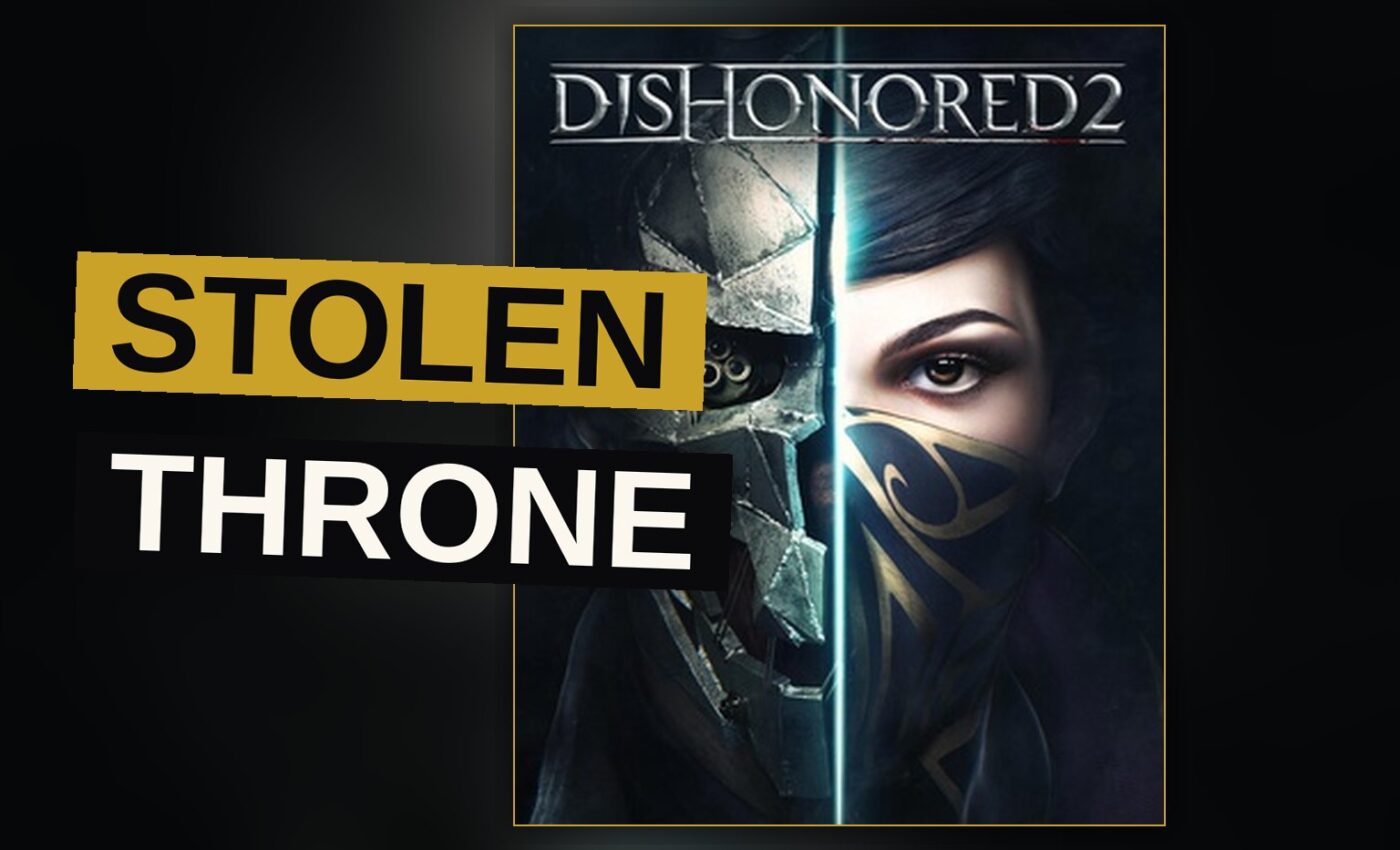
Dishonored 2 hands you two assassins and refuses to tell you which one is correct. Arkane Lyon built the 2016 sequel around Emily Kaldwin and Corvo Attano, each with a separate set of supernatural abilities, and then let players decline the powers entirely. Bethesda Softworks published it for PlayStation 4, Windows and Xbox One.
Trailer, via Bethesda Softworks.
Two Playable Rulers, One City
The choice is the whole architecture. Emily, deposed as Empress, and Corvo, her father and Royal Protector, both carry a pistol, a crossbow, a retractable blade, grenades and mines. Every one of those tools upgrades.
The difference sits in the powers. Emily and Corvo each employ their own array, and the game does not force either on you. A player can finish the campaign without killing anyone, and can finish it without touching the Void at all.
That second option matters more than it sounds. Dishonored 2 was built so that refusal is a legitimate play style, not a handicap.
Silver, Wind Turbines and the Dust District
The game opens and closes in Dunwall, the whale-oil city of the first game. Most of it happens somewhere else.
Karnaca is the capital of Serkonos, a coastal city in the southern Empire of the Isles, and its chief export is silver. It runs on wind turbines, fed by currents off a cleft mountain at the city’s border. The same winds carry dust storms into the mining district, which is why everyone calls it the Dust District.
Two factions fight there. The Howlers oppose the new Duke and his government after the death of the previous Duke. The Overseers stand against them. The Grand Serkonan Guard, the city’s law enforcement and military, answered the disorder with defensive barriers called Walls of Light.
The setting was built from Mediterranean reference points. Karnaca is based on Larnaca, the Cypriot city, and drew on Greece, Italy and Spain. The wider aesthetic came from paintings, sculpture, architecture, fashion and technology around 1851.
The Witch Who Takes the Throne
The story starts 15 years after the Lord Regent was defeated and the Rat Plague passed into history. Then an otherworldly usurper takes the throne from Emily.
That usurper is Delilah Copperspoon, a witch and the antagonist of the first game’s downloadable content, The Knife of Dunwall and The Brigmore Witches. She is also the half-sister of Emily’s dead mother. Promotional material from the special collector’s edition calls her Delilah Kaldwin.
The antagonists do not stop there. Luca Abele is the new Duke of Serkonos after the passing of his father Theodanis.
Rosario Dawson, Sam Rockwell and Pedro Pascal
The cast is unusually deep for the genre. Rosario Dawson plays Meagan Foster, captain of the Dreadful Wale. Pedro Pascal plays Paolo, leader of the Howler Gang, with Betsy Moore as his second-in-command Mindy Blanchard.
Sam Rockwell plays Mortimer Ramsey, a corrupt officer of the Dunwall City Watch. Jamie Hector plays Liam Byrne, the Vice Overseer of Karnaca who opposes the Howlers. Robin Lord Taylor plays the Outsider, the figure of the Void.
Stephen Russell voices Corvo. Erica Luttrell voices Emily. Roger L. Jackson plays Anton Sokolov, Dunwall’s inventor. Erin Cottrell plays Delilah. Vincent D’Onofrio plays Luca Abele.
Corvo speaking at all was a production decision. Ideas for the sequel began while the team was developing the first game’s downloadable content, and that work led to giving Corvo a voice after he stayed silent in Dishonored. The timeline jump followed from a different proposal: making Emily, a child in the first game, playable.
Keyholes, Alert Meters and Broken Bottles
Dishonored 2 is an action-adventure game with stealth elements, played first person. The prologue puts you in Emily’s shoes before the choice opens up.
Missions are nonlinear. Side missions unlock alternate methods of assassination, non-lethal approaches and separate paths through the main objective. Coin buys upgrades at black market shops scattered through levels, and blueprints hidden in the environment unlock new ones. You can also steal paintings.
Detection runs on line of sight. Cover and high ground keep you out of enemy vision cones. Darkness helps, but only at a distance. Alert meters and musical cues tell you when you have been spotted.
Noise pulls guards off their route. A broken bottle, a sprint, a sword struck against a wall — all of it sends them to investigate. Players can use that on purpose to lure guards into traps.
You can look through keyholes to survey a room before entering, and lean from cover without stepping out. Peer past a wall too long and you will be seen, a feature the first game did not have. Health elixirs and food restore health. Mana elixirs replenish mana.
Where the Systems Beat the Story
The level design is the argument. Dishonored 2 gives you a city, a target and a set of rules, then declines to tell you which route is correct. Emily and Corvo are not two campaigns. They are two answers to the same question, and the game respects both.
The no-powers run is the sharpest thing here. Most games treat abilities as the point. Dishonored 2 treats them as one option among several, and the missions hold up without them. That is a harder design problem than it looks, and Arkane Lyon solved it.
Karnaca earns its place too. Dunwall ran on whale oil and gloom. Karnaca runs on wind and dust, and the Dust District gives the sequel a texture the first game never had. The Howlers, the Overseers and the Walls of Light are not decoration. They explain why the city is a mess before you arrive.
The cast does real work. Vincent D’Onofrio’s Luca Abele and Erin Cottrell’s Delilah give the campaign two kinds of opposition — one petty and one genuinely strange. Pedro Pascal’s Paolo and Rosario Dawson’s Meagan Foster fill out a city that feels inhabited rather than staged.
What the Sequel Gets Wrong
Not everything lands. The story is thinner than the systems around it. Delilah’s claim to the throne is a strong premise, but the game spends more energy on how you reach her than on why she matters.
The two-protagonist structure has a cost. Emily and Corvo share the same missions, and the campaign does not branch enough to justify a second full run for most players. The powers differ. The path does not.
Corvo’s new voice is a mixed inheritance. Giving him dialogue was the right call after a silent first game, but the writing does not always give Stephen Russell enough to work with.
And the stealth detection is stricter than it first appears. The line-of-sight rules are readable, but the added exposure when you lean out too long will catch players who learned the first game’s habits.
Two Games, Side by Side
| Element | Dishonored (2012) | Dishonored 2 (2016) |
|---|---|---|
| Protagonist | Corvo Attano | Emily Kaldwin or Corvo Attano |
| Corvo’s voice | Silent | Voiced by Stephen Russell |
| Primary city | Dunwall | Karnaca, capital of Serkonos |
| Power source | Whale oil | Wind turbines |
| Antagonist | Lord Regent | Delilah Copperspoon; Luca Abele |
| Timeline | Rat Plague era | 15 years after the Plague |
| Leaning from cover | Not present | Present, with exposure risk |
| Non-lethal completion | Supported | Supported, with or without powers |
The Numbers
- Release year: 2016
- Developer: Arkane Lyon
- Publisher: Bethesda Softworks
- Platforms: PlayStation 4, Windows, Xbox One
- Perspective: first person
- Modes: single player
- Aesthetic reference year: around 1851
- Time since the Rat Plague: 15 years
- Score: 8.6 of 10
Dishonored 2 is the rare sequel that improves the machine without losing the mood. Arkane Lyon took the first game’s stealth, mobility and combat, added a second playable character with her own abilities, and then had the confidence to let players throw all of it away. The result is a game that trusts you to find your own way through Karnaca, and rewards you for it.
The weaknesses are real. The narrative does not match the ambition of the systems, and the two protagonists share too much ground. But the Dust District, the no-powers run and the sheer number of ways to solve a single room keep Dishonored 2 in the conversation a decade on.
Get the Notebook.
The day's best stories and every fresh verdict, in plain English, in your inbox by seven. One email a day, no more.


