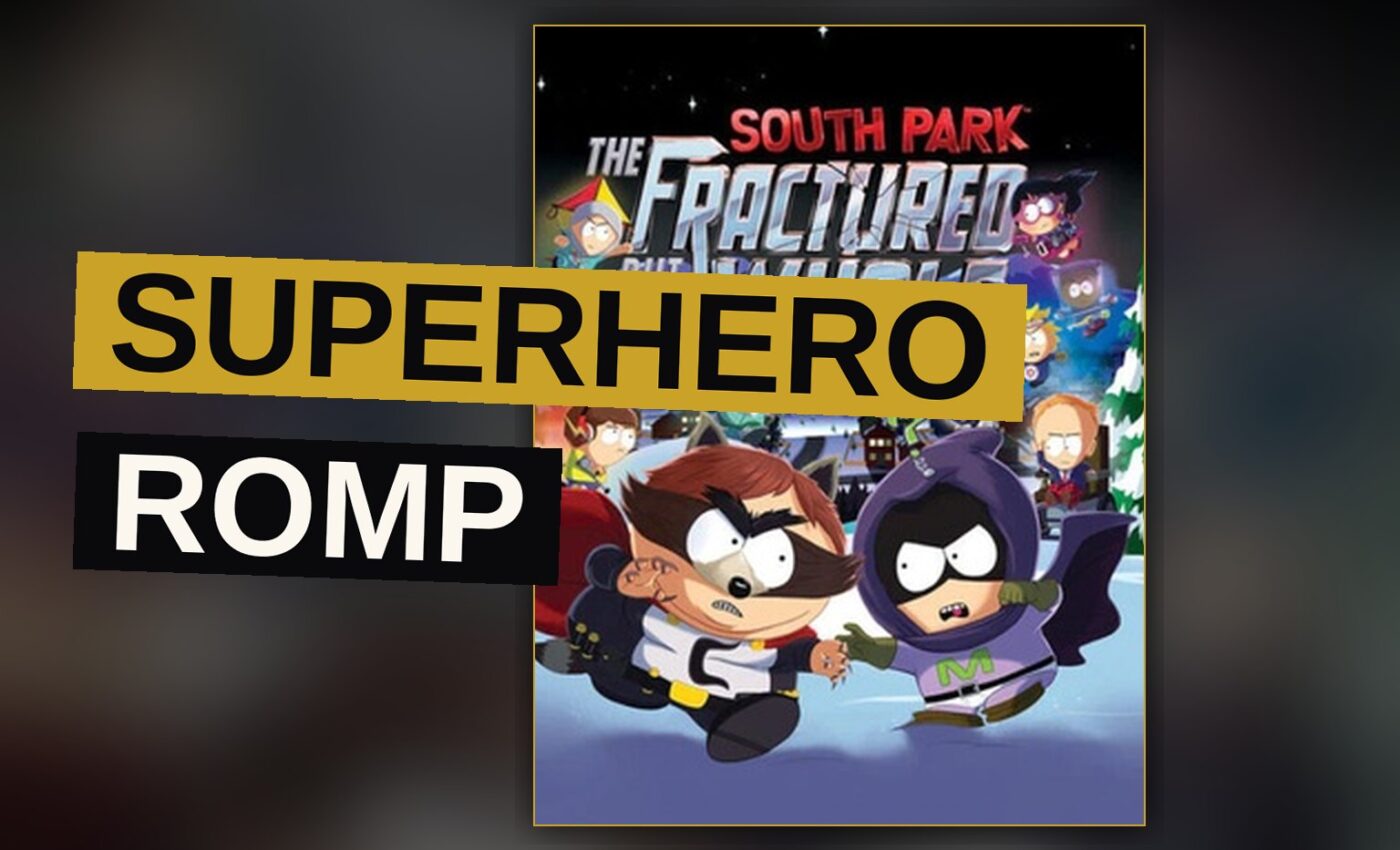
South Park: The Fractured but Whole arrived in 2017 as the follow-up to The Stick of Truth, and it makes a swap the first game never had to: fantasy out, superheroes in. Ubisoft San Francisco developed it, Ubisoft published it with South Park Digital Studios, and it came to PlayStation 4, PC, Xbox One and later Nintendo Switch. The kids of South Park have put away their wizard robes and picked up capes, and the result is a role-playing game built around a class system, a battle grid and a town full of enemies.
Trailer, via IGDBcom.
The New Kid Returns to South Park
You play the New Kid again, the silent protagonist who has recently moved to the fictional Colorado town of South Park. The game picks up one day after the events of The Stick of Truth. The children have abandoned their fantasy role-playing game and become superheroes, and they want to launch a media franchise. The trouble is they cannot agree on who gets a film or a Netflix series.
That disagreement splits them into two rival factions: Coon and Friends and the Freedom Pals. Each wants to create its own franchise first.
The New Kid can now be played as male or female, a change from the previous game. The character remains silent.
Coon and Friends versus the Freedom Pals
Coon and Friends is led by Eric Cartman, whose alter-ego is The Coon, half man and half raccoon. The group operates out of the Coon Lair, which is Cartman’s basement. The roster includes The Human Kite, also known as Kyle Broflovski, the life-leeching Mosquito, played by Clyde Donovan, the super-fast Fastpass, Jimmy Valmer, and the powerful Super Craig, Craig Tucker.
The Freedom Pals are led by the telekinetic Dr. Timothy, Timmy Burch. Their side includes Mysterion, Kenny McCormick, Toolshed, Stan Marsh, the weather-wielding Wonder Tweek, Tweek Tweak, and the mechanized Tupperware, Token Black. Other heroes float between the groups, like the hacker Call Girl, Wendy Testaburger, and the super-strong Captain Diabetes, Scott Malkinson.
The two factions spend much of the game at war with each other, but their roleplay accidentally uncovers a conspiracy to raise crime in the town. That discovery pushes them into conflict with supervillains, genetically engineered monsters, the police, crime families and a new kingpin of crime.
Cartman and the other children decide to play superheroes with the goal of launching a superhero media franchise by finding a missing cat and claiming the $100 reward.
That missing cat is the inciting incident. The New Kid joins the game, and Cartman provides them with a tragic backstory, having witnessed “your dad fuck your mom,” with Cartman apparently not realizing that this is normal.
Ten Archetypes and a Grid of Farts
The Fractured but Whole is a role-playing game played from a 2.5D, third-person perspective. It replicates the aesthetic of the television series. The New Kid can freely explore the town, interact with characters, take on quests and unlock new areas by progressing through the main story. A fast-travel system moves the character between unlocked travel points.
The class system is the biggest mechanical change from The Stick of Truth. You choose from ten superhero archetypes. There is a nimble Speedster, a short-range Brutalist built for heavy damage, a long-range Blaster that deals moderate damage, a weather-based Elementalist, a Cyborg that attracts enemy offense, a Psychic that works at range and applies status effects, a stealthy Assassin, a gadget-using Gadgeteer, a healing Plantmancer, and a swift, high-damage Martial Artist.
Only three choices are available at first: Blaster, Speedster and Brutalist. Eventually you can access all ten classes and freely match powers from them. You can use the Blaster’s fire blasts, the Assassin’s knives and the Martial Artist’s kicks in the same build. You assign four powers from the classes, three regular attacks and one ultimate attack. Ultimate attacks only become available after filling the Ultimate bar, a pool of points shared between the New Kid and their allies. That bar fills by completing timed button presses during the attacking and defending phases.
Combat retains the turn-based structure of The Stick of Truth, but it no longer takes place on a static plane. Battles are fought on a variable-size grid where the player and enemies can move freely. Attacks have specific areas of effect, which means positioning matters. You can select up to three allies from twelve characters to accompany you in battle, and each ally has three powers and an ultimate attack.
The attacks include melee, ranged and powerful farts.
A Town Full of Enemies
The game’s setting is South Park, the fictional town in the Colorado Rocky Mountains. The heroes’ journey brings them into conflict with a wide range of groups: the local elderly population, ninjas, the sixth graders, the Hooters-parodying Raisins girls, hobos, Kyle’s cousin Kyle Schwartz, and the supervillain Professor Chaos, also known as Butters Stotch.
The game pulls from the series’ history. Stan’s father Randy, Butters’ father Stephen, Kyle’s father Gerald, school principal PC Principal, Moses, Seaman, school counselor Mr Mackey, Detective Yates, strippers Spontaneous Bootay and Classi, Big Gay Al, gun enthusiasts Ned and Jimbo, and Father Maxi all appear.
The conspiracy plot gives the superhero roleplay a structure to hang on. The kids think they are playing a game, but the crime families and the police are not.
The Missing Cat and the $100 Reward
The opening hook is small and specific: a missing cat, a $100 reward, and a group of kids who decide this is how they launch a franchise. Cartman builds the New Kid a tragic backstory on the spot.
That is the shape of the plot. The conspiracy is real, but the kids’ reason for chasing it is not. They want a movie deal. They want a Netflix series. They want to be the most beloved superheroes in history, and they are willing to fight a civil war over who gets to be first.
Every supervillain and every genetically engineered monster is encountered by children who are still thinking about franchises.
The Ultimate Bar and the Battle Grid
The Ultimate bar is a pool of points shared between the New Kid and their allies. It fills through timed button presses during the attacking and defending phases, and it gates the ultimate attacks each character carries.
Battles take place on a grid of variable size. Participants move freely around it, and attacks have specific areas of effect, so where a character stands decides what an attack reaches. Each of the twelve selectable allies brings three powers and an ultimate attack into the fight.
What Works and What Does Not
The Fractured but Whole is at its best when it lets the class system breathe. Mixing powers from different archetypes opens up builds, and the grid-based combat gives every fight a spatial problem to solve. The Ultimate bar adds a layer of timed execution during the attacking and defending phases.
The writing is sharp. Cartman’s Coon is as insufferable as ever, and the game knows it.
The game is not perfect. The 2.5D perspective limits how much you can see of the town. The fast-travel system helps, but it also makes the world feel smaller than it should. Some of the side content is thinner than the main story.
The Switch version, which arrived later, runs the same core game. The PC, PlayStation 4 and Xbox One versions are also available.
The Fractured but Whole is a sequel that understands what made The Stick of Truth work and builds on it without repeating it. The move from fantasy to superheroes is a smart pivot, and the class system gives the combat more options than the first game had. It is not a perfect role-playing game, but it is a confident one.
For anyone who played The Stick of Truth, this is a natural next step. For anyone who has not, it stands on its own as a funny, mechanically solid RPG.
Get the Notebook.
The day's best stories and every fresh verdict, in plain English, in your inbox by seven. One email a day, no more.