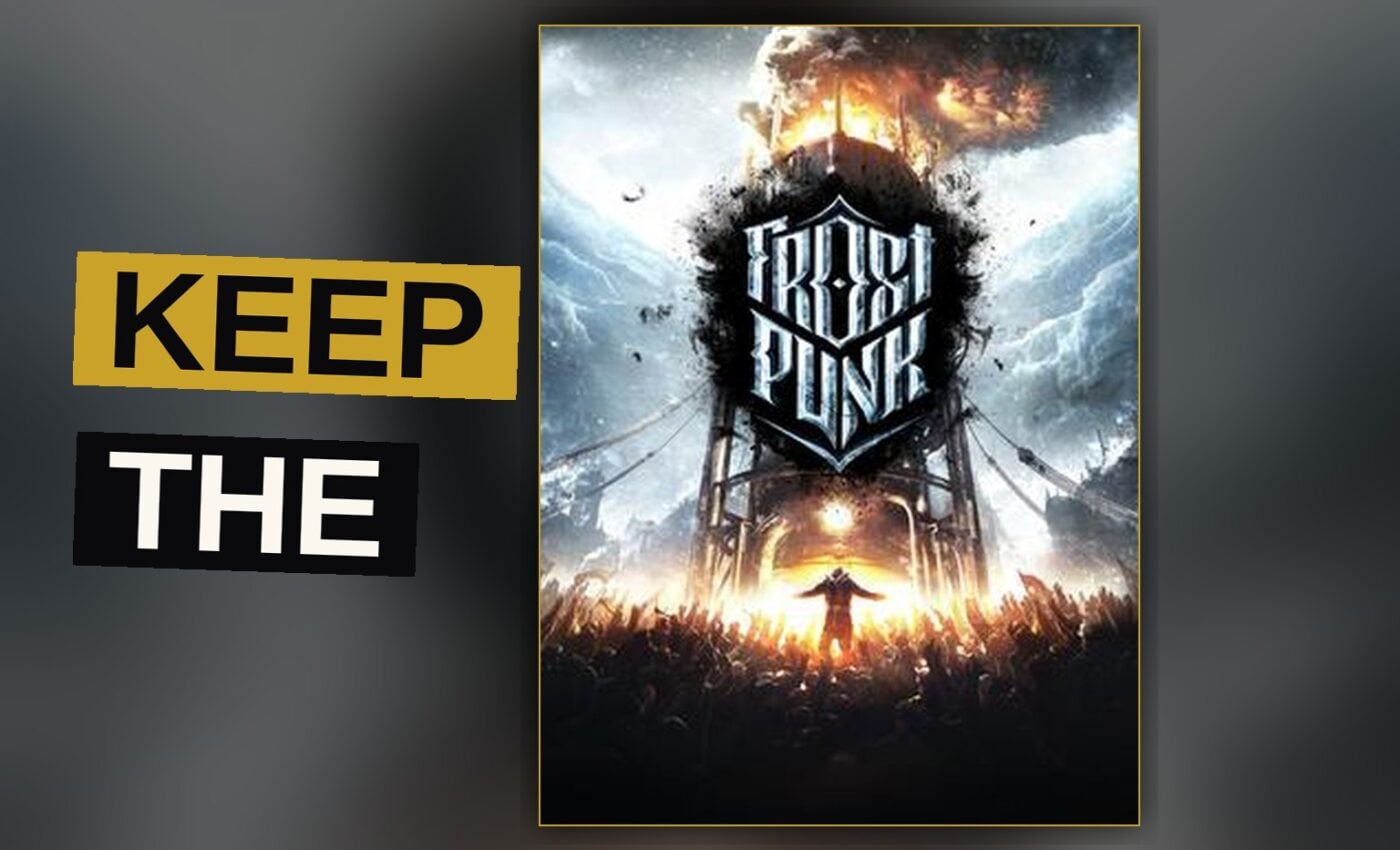
Frostpunk is a city-builder with a conscience, and that conscience is a cold, hard thing. Developed by 11 Bit Studios and released in 2018 for PC, PS4, Xbox One, and Switch, it drops you into a frozen wasteland where the last city on Earth survives around a single, massive heat generator. The game asks a simple question: how far are you willing to go to keep the flame burning? The answer, it turns out, is usually further than you thought.
Trailer, via 11 bit studios.
Generator First, Morals Later
The core loop is deceptively simple. You manage a population of survivors, gather coal, wood, and steel, and expand your city outward from the generator’s warmth. Every building has a heat requirement, and every night the temperature drops. When the thermometer plunges, you must decide who gets heat and who does not.
That decision is the heart of Frostpunk. It is not a game about efficiency spreadsheets, though those exist. It is a game about moral arithmetic. You will pass laws that feel necessary and then watch them erode the humanity of your people. You will sign a child labor act because the coal mines need hands, and you will tell yourself it is temporary. It never feels temporary.
The generator itself is a character. It looms over the city, a great iron lung breathing steam into the sky. Keeping it fed is your primary task, and when it sputters, the whole city feels it. The sound design sells this perfectly; the hiss of pressure, the clank of coal shovels, the desperate cheers when the heat kicks back on.
Laws That Bite
Frostpunk’s most striking feature is its law system. As the city grows, you unlock a tree of decrees. These are not simple upgrades. They are choices with names like “Soup” or “Food Additives,” “Grave Digging” or “Organ Transplants.” Each one carries a cost to your people’s hope and a benefit to their survival.
The game tracks two resources: Hope and Discontent. Let Hope hit zero and the city falls to chaos. Let Discontent max out and you are overthrown. Every law you pass shifts these meters, and the shifts are rarely obvious. A law that feeds people better might spark outrage at its cruelty. A law that calms the masses might quietly starve them.
This is where the game’s moral weight lands hardest. The laws are not abstract. You see the faces of your citizens, hear their complaints, and read their daily reports. When you sign a law allowing amputees to work as laborers, you do it because you need the hands. The game does not judge you, but it does not forgive you either. It just records the decision and moves on.
Scenarios and Their Rules
Frostpunk is not a single campaign. It is a set of scenarios, each with its own rules and its own flavor of misery. The main story, “A New Home,” is a survival marathon that lasts about ten hours. It throws waves of refugees, storms, and mechanical failures at you, and it rarely lets you rest.
The other scenarios are shorter but sharper. Each one twists the core systems in a different direction:
- “The Arks” gives you a small team of engineers and a handful of automatons, forcing a focus on technology over population.
- “The Refugees” starts you with a packed city and a constant influx of newcomers, testing your ability to manage overcrowding and disease.
- “The Fall of Winterhome” is a grim post-mortem of a failed city, where you must evacuate everyone before the generator explodes.
Each scenario changes the rules just enough to keep you off balance. The core systems remain, but the priorities shift. This variety is the game’s greatest strength. It turns a single moral dilemma into a series of distinct pressures, and it keeps the experience fresh long after the first campaign ends.
Endless Mode and Its Limits
Beyond the scenarios, Frostpunk offers an endless mode. This is a sandbox where the goal is simply to survive as long as possible. There are no scripted events, no narrative beats. Just the cold, the generator, and your own decisions.
Endless mode is a different beast. It lacks the narrative urgency of the scenarios, but it makes up for it with pure systemic pressure. You can experiment with different law paths, build sprawling cities, and push the generator to its limits. It is a mode for players who want to master the systems rather than experience the story.
It is also where the game’s flaws become most visible. The late-game economy can spiral into busywork. Once your city is stable, the challenge often becomes a matter of clicking the same upgrade buttons over and over. The moral choices fade, replaced by simple optimization. The cold stops being terrifying and becomes routine.
Visuals That Freeze the Eye
Frostpunk looks like a Victorian oil painting frozen mid-stroke. The art direction is superb. Buildings are chunky and functional, with brass pipes and iron rivets. The snow is everywhere, drifting over streets and piling against walls. The lighting is the star; the generator’s glow casts long, orange shadows across the white landscape, and the aurora borealis flickers overhead in shimmering ribbons.
The sound design matches the visuals. The wind howls constantly, a low, relentless moan that never quite fades into the background. The generator hums and clanks. Your citizens speak in clipped, weary voices. The music, composed by Piotr Musiał, is sparse and mournful, swelling only at key moments. It is a score that understands restraint.
The presentation is not flawless. The UI is functional but dense, and it takes time to learn where everything lives. The map is small, and the camera can feel cramped when your city grows large. These are minor complaints, but they are persistent.
Hope and Discontent Mechanics
The most talked-about feature of Frostpunk is its treatment of hope and discontent. The game presents these as mechanical resources, but it also treats them as moral barometers. When you pass a harsh law, the game shows you the consequences. A child dies. A worker collapses. A family is separated.
This is where the game is at its best and its most manipulative. It wants you to feel the weight of your choices, and it succeeds. But it also nudges you toward a specific reading of those choices. The game clearly prefers a humane approach, even when that approach is mechanically harder. It is a game with a point of view, and it is not shy about it.
That point of view is not a flaw. It is what makes Frostpunk memorable. A city-builder that only rewarded efficiency would be forgettable. Frostpunk rewards efficiency, but it also makes you pay for it in guilt. The best moments come when you find a path that is both kind and viable, and those moments are rare enough to feel earned.
Ranking the Scenarios
If you are new to Frostpunk, the order in which you play matters. The scenarios build on each other in difficulty and thematic weight. Here is how they stack up:
- “A New Home” — Start here. It teaches every system and delivers the full narrative arc.
- “The Arks” — A shorter, technical challenge that rewards careful planning over population management.
- “The Refugees” — A social puzzle that tests your ability to manage scarce resources under constant pressure.
- “The Fall of Winterhome” — The hardest and most tragic scenario, best saved for last.
Each one offers a different lens on the same core question. Playing them in this order lets the moral weight accumulate without overwhelming you.
A Final Word on the Cold
Frostpunk is a demanding game. It is not a relaxing city-builder. It is a pressure cooker that slowly turns up the heat until you are making decisions you never thought you would make. It is also a brilliant one, with a strong visual identity, a haunting soundtrack, and a moral core that most games in the genre lack entirely.
It is not for everyone. Players who want a pure sandbox will find the scenarios too scripted. Players who want a pure narrative will find the systems too fiddly. But for those who want a game that makes them think, then makes them feel bad about what they thought, Frostpunk is essential.
The cold is your enemy, but the real enemy is yourself. That is the game’s central insight, and it lands with force. The city will survive, or it will not. The question is what you will have become by the time you find out.
Frostpunk is a rare thing: a strategy game with a soul. It is not perfect, but it is unforgettable. I give it 8.4/10.
Get the Notebook.
The day's best stories and every fresh verdict, in plain English, in your inbox by seven. One email a day, no more.