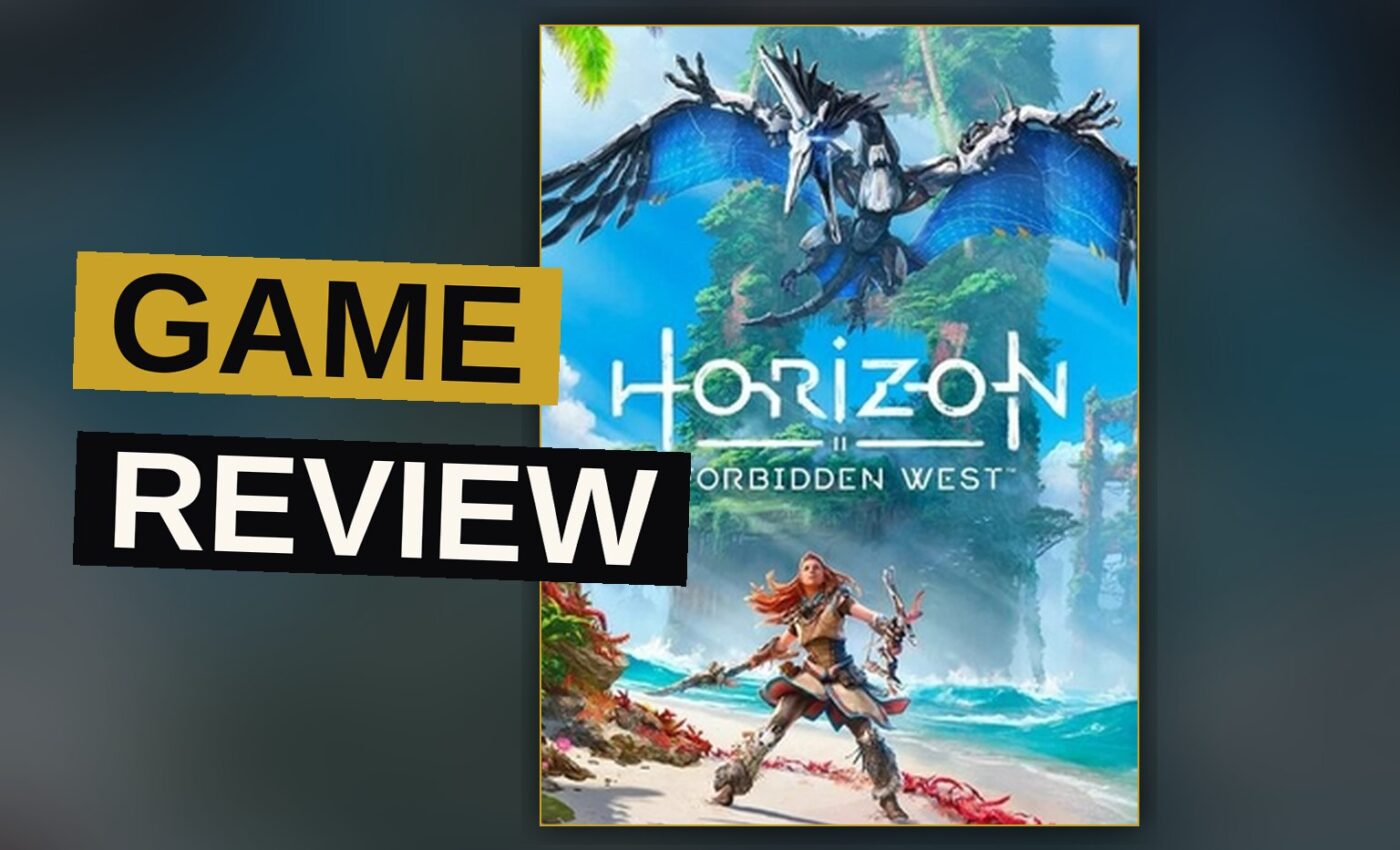
Horizon Forbidden West is a sequel that refuses to sit still. It takes the already vast world of the 2017 original and pushes it further, higher, and deeper, trading the rusted ruins of the Rocky Mountain West for the sunken, overgrown remains of the American West Coast. The result is a game that feels less like a follow-up and more like a dare: can you keep up with its ambition?
The story picks up months after the events of Horizon Zero Dawn. Aloy, the cloned warrior who saved the world from a rogue AI, is now hunting for a backup of GAIA, the terraforming system she lost. The search takes her into the Forbidden West, a territory of towering redwoods, scorching deserts, and the flooded streets of San Francisco. It is a premise built for discovery, and the game rarely wastes it.
Trailer, via PlayStation.
Hunting for GAIA
The plot is a direct continuation, and it does not waste time with a slow reintroduction. Aloy is immediately on the move, chasing a signal that could restore the planet’s failing biosphere. The stakes are global, but the writing grounds them in personal loss. Spoiler warning: this paragraph discusses a companion’s death. She is grieving Varl, a companion who dies during the events of this game, and her new allies — the warrior Kotallo and the Oseram captain Erend — each carry their own burdens.
The narrative leans hard into the lore of the Old Ones, the civilization that collapsed a thousand years before. Data logs and holographic recordings fill in the gaps, telling a story of corporate greed and scientific hubris that feels uncomfortably familiar. It is not subtle, but it is effective. The game asks a simple question: what do we owe the future? It answers with a thousand small choices, most of them made by Aloy alone.
Voice acting carries much of the weight. Ashly Burch returns as Aloy, and she gives a performance that is more tired, more frayed, than in the first game. She is no longer a curious outcast; she is a leader carrying the weight of a dying world. The supporting cast matches her. Lance Reddick, in one of his final roles, plays Sylens with a cold, calculating wit that makes every scene he is in feel sharper.
Machines and How to Fight Them
The real stars are the machines. Horizon Forbidden West introduces a new roster of robotic creatures, each designed with a specific ecological role. The Clawstrider, a raptor-like hunter, moves in packs. The Slitherfang, a massive cobra, burrows through sand. The Tremortusk, a woolly mammoth with cannons on its back, is a walking fortress. Fighting them is a dance of patience and precision.
Combat builds on the original’s system of weak points and elemental weaknesses. You can tear off a machine’s armor plates with a grapple, shoot its fuel tank to trigger an explosion, or override it to fight on your side. The new Valor Surges add a layer of strategy, letting you unleash powerful, cooldown-based abilities. The skill tree has been expanded, offering more ways to specialize in stealth, melee, or ranged combat.
The weapons are equally varied. The new Spike Thrower lobs explosive javelins. The Shredder Gauntlet returns discs that hit harder if you catch them on the rebound. The Boltblaster is a heavy, slow-firing cannon that rewards careful positioning. Each tool has a learning curve, but mastering them makes you feel like a hunter, not a tourist.
Sunken Cities and Redwood Peaks
The map is enormous, and it is built to be explored. The Forbidden West stretches from the snowy peaks of the Sierra Nevada to the sun-drenched beaches of the Pacific. It is a landscape of contrasts: a desert that glows orange at dusk, a jungle that drips with humidity, a ruined Las Vegas buried under sand and neon. The game’s visual engine, running on the Decima engine, is a technical marvel.
Water is the big addition. Aloy can now dive, and the underwater sections are a highlight. Sunken ruins, flooded office buildings, and coral-encrusted highways hide salvage and lore. The swimming controls are smooth, and the underwater combat, while limited, adds a sense of vulnerability. The game also introduces a grappling hook and a glider, both of which make traversal faster and more vertical.
The side content is where the game shines brightest. Each settlement has a series of quests that feel like small stories, not fetch quests. One has you helping a tribe of desert dwellers reclaim a buried tank. Another asks you to track down a rogue AI hiding in a theme park. A third involves a race across the plains on a machine mount. These missions are varied, well-written, and often tie back into the main plot.
The Arena and the Pit
For players who want a pure test of skill, the game offers two dedicated challenges. The Arena is a series of combat trials against waves of machines, with a timer and a score. It rewards fast thinking and careful loadouts. The Pit, on the other hand, is a melee combat gauntlet. It teaches you the game’s close-quarters system, which is deeper than it first appears, with a focus on dodging, parrying, and chaining combos.
Both are optional, but they are worth the time. They force you to use weapons and tactics you might otherwise ignore, and they offer some of the best gear in the game as rewards. The Arena, in particular, is a great way to test new builds without committing to a long expedition.
The game also adds a skill tree for the new weapon types, and a separate tree for the Valor Surges. It is a lot to manage, but the interface is clean, and respeccing is easy. You are never locked into a bad build.
Sound of the Wild
The audio design is a quiet triumph. The score, composed by Joris de Man and The Flight, blends tribal drums with orchestral swells. It is a soundtrack that knows when to stay quiet and when to roar. The sound of a machine roaring in the distance, the crunch of leaves underfoot, the echo of a waterfall — it all builds a world that feels alive.
The voice acting is supported by a strong script. The dialogue is natural, with moments of humor and grief that land. The game is not afraid to let a scene play out in silence, and those moments are often the most powerful. There is a scene in the ruins of a theater, where Aloy finds a recording of a comedian telling jokes to an empty room. It is a small, sad, human moment in a game about gods and machines.
Technical Costs and Stumbles
Horizon Forbidden West is not without its flaws. The game is a technical showcase, but it comes with a cost. The file size is massive, and the load times, while improved over the original, can still be noticeable. The frame rate on the base PS4 can dip in busy areas, and the game’s open world can occasionally feel bloated. There are times when you are traveling between objectives and the only thing to see is a long stretch of empty desert.
The story also stumbles in its final act. The climax relies on a twist that feels rushed, and the epilogue leaves several threads dangling for a sequel. It is not a bad ending, but it is a hurried one. The game sets up more than it resolves, and that can feel unsatisfying after a journey this long.
The side quests, while varied, can also fall into familiar patterns. You will often be asked to find a missing person, clear a machine nest, or retrieve a lost item. The writing elevates these tasks, but the structure is familiar. And the game’s crafting system, while deep, requires a lot of material grinding. If you want to upgrade your favorite bow, you will spend hours hunting specific machine parts.
Worth the Journey
Horizon Forbidden West is a game that is easy to recommend and hard to put down. It is a sequel that improves on its predecessor in almost every way, from its combat to its world design to its storytelling. It is a game that respects your time, even when it asks for a hundred hours of it. It is not perfect, but it is close.
The game is a statement of intent from Guerrilla Games. It is a blockbuster that wants to be more than a blockbuster, a spectacle that wants to be a story. It mostly succeeds. The machines are terrifying, the world is beautiful, and the people in it feel real. If you own a PS4, a PS5, or a PC, this is a game you should play.
- KEY FACTS BOX
- Title: Horizon Forbidden West
- Release: February 18, 2022
- Platforms: PS4, PS5, PC
- Developer: Guerrilla Games
- Publisher: Sony Interactive Entertainment
- Critical Score: 9.2/10
- Main Story Runtime: ~30-40 hours
- Full Completion Runtime: ~80+ hours
It is a rare game that makes you feel like you have been somewhere. Horizon Forbidden West is that game. It is a journey across a broken world, and it is one worth taking.
Get the Notebook.
The day's best stories and every fresh verdict, in plain English, in your inbox by seven. One email a day, no more.