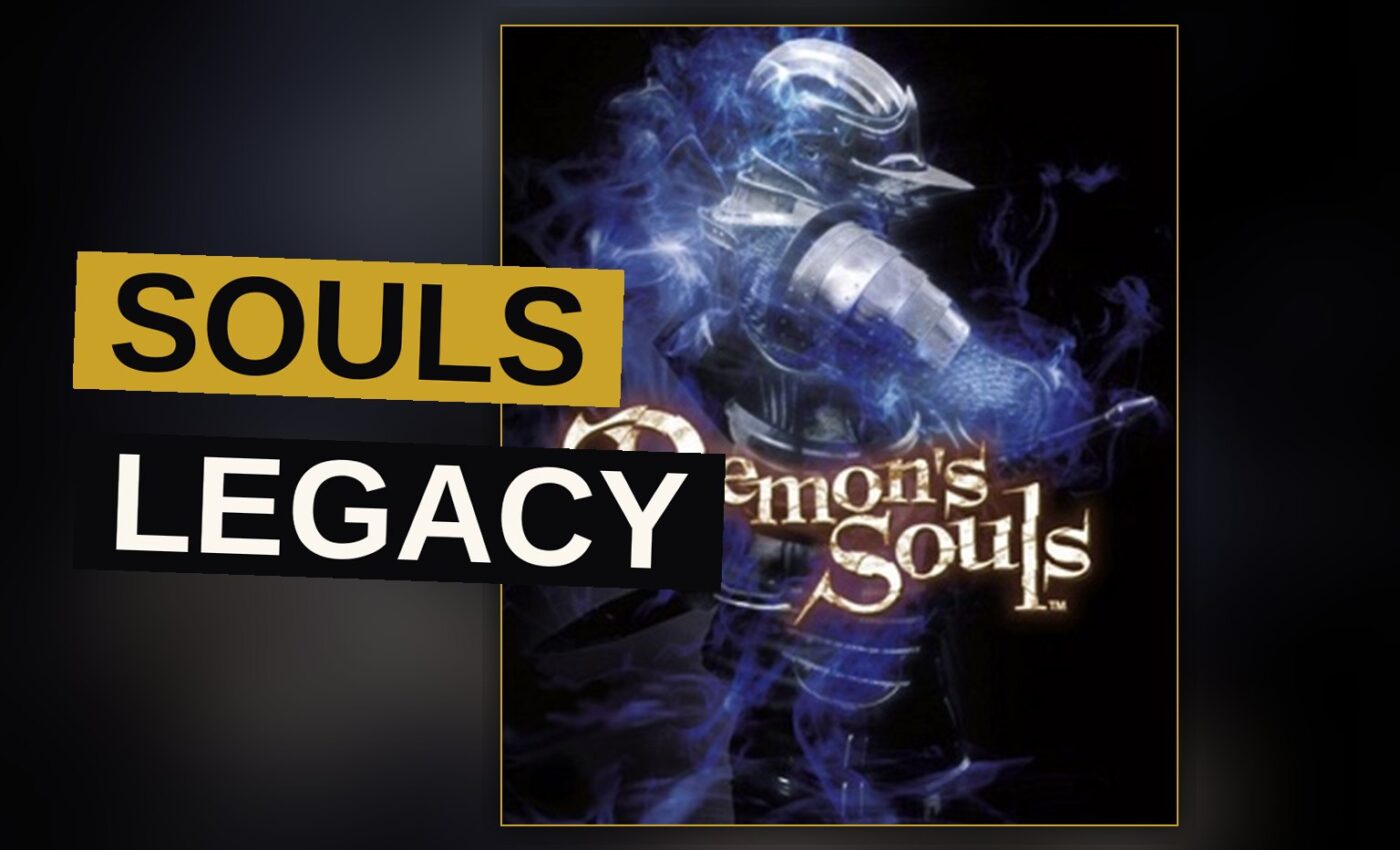
Demon’s Souls is a game that asks you to die, and then thanks you for it. It is a brutal, lonely, and unforgiving action RPG that launched on the PS3 in 2009, and it remains one of the most important games of its generation. It does not hold your hand, it does not explain itself, and it will punish you for every mistake you make. This is not a flaw; it is the entire point.
From Software built a world that feels genuinely hostile, a kingdom called Boletaria shrouded in a thick, oppressive fog. The story is sparse, told through brief conversations and item descriptions rather than cutscenes. You are a lone warrior, a soul drawn back to the land to slay demons and break the curse. The narrative is not the draw, though. The draw is the challenge, the atmosphere, and the strange, addictive thrill of overcoming something that seemed impossible.
Trailer, via BANDAI NAMCO Europe.
Boletaria’s Five Archstones
The game is structured around the Nexus, a hub area that acts as your sanctuary. From there, you access five distinct worlds, each tied to an Archstone. These are not just levels; they are complete, interconnected zones with their own lore, enemies, and bosses.
The first world, Boletarian Palace, is a crumbling castle of knights and dragons. It is the most traditional fantasy setting, but its narrow corridors and shield-wielding enemies teach you the game’s core lessons early.
The second, Stonefang Tunnel, is a mine of fire and rock, home to the game’s most annoying enemy type: the crystal lizards that scurry away before you can kill them. The Tower of Latria is a prison of mind games, filled with singing sirens and a terrifying, tentacled boss that chimes like a bell.
The Shrine of Storms is a graveyard of skeletons and reapers, where the wind howls and the dead rise endlessly. Finally, the Valley of Defilement is a swamp of poison and filth, a miserable slog that tests your patience more than your skill.
Each world has a distinct visual identity, but they all share a common palette of decay and despair. The art direction is superb, using light and shadow to create a sense of dread that few games have matched since. The sound design is equally effective; the clang of your sword, the distant roar of a dragon, and the mournful cries of the damned all work to keep you on edge.
Combat as a Conversation
The combat in Demon’s Souls is slow, deliberate, and weighty. You have a stamina bar that governs every action, from swinging your sword to rolling out of the way. You cannot spam attacks; you must manage your stamina, read your enemy’s telegraphed moves, and strike when there is an opening. It is a dance, and the game is the lead.
Shields are your best friend, at least at first. Blocking is safer than dodging, but it drains your stamina and leaves you vulnerable to guard breaks. Parrying is possible, but the timing is strict and the risk is high. Magic is powerful but requires a catalyst and a careful investment of souls. The game gives you tools, but it never tells you how to use them. You learn by dying, and you die a lot.
Death is not a failure state in Demon’s Souls; it is a mechanic. When you die, you lose all the souls you have collected, the currency used to level up and buy items. You get one chance to retrieve them from the spot where you fell. If you die again on the way back, they are gone forever. This creates a constant, palpable tension. Every step forward is a risk, and every shortcut found is a small victory.
The game also has a unique mechanic called World Tendency. Your actions in a world shift its alignment between white and black. Dying in human form makes a world darker, making enemies stronger but increasing drop rates. Killing bosses and demons makes it lighter, making the game easier but hiding some secrets. This system is opaque and often frustrating, but it adds a layer of depth that rewards exploration and experimentation. It is a system that most players will not fully understand without a guide, but its presence makes the world feel alive and reactive.
Bosses as Puzzles
The bosses in Demon’s Souls are not just health bars; they are tests of observation. Each one has a gimmick, a weakness that you must discover and exploit. The Tower Knight is a giant in armor; you must break his ankles to bring him down. The Fool’s Idol is a mage who clones herself; you must find the real one. The Dragon God is a massive creature that you must sneak past, dodging his gaze and destroying the pillars that hold back his fire.
These fights are not always fair, and some are more frustrating than fun. The Maneaters, a pair of gargoyles on a narrow bridge, are a notorious difficulty spike. The Old Monk is a player-versus-player fight, where another human can invade your game and take the boss’s place. This can be a thrilling surprise or a miserable experience, depending on who you match with.
But when a boss clicks, when you finally understand the pattern and execute your plan perfectly, the feeling is unmatched. The game rewards patience and observation over raw reflexes. It is a puzzle box wrapped in a sword-and-sorcery skin. When you finally fell the Penetrator, a knight whose sword is longer than your entire body, you feel like you have actually earned the victory.
The Online Experiment
Demon’s Souls was a pioneer of asynchronous online play. You can leave messages on the ground for other players to see, warning them of traps or encouraging them with lies. You can see the ghosts of other players as they die, a constant reminder that you are not alone in your suffering. You can also summon other players to help you, or invade their worlds to kill them.
This system was revolutionary in 2009. It made the loneliness of the game feel shared. The messages, in particular, are a delight. Some are genuinely helpful; others are jokes or outright misinformation. The community that formed around the game was a direct result of this design, and it set the template for the entire “Souls-like” genre that followed.
The multiplayer is not seamless, though. Summoning requires you to be in human form, which is a limited resource. Invading is a constant threat, and some players will camp in your world just to ruin your day. The netcode was also rough in the original PS3 release, leading to lag and strange hit detection. But these flaws are part of the charm. The game is messy, and it does not care.
A Comparison of the Five Worlds
To give you a sense of what to expect, here is a quick breakdown of the game’s five main areas.
| World | Setting | Primary Threat | Best Boss |
|---|---|---|---|
| Boletarian Palace | Crumbling castle | Knights and dragons | Phalanx |
| Stonefang Tunnel | Volcanic mines | Fire and rock | Armor Spider |
| Tower of Latria | Gothic prison | Mind games and sirens | Fool’s Idol |
| Shrine of Storms | Windy graveyard | Skeletons and reapers | Old Hero |
| Valley of Defilement | Toxic swamp | Poison and filth | Leechmonger |
Each world has a different rhythm, and the order in which you tackle them is up to you. The game does not gate your progress; it lets you wander into a high-level area and get slaughtered if you are not ready. This freedom is both a strength and a weakness. It encourages exploration, but it can also lead to frustration when you hit a wall and have no idea where to go next.
The Grind and the Glory
The game is built on a simple loop: die, learn, improve, and try again. This loop is compelling, but it is also demanding. The difficulty is not artificial; it is deliberate. The game wants you to fail, and it wants you to learn from that failure. It is a hard game, but it is a fair game, most of the time.
There are moments of pure frustration. The camera can be your enemy in tight corridors. The lock-on system will occasionally target the wrong enemy. And some of the later areas, particularly the Valley of Defilement, feel like they were designed to be cruel rather than challenging. The game’s difficulty is part of its identity, but it is not for everyone. It demands a significant time investment, and it will test your patience.
But the glory is real. When you finally clear a world, when you find a hidden path, when you beat a boss that has killed you twenty times, you feel a sense of accomplishment that few other games can offer. The game respects your intelligence and your persistence. It does not hand you victories; it makes you earn them.
A Plan for Your First Playthrough
If you are new to the game, here is a suggested order for tackling the five worlds. This is not the only way to play, but it is a reasonable path that scales the difficulty in a manageable way.
| Order | World | Approximate Time to Clear | Recommended Level |
|---|---|---|---|
| 1 | Boletarian Palace (1-1) | 1-2 hours | 1-10 |
| 2 | Stonefang Tunnel (2-1) | 2-3 hours | 10-20 |
| 3 | Tower of Latria (3-1) | 2-3 hours | 20-30 |
| 4 | Shrine of Storms (4-1) | 2-3 hours | 30-40 |
| 5 | Valley of Defilement (5-1) | 3-4 hours | 40-50 |
This schedule is a rough guide. Your mileage will vary, and the game will punish you for overconfidence. The key is to be patient, to upgrade your weapons, and to learn from every death.
Legacy of the Souls
Demon’s Souls is not a perfect game. Its framerate can chug, its camera can betray you, and its online systems are dated. But it is a masterpiece of atmosphere and design. It is a game that trusts the player to figure things out, and it rewards that trust with a deeply memorable experience.
It is the father of a genre, and its influence can be seen in countless games that followed. It is a game about perseverance, about the value of struggle, and about the quiet satisfaction of overcoming a challenge that seemed insurmountable. For those willing to accept its terms, it offers one of the most rewarding experiences in gaming.
It is a bleak, beautiful, and brilliant game. It is not for everyone, but for those it clicks with, it is unforgettable.
Get the Notebook.
The day's best stories and every fresh verdict, in plain English, in your inbox by seven. One email a day, no more.