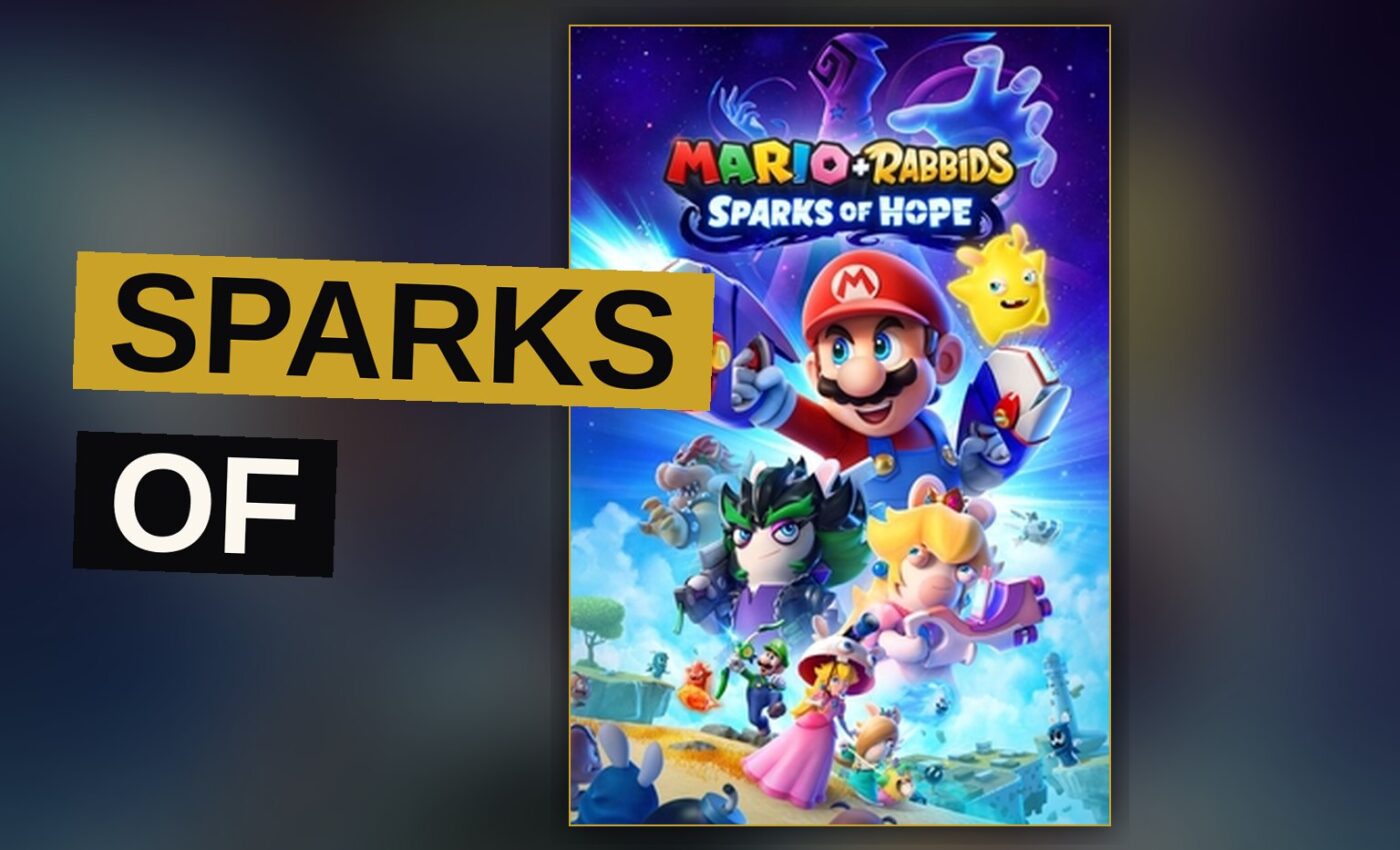
Mario + Rabbids Sparks of Hope is a strange, wonderful machine. It takes the tactical combat of its predecessor and cracks it open, replacing rigid grids with free movement and adding a layer of real-time action that should not work. It does work, and the result is one of the most inventive strategy games on the Switch.
The game picks up after the events of Mario + Rabbids Kingdom Battle. A mysterious entity called Cursa is draining the energy of the Sparks, creatures that are a fusion of Lumas and Rabbids. Mario, the Rabbids, and a new ally named Edge must travel across a series of planets to stop Cursa and save the galaxy. The plot is thin, but it is never the point. The point is the combat, and the combat is excellent.
Trailer, via Ubisoft.
A Grid-Free Battlefield
The biggest change is the battlefield. The first game used a grid, like a traditional tactics title. Sparks of Hope removes it. Characters now move freely within a circular movement zone. You can position yourself for a shot, flank an enemy, or grab a collectible in the middle of a turn. It feels looser, faster, and more chaotic, but the strategy is still there.
Every character has a primary weapon, a secondary technique, and a special move. Mario uses his blaster. Luigi snipes from range. Rabbid Peach heals. Edge, the new sword-wielding heroine, is a close-range monster. Each character also equips two Sparks, which grant elemental powers. A Spark might add fire damage to your shots, or freeze enemies in place, or let you dash through foes without taking damage.
The Sparks are the heart of the system. You can swap them between characters at any point before a battle, and each one changes how a fight plays out. Want to burn a group of enemies clustered together? Give Mario a fire Spark. Need to stop a fast attacker from reaching your healer? Equip an ice Spark and freeze them in their tracks. The combinations are deep, and experimenting with them is half the fun.
When Aiming Becomes Action
Here is the twist that sets Sparks of Hope apart. When you shoot an enemy, the game does not simply roll dice. You enter a brief real-time aiming mode. You move a reticle over the target and pull the trigger. If you hit, you deal damage. If you miss, you waste the shot.
This changes everything. Positioning matters more because you need a clear line of sight. Enemy movement matters more because they can dodge your shots. And the game rewards skill in a way that turn-based tactics usually do not. A well-aimed shot can take down a tough foe in one turn. A sloppy one can leave you exposed.
The same logic applies to movement. You can dash through enemies to deal damage, and you can jump on them like a classic Mario game. These moves are on a cooldown, so you cannot spam them. But chaining a dash into a jump into a shot feels fantastic. It is a rhythm game hiding inside a strategy game, and it never gets old.
Playgrounds Across the Galaxy
Between battles, you explore a series of open planets. Each one is a small sandbox with puzzles, secrets, and optional fights. You collect coins, unlock new Sparks, and find memory orbs that flesh out the backstory. The exploration is lighter than the combat, but it is a welcome breather.
The first planet, Beacon Beach, is a sunny shoreline with a lighthouse and a lot of sand. It is a gentle introduction. The second, Pristine Peaks, is a frozen mountain range with slippery slopes and hidden caves. Later planets include a haunted forest, a lava-filled fortress, and a strange world made of mechanical parts. Each one has a distinct look and a distinct set of challenges.
The game also features a hub world where you can talk to your crew, upgrade your Sparks, and take on side quests. It is not a big deal, but it gives the game a sense of place. You are not just moving from battle to battle. You are building a team.
A Cast Full of Weirdos
The character roster is a mix of Mario staples and Rabbid chaos. Mario is Mario. He is reliable and balanced. Luigi is a sniper with a long range but low health. Peach is a tank who can shield her allies. Rabbid Peach is a healer with a mean streak. Rabbid Mario is a brawler who hits hard and takes hits harder.
The new additions are strong. Edge is a brooding, sword-wielding fighter who speaks in dramatic one-liners. She is a bit of a parody of edgy video game characters, but she is also genuinely useful in combat. Her dash attack can hit multiple enemies in a line, and her special move deals massive damage to a single target.
The Rabbids themselves are as silly as ever. They speak in gibberish, they wear ridiculous costumes, and they do not take anything seriously. The humor is broad and often juvenile, but it lands more often than it misses. There is a running gag about a Rabbid who thinks he is a superhero, and it is genuinely funny.
Balancing Challenge and Fun
Sparks of Hope is easier than its predecessor. The first game had a reputation for brutal difficulty spikes. This one is more forgiving. You can heal between battles, and the game gives you plenty of Sparks to work with. That does not mean it is a pushover. The later planets throw tougher enemies and more complex scenarios at you, and the optional battles are genuinely challenging.
There are also side quests that push you to use specific characters or Sparks. These are a good way to learn the systems, and they reward you with rare items. If you want a real test, you can try the post-game content, which is much harder than the main campaign.
Music, Visuals, and a Few Hiccups
The music is a highlight. The score was written by three composers: Yoko Shimomura, Grant Kirkhope, and Gareth Coker. Shimomura has a long history with Mario and Kingdom Hearts, Kirkhope is known for Banjo-Kazooie, and Coker has worked on Ori and the Blind Forest. Their work here is excellent. The main theme is a sweeping orchestral piece that sets the tone for the adventure. Each planet has its own musical identity, from the gentle waves of Beacon Beach to the ominous chants of the haunted forest.
The sound effects are punchy. Shots crack, explosions boom, and the Sparks make a pleasant chime when they power up. The voice acting is mostly gibberish, which is fine. The game does not need dialogue to tell its story. The visuals are bright and colorful, with a clean cartoon style that runs well on the Switch. There are occasional frame rate dips in the busiest battles, but they are rare and never game-breaking.
The game is not perfect. The camera can be a problem in tight spaces. Sometimes it gets stuck behind a wall or a tree, and you cannot see your target. You can adjust it manually, but it is a hassle. The exploration is also a little shallow. The planets are pretty, but they are not dense with content. You will see most of what they have to offer in a few hours.
The story is also forgettable. Cursa is a generic villain, and the plot is a standard collect-the-macguffins affair. The game does not try to be deep, and it does not need to be. But if you are looking for a narrative to match the combat, you will be disappointed.
The loading times are also noticeable. Fast travel takes a few seconds, and battles take a moment to load. It is not terrible, but it is not seamless either. On the Switch, you will spend a fair amount of time staring at a progress bar.
How the Campaign Unfolds
For those who want to plan their play sessions, the game offers a clear structure. The campaign is built around a sequence of planets, each with its own battles and objectives, and a final confrontation with Cursa. Here is a rough sense of how the game’s pacing works out:
| Planet | Tone | Main Objective | Approximate Playtime |
|---|---|---|---|
| Beacon Beach | Sunny shoreline | First battles and Spark tutorials | 3-4 hours |
| Pristine Peaks | Frozen mountains | New enemy types and platforming | 3-4 hours |
| Terra Flora | Overgrown gardens | Puzzle-heavy combat arenas | 4-5 hours |
| Palette Prime | Colorless desert | Restore the planet’s color | 4-5 hours |
| Barrendale Mesa | Rocky badlands | Cursa’s lieutenants | 5-6 hours |
| The Final Battle | Cosmic void | Defeat Cursa | 2-3 hours |
The total campaign runs around 20 to 25 hours in my playthrough. Add in the side quests and optional battles, and you can stretch it to 30 or more. That is a solid length for a strategy game, and it never feels padded.
Sparks of Hope Delivers
Mario + Rabbids Sparks of Hope is a bold sequel. It takes the core of the original and rebuilds it from the ground up. The free movement and real-time aiming add a layer of skill and excitement that the grid-based combat lacked. The Sparks system is deep and rewarding, and the planets are a joy to explore.
It is not without flaws. The camera is occasionally troublesome, the story is thin, and the exploration could be richer. But these are minor complaints in a game that gets so much right. The combat is a triumph, the humor lands, and the presentation is polished.
If you own a Switch and have any interest in strategy games, this is an easy recommendation. It is accessible enough for newcomers and deep enough for veterans. It is a game that respects your time and rewards your attention.
The game holds an aggregate score of 8.8 out of 10 across six outlets.