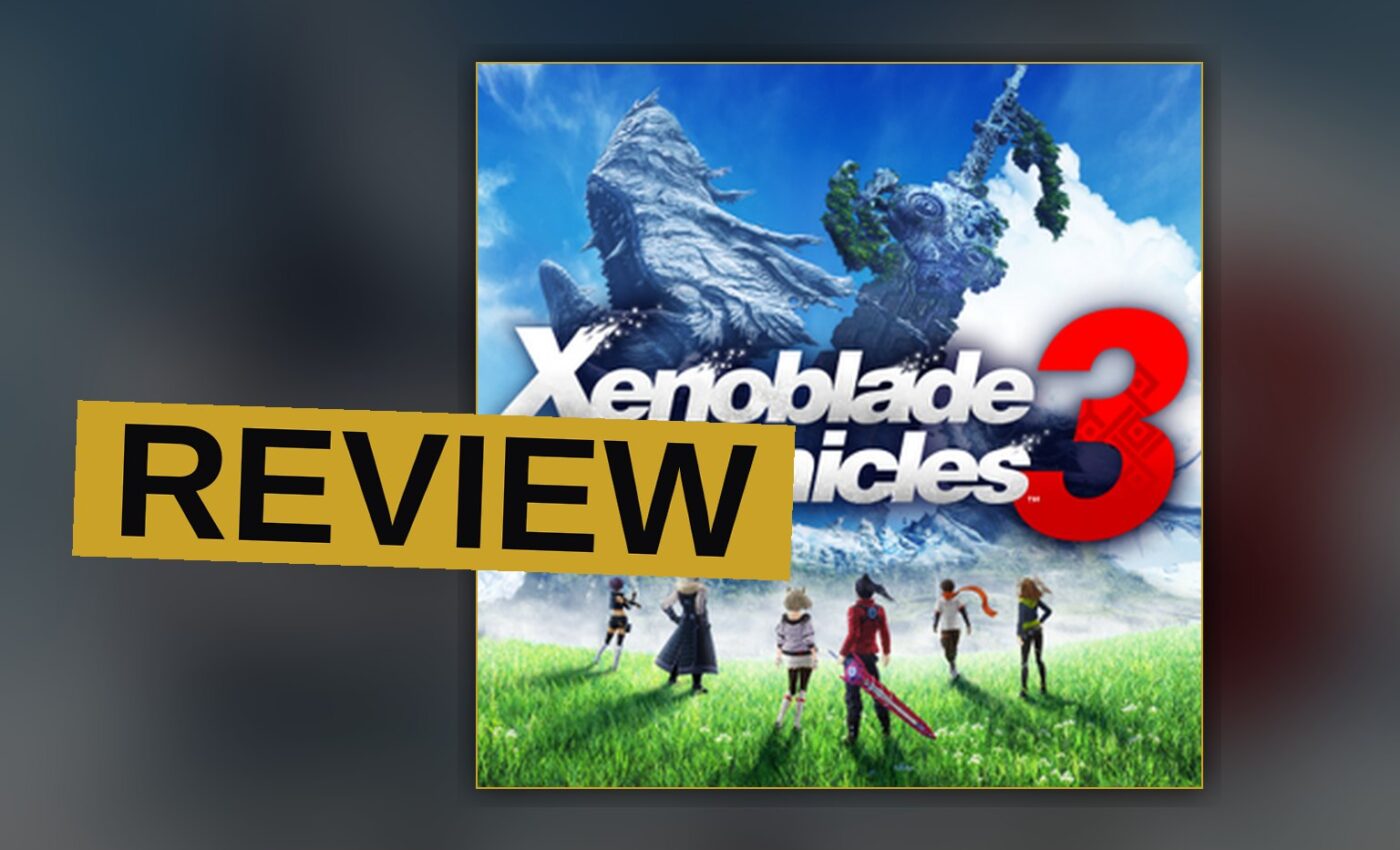
Xenoblade Chronicles 3 is a game about the weight of a lifetime, and it asks you to carry that weight across a world that never stops moving. The third entry in Monolith Soft’s sprawling JRPG series lands on Switch as the most complete and emotionally direct version of the franchise yet.
The game takes place on Aionios, a land locked in an endless war between the nations of Keves and Agnus. Soldiers from both sides are born in pods, live for ten short terms, and die in battle, their lives measured in missions rather than years. That premise sounds grim, and it is. But this is not a dirge; it is a story about finding meaning inside a system that wants you to be disposable.
The World of Aionios and Its Colonies
Six soldiers — three from each nation — cross paths and discover that their war is built on a lie. They break away from their commanders and set out for the City, a rumored sanctuary where people live full lives. The party is led by Noah, an off-seer who plays a flute to send the fallen to the afterlife, and Mio, a soldier from Agnus whose remaining time is shorter than anyone else’s.
Their relationship is the spine of the game, handled with a restraint that makes the big moments land hard. The voice cast is strong, and the writing avoids the melodrama that often sinks this genre. The jokes feel earned; the sadness never tips into misery.
The map is enormous, the best version of this series’ design philosophy. Each region is a layered puzzle box of cliffs, caves, rivers, and hidden paths. You get a clear objective, but the game constantly invites you to wander: landmarks to climb, ruins to explore, dozens of side quests that actually matter.
Most of these quests come from the colonies you liberate, and they are not the usual fetch-and-kill filler. They are small stories about soldiers learning to cook, to farm, to play music — the ordinary acts of living that the war has denied them. Completing them raises your affinity with each colony, unlocking new items and revealing more of the map. The loop feeds on itself and is hard to stop.
The Combat and the Ouroboros System
Combat is real-time and builds on the previous games. You control one character, but your whole party fights in sync, and positioning matters. Each character has a class, and you can switch classes freely once unlocked, letting you experiment with team composition.
The key mechanic is the Chain Attack, a meter that fills as you land hits and lets you unleash coordinated strikes. It is flashy and satisfying, but the real depth comes from the Ouroboros system: when two party members are linked, they can fuse into a giant form with its own moveset. The fusion is not just a power-up but a metaphor for the trust between the characters.
A Story About Time and Choice
The narrative is where Xenoblade Chronicles 3 makes its strongest argument. The soldiers of Aionios do not age past their tenth term; they simply vanish. It gives every conversation stakes most RPGs lack. Mio’s remaining time is shown on screen as a countdown; the game does not let you forget it. The plot slows down for quiet scenes — long stretches where the party just talks are often the best parts. The villains are not cartoonish; they are systems, and the game is smart enough to show the people running them are trapped too.
The game’s length is a double-edged sword. The main story runs well past 60 hours, and side content can push that past 100. Not every hour is equal: the middle chapters dip as the party moves from one similar dungeon to the next, and tutorials keep arriving long after you have mastered the basics. But the game never punishes you for exploring and never locks critical story beats behind grinding. You can see the credits in a straight line, or dig deeper and be rewarded.
The Music and the Quiet Moments
The soundtrack, composed by Yasunori Mitsuda and a team of contributors, is the best score in the series. The main battle theme is a driving rock piece, but the emotional core is carried by the quieter tracks. The off-seeing theme, played by Noah’s flute, is a simple melody that recurs throughout the game — a leitmotif used sparingly, which keeps it powerful.
The sound design is strong: a constant ambient hum of wind and water, and creatures that sound biological rather than canned. The Switch presentation is a compromise: dynamic resolution that drops in busy areas and a frame rate that stutters in the biggest battles. Players with a high-end PC will notice, but the art direction is so strong the compromises are easy to forgive. The character designs are distinct, the environments vivid, and the lighting in the sunset scenes genuinely beautiful.
The Party and Their Roles
| Character | Nation | Starting Class | Role in the Story |
|---|---|---|---|
| Noah | Keves | Swordfighter | The off-seer, the moral center |
| Mio | Agnus | Zephyr | The soldier with limited time |
| Eunie | Keves | Medic Gunner | The blunt, comic relief |
| Taion | Agnus | Tactician | The strategist, the skeptic |
| Lanz | Keves | Heavy Guard | The brawler, the loyalist |
| Sena | Agnus | Ogre | The powerhouse, the insecure |
The six are not just stats on a screen; the game spends its runtime building this unit into a family. The conversations between battles are a highlight, written with natural rhythm and delivered with warmth. An early scene where the party cooks a meal together is one of the most affecting moments in the entire series. That is the game’s strength: it makes you care about these people, then puts them in danger.
Why It Works and Where It Falters
The game is not flawless. The side quests, while better than the genre average, still rely on a lot of back-and-forth travel. The menu system is dense, and the game explains its systems at a slow pace that can feel condescending to veterans. The final act introduces a few plot twists that stretch credibility, and the ending, while satisfying, leaves some threads dangling. But these are minor complaints against a game that achieves so much.
- The combat is deep and rewarding.
- The story is emotionally honest.
- The world is vast and worth exploring.
- The soundtrack is excellent.
- The characters are memorable.
- The pacing dips in the middle.
Its greatest achievement is making you feel the passage of time. In a genre that often treats death as a checkpoint, Xenoblade Chronicles 3 treats it as a fact of life. The soldiers of Aionios do not get to grow old or retire; they get ten terms, and then they are gone. It asks you to sit with that, and gives you characters whose refusal to accept it drives the plot and makes the game hard to put down. The final hours are a marathon of set pieces and emotional payoffs, and it earns every one.
A rare blockbuster willing to be quiet when it needs to be, Xenoblade Chronicles 3 is a landmark for the Switch and the genre — long, ambitious, occasionally uneven, but the most human game in the series. It is a story about soldiers who learn to live, told with grace.