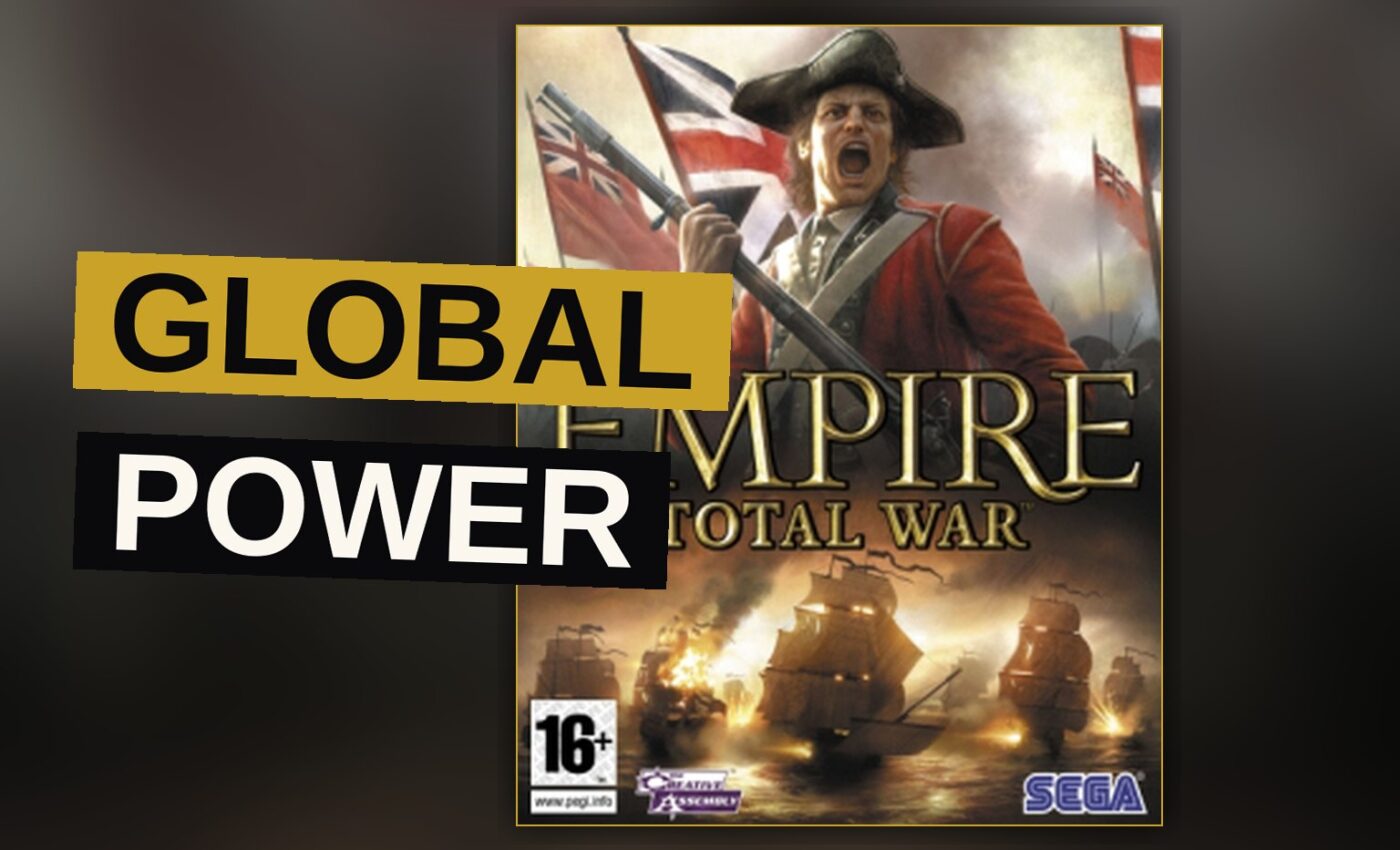
Empire: Total War asks a question few strategy games dare to pose: what does it actually take to run a global power? The answer, delivered across a campaign map that spans three continents, is a complex web of trade, diplomacy, technology, and war. It is a game that expects you to think like a statesman, an economist, and a general all at once. The result is a sprawling, demanding, and frequently brilliant experience that still stands as a high point in the genre. It earns a score of 9 of 10.
Trailer, via Feral Interactive.
Scope Beyond Borders
The game’s core hook is its scale. You are not just fighting battles; you are managing a global empire. The campaign map stretches from the Americas to India, and every region matters. Trade routes across the Atlantic and Indian Oceans are lifelines, and controlling them is as important as winning a field battle. The game captures the feeling of managing a world power, where a decision in Europe can have consequences in the Caribbean.
This scale is both a strength and a source of complexity. The sheer number of theaters can be overwhelming. You might be fighting a war in Europe while your colonies in the Americas are under threat and your trade routes are being raided. The game expects you to prioritize, and it does not always make that easy. The interface, while functional, can feel cluttered, and it takes time to understand the flow of information across your entire domain.
Ideas as Weapons
The campaign is where Empire: Total War truly shines. The game is set in the Age of Enlightenment, and this is reflected in its systems. Technology is not just a research tree; it is a path to power. You can invest in new farming techniques, better ship designs, or the philosophical ideas that will shape your government. This adds a layer of strategic depth that goes beyond simple military conquest.
The game gives you the tools to pursue either path, and the emergent narratives that arise from your decisions are what make the experience so compelling.
You are not just a general; you are a head of state. Diplomacy is a complex dance of alliances, trade agreements, and threats. The game gives you a range of options, from offering subsidies to declaring war. The AI is not always predictable, which can lead to both frustrating betrayals and surprising partnerships. Managing your empire’s finances is a constant balancing act, and building the right combination of schools, factories, and farms is key to long-term success.
Thunder of Cannon
The battles in Empire: Total War are a spectacle. The focus is on line infantry, and the game does a fantastic job of conveying the power of a well-drilled firing line. The sound of musket volleys and the roar of cannon are immersive, and the sight of your troops holding a hill against a charging enemy is genuinely thrilling. The addition of naval warfare is a major highlight, as it is a separate and complex challenge that requires a different set of tactics.
The tactical battles are not without their flaws. The AI can sometimes be hesitant or make strange decisions, particularly in siege situations. The pathfinding for units can also be problematic, with soldiers sometimes getting stuck on terrain or buildings. However, these issues are often overshadowed by the sheer drama of the battlefield. A well-executed flanking maneuver or a desperate last stand can be a memorable moment.
Age of Sail
Naval combat is a game within a game. Managing a fleet of ships, each with its own crew and armament, is a unique challenge. You must consider wind direction, ship positioning, and the type of ammunition you are using. Chain shot can disable a ship’s sails, while grape shot is devastating to enemy crews. The battles are slower and more methodical than land engagements, but they are no less tense.
The campaign map and the battle map are seamlessly connected. When your fleet engages an enemy, you are taken to a 3D naval battle. This integration is smooth and helps to maintain immersion. However, the naval AI can be a bit passive, and it is often easier to auto-resolve naval battles than to fight them manually. Despite this, the option to engage in these complex naval engagements adds a layer of depth that few other strategy games offer.
Long Road to Victory
The game’s main campaign mode is a long and demanding affair. You can choose from a number of major powers, including Great Britain, France, Spain, and the Ottoman Empire, each with its own unique starting position and objectives. The game’s turn-based structure allows for careful planning, but it also means that a single campaign can take dozens of hours to complete. This is not a game for a quick session.
The path to victory is not always clear. You are given a set of objectives, but the game is at its best when you are creating your own story. Do you focus on expanding your empire through military might, or do you build a commercial powerhouse and dominate the world through trade? The game gives you the tools to pursue either path, and the emergent narratives that arise from your decisions are what make the experience so compelling.
History in Motion
Empire: Total War is set in a period of significant historical change, and the game does a good job of incorporating this into its design. The emergence of new ideologies, the rise of the nation-state, and the struggles for colonial dominance are all represented in the game’s mechanics. This gives the game a sense of purpose and place that is often missing from more generic strategy titles.
This historical grounding is not just cosmetic. The game’s tech tree is tied to historical developments, and the events that occur during a campaign often reflect the real-world tensions of the era. This attention to detail helps to create a believable and engaging world. It is a game that rewards players who are interested in the period, as their knowledge can help them make strategic decisions.
Flaws and All
Empire: Total War is not a perfect game. It has its share of bugs and quirks, and its age is showing in some of its systems. The AI can be inconsistent, and the interface can be unwieldy. However, these flaws are minor compared to the game’s many strengths. The sheer scope of the game, the depth of its systems, and the drama of its battles make it a truly exceptional experience.
It is a game that demands patience and strategic thinking, but it rewards that investment with a rich and memorable experience. For fans of strategy games, Empire: Total War is a title that should not be missed. It is a high point in the genre that few have matched since.
Empire: Total War earns a score of 9 of 10.
Get the Notebook.
The day's best stories and every fresh verdict, in plain English, in your inbox by seven. One email a day, no more.