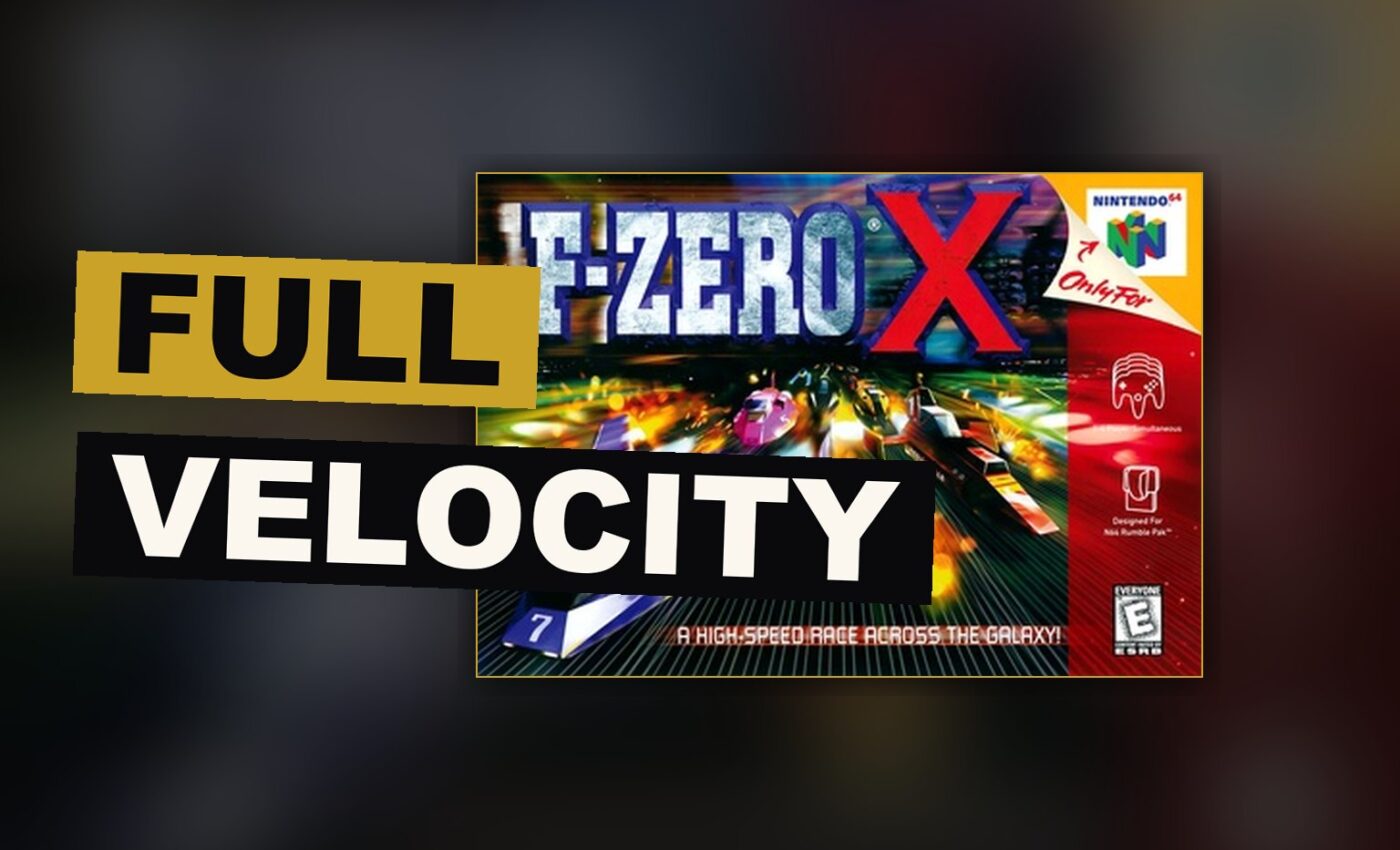
F-Zero X arrives on the Nintendo 64 with one goal: velocity. It delivers that goal at a pace few racing games of its time can match, running at 60 frames per second even as thirty machines fight for position on the track.
Velocity as the Point
The game removes detail to keep the frame rate high. Tracks look plain. Cars look simple. Nintendo decided on that exchange on purpose, and the result is a sense of pace that still feels precise today.
Thirty racers start every heat. That number alone sets F-Zero X apart from most console racers of 1998, which rarely field more than a dozen cars at once.
Courses twist through bends, rises and narrow paths with no barriers at the edge. Fall off and the run ends. Some tracks change shape as a race plays out, opening new ways forward or removing old ones without warning.
Contact matters. Cars carry an energy meter that drops with every strike against another car or push forward. Press too hard and a machine breaks apart before the finish line. Play too carefully and the pack moves ahead. The balance between the two is where the game finds its edge.
Death Race and the Machines
Death Race mode cuts the contest down to one job: destroy every rival car on the track. There is no rank and no course to finish, only a field of enemy machines to take out. It plays almost nothing like the main game, and it works as a short break between longer sessions.
Thirty vehicles make up the roster, split across four weight classes. Cars of greater weight hit harder and last longer. Lighter ones turn faster and push forward with less cost to their energy meter.
By The Numbers
- Platform: Nintendo 64
- Frame rate: 60 frames per second
- Racers per heat: 30
- Vehicle roster: 30 machines across four weight classes
- Modes: main championship mode, Practice, Death Race, multiplayer mode, X Cup
- Score: 8.5 of 10
Multiplayer and X Cup
Up to four players can race at once, though the frame rate and detail scale back to hold the pace steady with a full human field. The X Cup mode brings a larger track list beyond the fixed set of courses the game builds on its own, giving players more ground to cover than the base cartridge lists up front.
The controls hold up under all of this. Pressing forward to push, turning to drift, and striking a rival react the instant a player presses the button, with no delay between the button press and the result on screen. That promptness is what keeps a field of thirty cars in close quarters feeling fair instead of random.
Race Modes at a Glance
| Mode | Format | Cars | Notes |
|---|---|---|---|
| Main championship | Series of races, ranked | 30 | Core campaign mode |
| Practice | Single track, alone | 30 | No ranking pressure |
| Death Race | Destroy all rival cars | Varies | No rank, no finish line |
| Multiplayer mode | Local play | Up to 4 players | Reduced detail on screen |
| X Cup | Larger track list | 30 | Adds courses beyond the fixed set |
The sound design tends toward a hard techno score that matches the pace on screen, though it will not appeal to every player. Menus move quickly and stay free of mess, letting a player drop into a race within seconds of turning the console on.
Presentation and the Verdict
Where the game falls short is presentation. Tracks are plain, textures are simple, and cars lack the polish found in other N64 titles from the same year. Nintendo decided in favor of frame rate over graphics, and that decision will read as either a clever exchange or a disappointment depending on what a player wants from the console.
F-Zero X is not a game for players who want detail or spectacle. It is a game for players who want to move fast and stay in control while doing it. The large fields and the Death Race mode both serve that single purpose without much else drawing focus away.
Few racers on the Nintendo 64 move like this one does. The plain look holds it back from feeling like a complete package, but the pace and control at its core make it one of the finest racing games on the console.