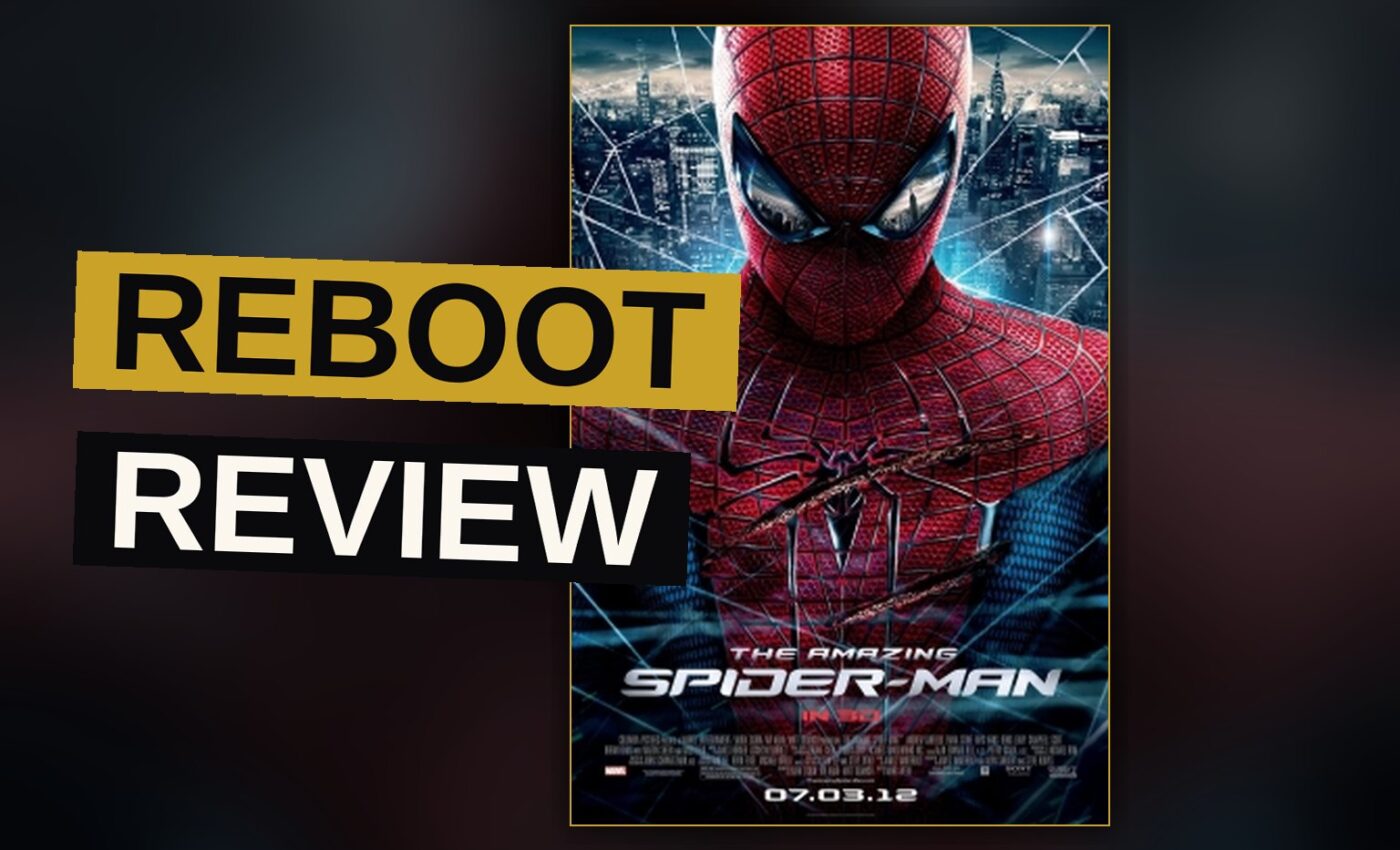
The 2012 film The Amazing Spider-Man is a reboot that nobody asked for, arriving just five years after Sam Raimi’s trilogy concluded. It is also, against the odds, a picture that earns its own reason to exist. The film trades the earlier series’ glossy studio polish for a grainy, hand-held realism, and the trade mostly works.
Director Marc Webb, best known for the indie romance (500) Days of Summer, grounds the origin story in teenage awkwardness and quiet grief. Andrew Garfield takes over the mask from Tobey Maguire, and his Peter Parker is a skateboarding loner with a chip on his shoulder. The film spends its first hour on the mystery of Peter’s parents, a subplot the 2002 movie ignored entirely. That choice gives the picture a melancholy spine that the Raimi version never had.
Trailer, via Sony Pictures Entertainment.
Garfield Carries the Mask
Garfield is the best thing in The Amazing Spider-Man. His Peter is a smart-mouth with a fast wit and a faster temper, but Garfield never lets the coolness curdle into arrogance. When Peter gets his powers, the film shows him fumbling — crashing into lockers, breaking a bathroom sink, startling himself with his own reflexes. It is a small, physical performance that sells the transformation better than any special effect.
The romance with Gwen Stacy, played by Emma Stone, also lands better than the Mary Jane relationship in the earlier films. Stone and Garfield share a loose, teasing chemistry. Their scenes together feel like two smart kids actually enjoying each other’s company, not actors hitting marks. The film makes Gwen a working scientist’s daughter with her own ambitions, and it treats her intelligence as an asset rather than a burden.
Peter’s uncle Ben, played by Martin Sheen, gets a bigger role here than in the 2002 version. The film spends real time on the Parker household, showing a family that argues and laughs and carries grief. When Ben dies — and the film does not shy from the brutality of that moment — the loss lands with weight. Sheen plays Ben as a man who knows he failed his nephew once and is trying, too late, to fix it.
A Villain Who Doesn’t Land
The villain is where The Amazing Spider-Man stumbles. Dr. Curt Connors, played by Rhys Ifans, is a one-armed scientist who turns himself into a giant reptile. The character’s motivation — to regrow his limb and, in doing so, rid the world of weakness — is clear enough. But the design of the Lizard is a mess of CGI scales and glowing eyes, and the creature never feels like a real threat.
The action scenes with the Lizard are noisy and dark, often shot so close that the geography of the fight is hard to follow. A sequence on a school rooftop has a few good beats, but the final showdown at Oscorp’s tower devolves into the usual smash-and-crash. The film’s best action moment is actually a quiet one: Peter, suspended from a crane, uses his web to save a falling construction worker. It is a small, human gesture, and it works better than any of the monster punches.
The script, credited to James Vanderbilt and the duo of Alvin Sargent and Steve Kloves, carries a few too many plot threads. The parent mystery, the Connors arc, the romance, and the high school drama all compete for screen time. The film runs 136 minutes, and it feels every one of them. Some scenes drag badly.
What Saves the Picture
What saves The Amazing Spider-Man is its commitment to Peter’s interior life. The film is less interested in the spectacle of super-heroics than in the loneliness of the person behind the mask. Garfield plays Peter as a boy who has been abandoned twice — first by his parents, then by his uncle — and who is terrified of being left again. That fear drives him to hide his identity from Gwen, even as he loves her.
The film also makes a smart choice about Peter’s powers. He does not master them overnight. He spends days in an abandoned warehouse, practicing, failing, and practicing again. The montage is brief but effective, showing a kid who earns his skill through repetition. It is a small touch, but it makes the hero feel more real.
The supporting cast helps. Sally Field plays Aunt May with a frayed, worried energy. Denis Leary, as Captain Stacy, brings a gruff authority to the role of Gwen’s father. His scenes with Garfield crackle with tension, especially when the captain realizes the masked vigilante is the boy dating his daughter. The film’s final act, which hinges on a promise Peter makes to Captain Stacy, has a genuine emotional payoff. It is a rare superhero movie where a death actually changes the hero’s behavior.
“You are Spider-Man. You have a gift. You have power. And with great power, there must also come great responsibility.”
That line, spoken by Ben Parker, is a near-verbatim echo of the famous motto from the comics. The film does not belabor it. Ben says it once, quietly, and the movie trusts the audience to remember it. That restraint is typical of the picture’s best instincts.
The Bottom Line
The Amazing Spider-Man is not a great movie. Its villain is weak, its pacing is uneven, and its action scenes lack clarity. But it is a sincere one. It takes the character seriously without taking itself too seriously. Garfield’s performance carries the picture, and Webb’s direction gives the story a tactile, grounded feel that the glossy sequels of the 2000s lacked.
The film was followed by a sequel in 2014 and then canceled, its story cut short by studio politics. That is a shame, because the foundation laid here — a hero with real grief, a love interest with real agency, a city that feels lived-in — was worth building on. As a standalone picture, it holds up better than its reputation suggests. It is flawed, but it is never boring.
Score: 6.8 out of 10.