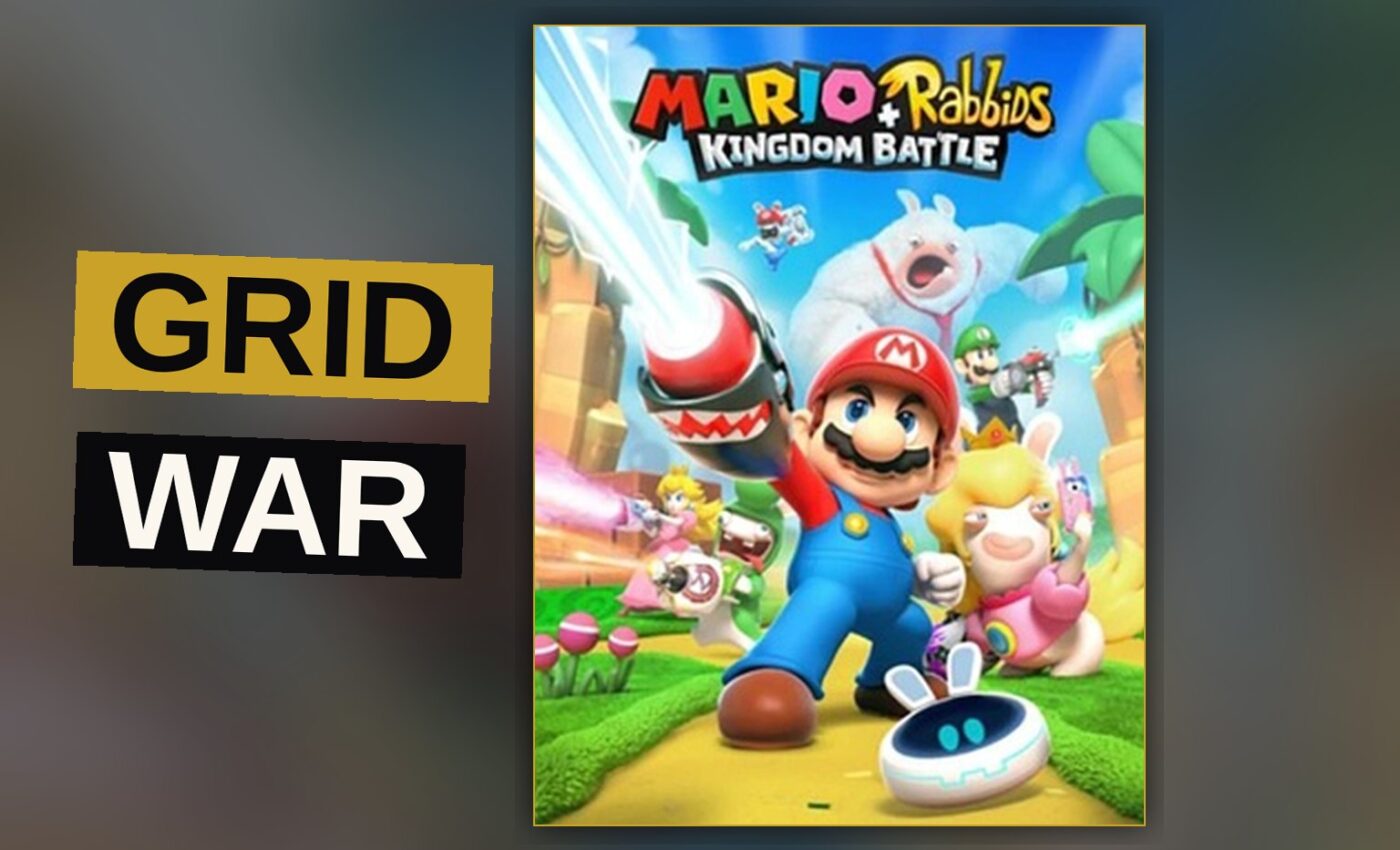
Mario + Rabbids Kingdom Battle is a tactical strategy game that asks players to treat a plumber and a rabbit like chess pieces. It works. Ubisoft took the turn-based combat system from its own WarioWare: Touched! and wrapped it around Nintendo’s most famous characters, then added a toy-like art style that makes every battle look like a tabletop game you could pick up and set down yourself. The result is a game that feels both familiar and fresh, a hybrid that respects its source material while building something distinctly its own.
Trailer, via IGDBcom.
The Setup
The premise is simple. Bowser has stolen Princess Peach, and Mario, Luigi, Princess Daisy, and Toad are left to chase him across a series of kingdoms built around different themes. Along the way, they meet the Rabbids, a group of pink rabbits who have been turned into soldiers by Bowser’s forces. The Rabbids join the heroes, and the game becomes a shared mission to save Peach and stop Bowser.
Each character has a set of skills, weapons, and gear that determine how they move and fight. Players choose which character to move each turn, and the battlefield is laid out in a grid that rewards planning and punishes rushing. The game also introduces a “Wisdom” system, which lets players spend points earned during battles to upgrade abilities, buy new equipment, or unlock additional moves.
The Grid System
The core mechanic is a grid-based movement system. Characters can move through open spaces, climb ladders, jump over obstacles, and perform a limited set of actions per turn. The enemy AI is clever enough to react to player movements, forcing players to think several steps ahead. The game does not hold the player’s hand, and early levels can feel dense with options.
Battles are won through careful positioning and timing. Players can attack, block, dodge, and use items to change the battlefield. The game encourages experimentation, and the controls are precise enough that a missed button press rarely feels like a failure of the system itself.
The Toy Look
The visual design is a major draw. Everything looks like it was made from plastic toys, with exaggerated shapes, bright colors, and a clean, readable layout. The character models are expressive, and the environments are packed with small details that reward exploration. The toy aesthetic carries over into the menus and loading screens, making the whole package feel cohesive.
The sound design matches the visuals. The music is cheerful and energetic, with a mix of orchestral and electronic elements that fit the game’s playful tone. Sound effects are punchy and distinct, so players know exactly what an action does without looking away from the screen.
The Difficulty Curve
The difficulty ramps up steadily throughout the campaign. Early levels are forgiving, teaching the basics of movement and combat. Later stages introduce new enemy types, tighter grids, and more demanding objectives. Boss fights require careful planning and execution, and the game does not offer hints beyond the basic rules.
Some players may find the later levels frustrating, especially when enemy numbers stack up and the battlefield shrinks. The game does not provide a difficulty setting, so players who want an easier challenge are stuck with the default. That said, the game’s difficulty is consistent, and the sense of achievement after a tough win is genuine.
The Multiplayer Mode
The game includes a multiplayer mode that lets two players compete or cooperate on the same screen. This mode adds a layer of social interaction that the single-player campaign lacks. Players can share strategies, coordinate attacks, and banter with each other as they work through levels together.
The multiplayer mode is a separate experience from the main campaign, and it offers its own set of challenges and rewards. It is a nice addition, though it is not essential to the overall package.
The Final Word
Mario + Rabbids Kingdom Battle succeeds because it takes a proven formula and applies it to a beloved franchise with confidence. The tactical depth is real, the presentation is charming, and the difficulty is fair. It is not a perfect game, and some players may find the late-game challenges too steep, but the overall experience is rewarding.
The game is available on multiple platforms, and the Switch version plays at a smooth frame rate with a fast load time. The game also supports amiibo cards, which can be used to unlock cosmetic items and special abilities.
Here is what stands out about the game:
- A toy-like art style that fits the tactical gameplay
- A grid-based movement system that rewards patience
- A Wisdom system that adds replay value
- A multiplayer mode that extends the fun beyond the campaign
- A difficulty curve that stays fair throughout
The game is a strong entry in the genre, and it earns its place alongside other tactical strategy games. It is a game that respects its source material while building something new on top of it.
Get the Notebook.
The day's best stories and every fresh verdict, in plain English, in your inbox by seven. One email a day, no more.