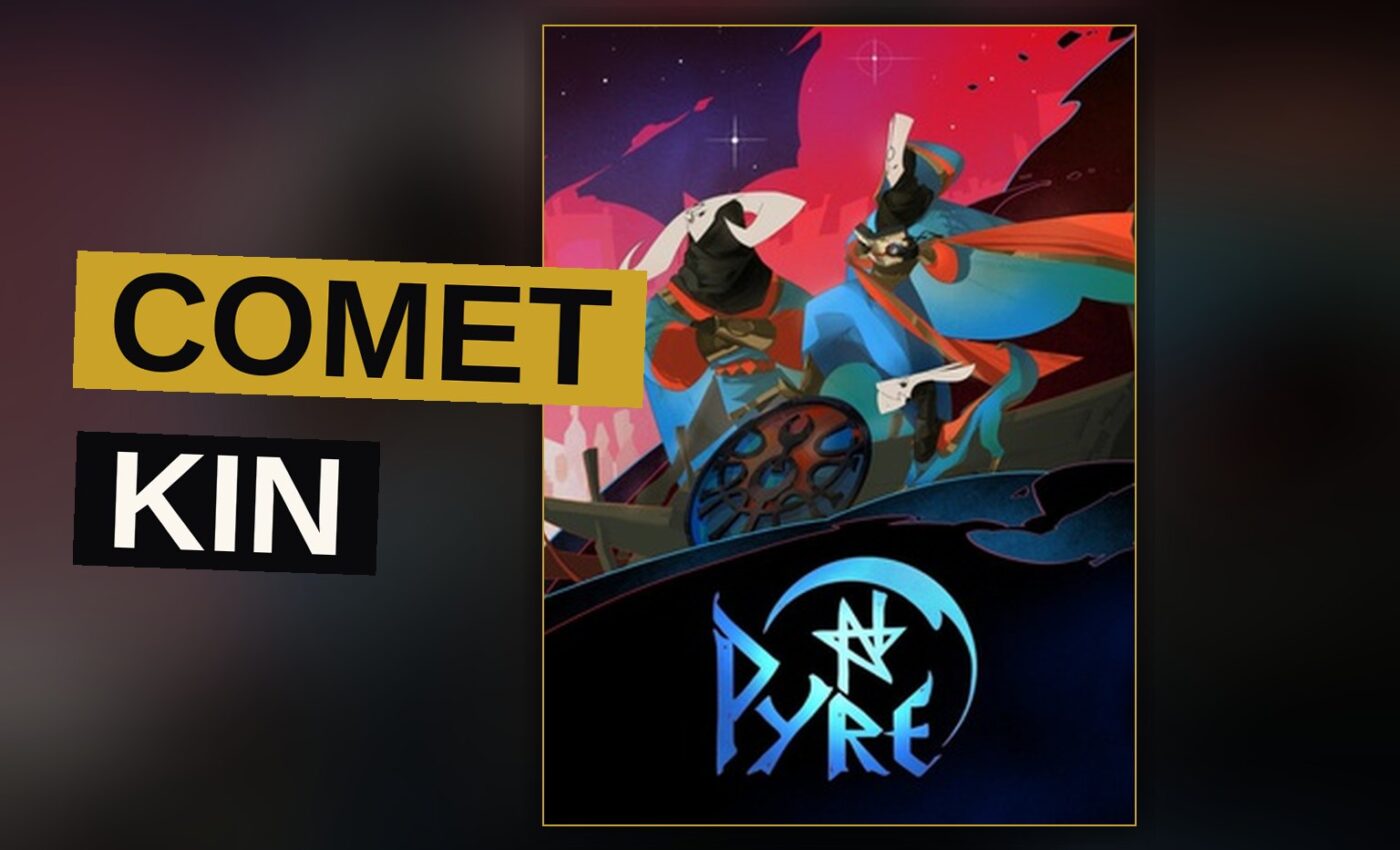
Pyre is a game about failure. It asks you to lose, to die, and to start over again. That sounds grim, but it isn’t. Pyre is a triumph of design, a game that turns its central mechanic into a philosophy. It’s a roguelike wrapped in a fantasy epic, built on a simple loop of three-person combat, ritual, and conversation. It’s also a rare thing: a game that makes losing feel meaningful, even when the stakes are literally life and death.
The game follows the Comet Kin, a group of outcasts who live outside the civilized kingdoms of the Realm. They are exiles, criminals, and those deemed unfit by society. Their world is ruled by a council of kings, each one a god-like figure who governs a different aspect of life. The Comet Kin exist in the margins, and their story is about finding a place to belong, even in a world that doesn’t want them.
Trailer, via IGDBcom.
The Ritual of Fire
The core loop of Pyre is a fire ceremony. Each match involves three characters, and you move them across a field, dodging enemy attacks while trying to set your allies ablaze. The fire spreads, and the team that gets their entire line ablaze first wins. It sounds simple, but the mechanics are deep. You have to manage positioning, timing, and the strengths of each character. Some characters can block attacks, some can heal, and some can boost your chances of igniting.
The matches are tense. Every loss costs you a life, and losing too often means the game ends. This creates a constant pressure to perform, to read the battlefield, and to make the right call. It’s a system that rewards patience and punishes greed. The game never tells you this directly, but the design teaches you that aggression has consequences.
The Companions
The characters you recruit are the heart of Pyre. Each one has a backstory, a personality, and a skill set. They are not just tools for combat. They talk to you, they argue with each other, and they form bonds that carry the narrative forward. The game’s dialogue is sharp, often funny, and always human. The companions are memorable because they are treated as people, not as assets.
The game’s writing is excellent. The dialogue is full of wit, and the characters have distinct voices. The banter between the members of the Comet Kin is a joy to listen to. The game also handles serious moments with grace, letting the weight of the story land without forcing it. The companions are the reason you care about the outcome, and their relationships are the emotional engine of the game.
The World of the Realm
The setting is a strange, dreamlike place. The kingdoms are named after the elements: the Kingdom of Stone, the Kingdom of Flame, the Kingdom of Water. Each region has its own visual identity, from the crumbling ruins of Stone to the fiery peaks of Flame. The art direction is stunning, with hand-painted backgrounds and detailed character portraits. The game looks beautiful, and the world feels lived-in.
The music is a highlight. The soundtrack blends folk instruments with electronic textures, creating a sound that feels both ancient and modern. The main theme, “Pyre,” is a haunting melody that sets the tone for the entire game. The audio design is subtle but effective, with sound effects that enhance the atmosphere without overwhelming it.
The Difficulty Curve
The difficulty in Pyre is high. Losing is frequent, and the game doesn’t hold your hand. There are no tutorials beyond the basic mechanics, and the early matches can be punishing. However, the game is fair. Every loss teaches you something, and the systems are consistent enough that you can improve through practice.
The game’s difficulty curve is steep, but it rewards persistence. The challenge is not arbitrary. It forces you to learn the systems, to understand the enemy patterns, and to adapt your strategy. The game respects your intelligence, and that respect is what makes the victories feel earned.
The Story
The plot of Pyre is a slow burn. It unfolds through conversations, flashbacks, and brief cutscenes. The story is about redemption, belonging, and the cost of freedom. It’s a tale of people who have been cast out, and their journey back to something resembling a home. The narrative is character-driven, and the ending is bittersweet. It doesn’t tie everything up neatly, but it leaves you with a sense of closure.
The game’s narrative structure is episodic. Each chapter introduces new characters, new locations, and new challenges. The pacing is deliberate, and the game takes its time. This can be frustrating if you’re used to fast-paced storytelling, but it pays off in the end. The slow build allows the emotional payoff to land harder.
The Roguelike Structure
Pyre is a roguelike, which means you lose progress when you die. The game has permadeath, and the difficulty means that failure is a regular occurrence. This creates a tension that permeates the entire experience. You are constantly aware that your actions have consequences, and that your choices could lead to the end of the game.
The roguelike structure is a double-edged sword. On one hand, it adds replayability and depth. On the other hand, it can be frustrating. The game is designed to be played multiple times, and each run offers a slightly different experience. The randomness of enemy encounters and item drops means that no two playthroughs are identical. This variety keeps the game fresh, even after dozens of hours.
The Comparison Table
| Element | Pyre |
|---|---|
| Genre | Roguelike, fantasy |
| Platforms | PS4, Linux, PC, Mac |
| Setting | The Realm, a kingdom of exiles |
| Core mechanic | Three-person fire matches |
| Difficulty | High, with permadeath |
| Narrative structure | Episodic, character-driven |
| Critical score | 8.6/10 |
Key Facts Box
- Title: Pyre
- Developer: Supergiant Games
- Publisher: Supergiant Games
- Platforms: PS4, Linux, PC, Mac
- Release date: 2017
- Critical score: 8.6/10
Pyre is a game that demands your attention. It’s not for everyone, but for those who stick with it, it offers a rewarding experience. The combat is engaging, the world is beautiful, and the story is compelling. It’s a game that understands the power of failure, and it builds its entire structure around that understanding.
The game’s greatest strength is its ability to make you care. You will lose characters you’ve grown attached to, and you will feel the loss deeply. But the game never lets you wallow. It pushes you forward, toward the next match, toward the next conversation, toward the next chance to win. It’s a game about resilience, and it earns that message through its design.
Pyre is a masterpiece of game design. It takes a simple idea and builds a rich, complex experience around it. The combat is satisfying, the world is immersive, and the story is unforgettable. It’s a game that deserves your time, and it will repay that investment with some of the best moments in recent memory.
Get the Notebook.
The day's best stories and every fresh verdict, in plain English, in your inbox by seven. One email a day, no more.