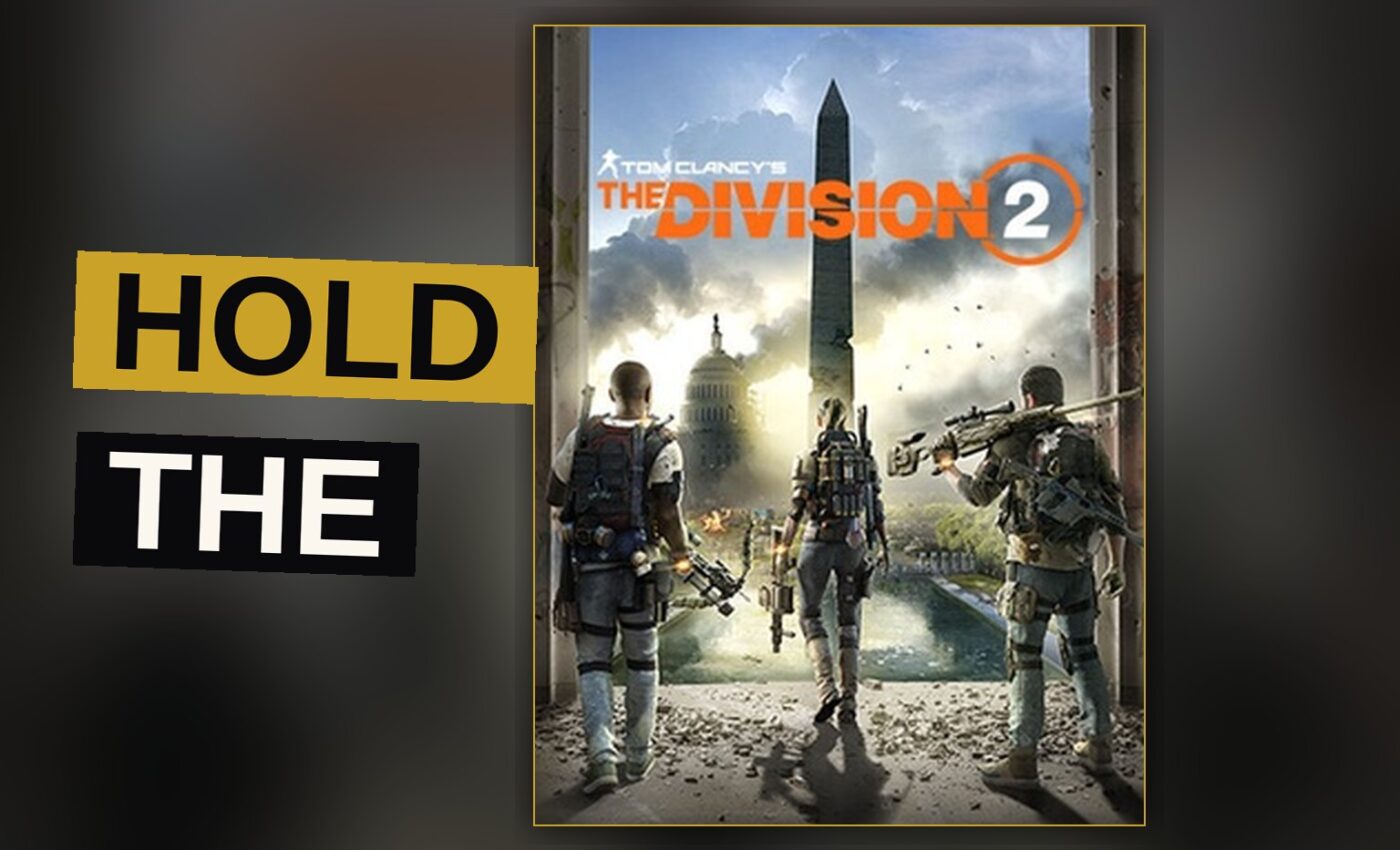
Tom Clancy’s The Division 2 opens with a city already lost. Washington, D.C. has fallen into lawlessness. The acting president is missing after Air Force One goes down, and five factions have carved the capital into territories. The Strategic Homeland Division sends you in anyway.
Trailer, via IGDBcom.
Green Poison and the Fall of Washington
The Division 2 is a 2019 online-only action role-playing game developed by Massive Entertainment and published by Ubisoft. It is the sequel to Tom Clancy’s The Division (2016). The game is set in a near-future Washington, D.C., seven months after the release of a genetically engineered virus called “Green Poison.” A civil war between survivors and marauder bands has broken out. You play an agent of the Strategic Homeland Division trying to rebuild the city.
Massive built the game with Ubisoft Reflections, Red Storm Entertainment, and Ubisoft studios in Annecy, Paris, Bucharest and Shanghai. The team looked at other cities before settling on Washington, drawn by its diverse environments, landmarks and monuments. They consulted first responders and emergency management experts while building the post-apocalyptic world, and drew on real disasters for inspiration.
Five Factions, One Broken Capital
The factions give the open world its shape. The Joint Task Force holds the White House and tries to protect civilians and re-establish order. The Civilian Militia supports the JTF from settlements across the city. The Hyenas, a coalition of gangs, criminals and anarchists, run the District Union Arena and take the chaos as entertainment and profit. The Outcasts, survivors of severe quarantines based on Roosevelt Island, want revenge on everyone they blame for their imprisonment and infection.
| Faction | Base | Goal |
|---|---|---|
| Joint Task Force | White House | Protect civilians, re-establish order |
| Civilian Militia | City settlements | Support the JTF |
| Hyenas | District Union Arena | Profit and amusement from chaos |
| Outcasts | Roosevelt Island | Revenge for quarantine and infection |
| True Sons | The Capitol | Order through authoritarianism |
Each faction fights differently, and the game adds enemy types the first title did not have — healers, and characters who shoot foam at players.
Cover, Clans and SHD Tech
Combat is cover-based third-person shooting. Up to four players can run missions together. You build your own agent at the start, choosing gender and appearance, then kit them out with grenades, assault rifles, sniper rifles and submachine guns. Weapons come in tiers and rarities. High-quality guns are hard to get but carry better statistics and “talents” that lift your performance. Optics, iron sights and barrel attachments let you tune them further.
Gear works the same way. Wearing pieces from the same brand gives a small performance boost. Missions pay out loot and experience points. Enough XP levels you up and earns SHD Tech, the currency for new skills: gun turrets, shields, combat drones, seeker mines and chemical launchers. Every skill has mods that change what it does.
| System | What it does |
|---|---|
| SHD Tech | Unlocks skills like turrets, shields, drones, seeker mines and chemical launchers |
| Brand gear sets | Same-brand pieces give a small performance boost |
| Weapon talents | High-rarity guns carry stat boosts and talents |
| Clan XP | Up to 50 members contribute; upgrades earn gameplay benefits |
Players can call for backup mid-mission, which lets others join their session. Clans hold up to 50 players, and every member’s actions feed clan XP that upgrades the clan for extra benefits.
The Endgame Bet
The most important design decision here is not the setting or the shooting. It is the endgame. Massive evaluated feedback from players of the first game and decided to have more-robust endgame content at launch. That is the part of the pitch the studio put its weight behind.
The Division 2 was released for PlayStation 4, Windows and Xbox One on March 15, 2019. It has since come to Google Stadia, PlayStation 5 and Xbox Series X|S. Critics gave it generally favorable reviews.
The plot sends you to D.C. after ISAC, the Division’s AI system, suddenly shuts down. You leave a civilian settlement under bandit attack and travel to the capital to help the JTF fend off the Hyenas. Manny Ortega, the city’s Division controller, briefs you. He and fellow agent Alani Kelso send you to assist settlements, liberate the city from the factions, and restore ISAC. Along the way they uncover information about a possible cure to Green Poison.
What Holds Up and What Doesn’t
The Washington setting does real work. D.C. gives Massive monuments, landmarks and varied terrain to rebuild. The faction map spreads five groups across distinct districts, from the White House to Roosevelt Island to the Capitol. Those are not interchangeable locations, and the game treats them as separate fronts.
The gear and skill systems carry the long tail. SHD Tech opens skills beyond the starting kit, and brand sets reward players who think about builds rather than just grabbing the highest number. The clan system ties individual play to a group of up to 50.
Where the game is thinner is in what it asks of you emotionally. The Division 2 wants you to feel the weight of a collapsed government, and the premise carries that. But the campaign’s strongest material is in the setup rather than the encounters, and the factions read better in a briefing than they play in a firefight.
The endgame bet is the part worth watching. Shipping robust late-game content at launch was the developers’ stated priority, and it is the clearest signal of what kind of game this is meant to be. The Division 2 is at its best when it treats Washington as a place with a history and a stake.
That is a strong game. The setting is specific, the systems have depth, and the launch-day endgame shows a studio that listened. It is not a game that will surprise you often. 8.5 of 10.
Get the Notebook.
The day's best stories and every fresh verdict, in plain English, in your inbox by seven. One email a day, no more.