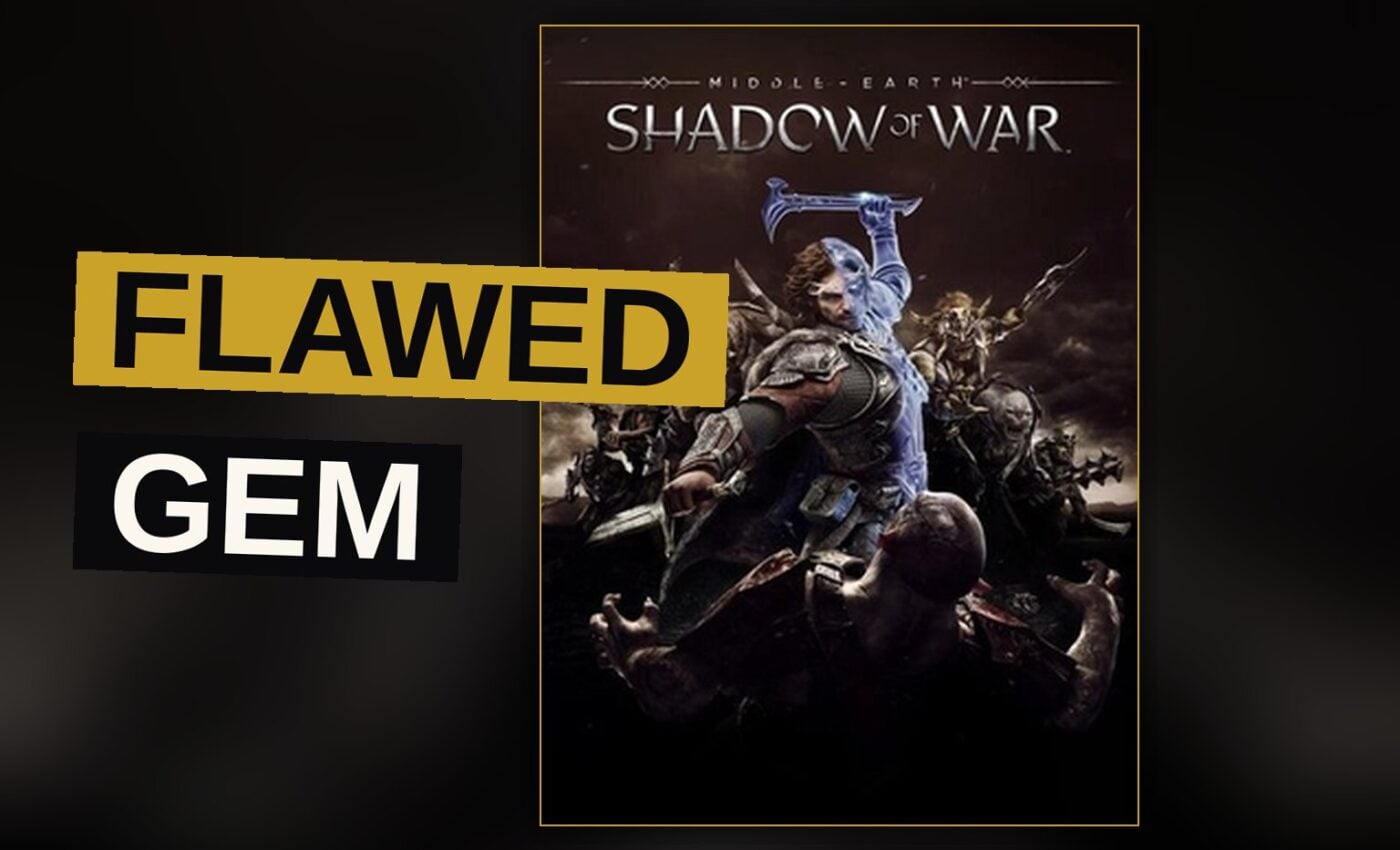
Middle-earth: Shadow of War picks up right where its predecessor left off, but it does not stay small for long. Talion and the elf lord Celebrimbor now wield the New Ring, and they have set their sights on nothing less than breaking Sauron’s hold on Mordor. The 2014 original was a lean, focused action game built around a brilliant gimmick. This sequel takes that gimmick and buries it under fortresses, armies, sieges, and a mountain of systems. Sometimes it soars. Sometimes it sinks.
The nemesis system returns, and it is still the reason to play. Orcs remember you, hold grudges, and come back from the dead with scars and new vendettas. The game generates stories no scripted campaign could match. But Middle-earth: Shadow of War also adds layers of management, a punishing endgame, and a grind that will test your patience. It is a game of extremes, and it earns its reputation as a flawed gem.
Trailer, via Shadow of War.
Nemesis, Upgraded
The nemesis system was the star of Shadow of Mordor, and Middle-earth: Shadow of War expands it into something almost overwhelming. Captains and warchiefs now have more personality, more quirks, and more ways to remember you. Kill an orc with fire, and he might return with burned skin and a fear of flame. Humiliate one in combat, and he will hunt you across the map for revenge. The system is a machine that spins out personal stories, and it remains the game’s greatest strength.
The hierarchy is deeper now. You are not just hunting captains; you are infiltrating a chain of command that runs from grunts up to overlords who rule entire fortresses. You can dominate orcs, recruit them, and assign them to your ranks. They climb the ladder, fight for you, and occasionally betray you. It is a power fantasy with a tactical edge, and it works more often than it fails.
The downside is clutter. The map becomes a dense web of icons, missions, and overlapping objectives. There is so much to track that the game sometimes loses focus. Players who want to engage with everything will find plenty to do, but the game does not always steer you toward what matters.
Fortress Sieges and Their Cost
The big new addition is the siege mode. You assemble an army of dominated orcs and lead them against enemy strongholds. These battles are loud, chaotic, and genuinely thrilling. You break down gates, capture points, and fight your way to the overlord’s throne room. Watching your captains clash with enemy warchiefs in a burning courtyard never gets old.
The scale comes at a price. On PC, PS4, and Xbox One, the frame rate dips noticeably when the action gets crowded. Dozens of orcs, siege engines, and fire effects push the hardware to its limits. It is not a dealbreaker, but it is a constant reminder that this is an ambitious game straining at the seams.
The sieges also feed into the endgame. After the main story ends, you defend your fortresses against waves of enemy attacks. This is where the grind becomes most apparent. The difficulty spikes sharply, and progression slows to a crawl. Some players will relish the challenge. Others will find it tedious.
Combat That Carries the Weight
The combat remains the same satisfying mix of counter, strike, and execute that made the original so enjoyable. Talion is a blur of blades, and chaining combos against a crowd of orcs feels great. New abilities, like summoning a drake or riding a graug, add variety, but the core loop is familiar. If you liked the fighting in Shadow of Mordor, you will like it here.
Movement is largely unchanged. Talion climbs, leaps, and glides across the environment with ease. The world is bigger, with multiple regions to explore, but the traversal tools are the same. That is not a complaint. The parkour works well, and the verticality of the fortress designs makes for some thrilling moments.
The skill tree has been expanded, offering more ways to customize your playstyle. You can focus on stealth, brute force, or dominating orcs to fight for you. The options are welcome, but the sheer number of abilities can be daunting. You will spend a lot of time in menus, and that is not always the most exciting part of the game.
Mordor, Region by Region
The setting is a mix of familiar and new. You will visit the plains of Nurn, the snowy peaks of Seregost, and the cursed lands of Gorgoroth. Each region has its own look and feel, and the art direction is strong. The shadow of Barad-dûr looms over everything, and the sense of scale is impressive. It is a grim world, but it is also a beautiful one.
The game does not shy away from the darker elements of Middle-earth. There is blood, death, and plenty of orcs who deserve both. The tone is more serious than the first game, and the story tries to add weight to the proceedings. It does not always succeed, but the effort is appreciated.
The side content is a mixed bag. Some missions are excellent, offering meaningful choices and memorable encounters. Others are simple fetch quests or repetitive arena battles. The game is packed with things to do, but not all of them are worth doing. Completionists will have a long road ahead. Casual players will likely ignore large chunks of the map.
“The nemesis system is a marvel, a machine that generates stories no scripted campaign could match.”
That is the heart of this review. The scripted story is fine, but the real narrative lives in the orcs you meet, the grudges they hold, and the victories you carve out against them.
The Grind and the Loot Box Shadow
The game launched with a controversial system of microtransactions. You could buy loot boxes with real money to get better orcs and gear. The system was widely criticized, and it is easy to see why. The endgame is balanced around the assumption that you will either grind for hours or pay to skip the grind. It is a cynical design, and it left a sour taste in many players’ mouths.
Monolith later removed the microtransactions entirely, but the damage was done. The game’s reputation took a hit, and the review scores reflect the launch state. The core game is strong, but the monetization was a black mark on an otherwise solid package. If you play the game today, you will not have to deal with the loot boxes, but the memory of them lingers.
The grind itself is the bigger problem. The final act requires you to defend your fortresses multiple times, and each defense takes a significant chunk of time. The difficulty spikes are real, and you will need to level up your orcs and your gear to survive. It is a long haul, and not everyone will have the patience for it.
Voice Work and Technical Stumbles
The performances are solid across the board. Troy Baker brings a gruff intensity to Talion, and Alastair Duncan’s Celebrimbor is suitably cold and calculating. The orcs are the real stars, though. Their dialogue is a constant source of amusement, with lines that range from menacing to absurdly funny. The voice actors clearly had fun with the roles, and it shows.
The soundtrack is serviceable, with orchestral swells that fit the epic tone. It does not stand out, but it does not need to. The sound design is better. The clash of swords, the roar of beasts, and the screams of dying orcs all land with impact. It is a game that sounds as good as it looks, even when the frame rate stumbles.
The technical issues are not limited to the frame rate. There are bugs, some amusing and some frustrating. Orcs might clip through walls, quest objectives might fail to trigger, and the camera can get stuck in tight spaces. None of these are game-breaking, but they are frequent enough to notice.
Nine years after its release, the game’s flaws are easier to see, but so are its strengths.
A Flawed Gem
Middle-earth: Shadow of War is a game of extremes. Its best moments are thrilling, and its worst moments are tedious. The nemesis system is a genuine innovation, and the fortress sieges are a spectacle. But the grind, the bugs, and the lingering shadow of the microtransactions hold it back.
The game is at its best when you are in the thick of a fight, carving through a crowd of orcs with a perfect counter and a brutal execution. It is at its worst when you are staring at a menu, trying to figure out which captain to assign to which war party, or replaying the same siege for the third time.
It is also a game that respects your time poorly. The campaign is long, and the endgame is longer. There is a good game buried under all the systems, but you have to dig through a lot of dirt to find it.
If you can look past the grind, Middle-earth: Shadow of War is a worthy sequel. It improves on the original in almost every way, and it offers a level of player-driven storytelling that few games can match. The orcs are memorable, the combat is satisfying, and the world is a joy to explore.
The game is not for everyone. Casual players will likely bounce off the difficulty and the complexity. Completionists will find themselves drowning in content. But for those willing to invest the time, the payoff is real.
Middle-earth: Shadow of War scores an 8.2/10.