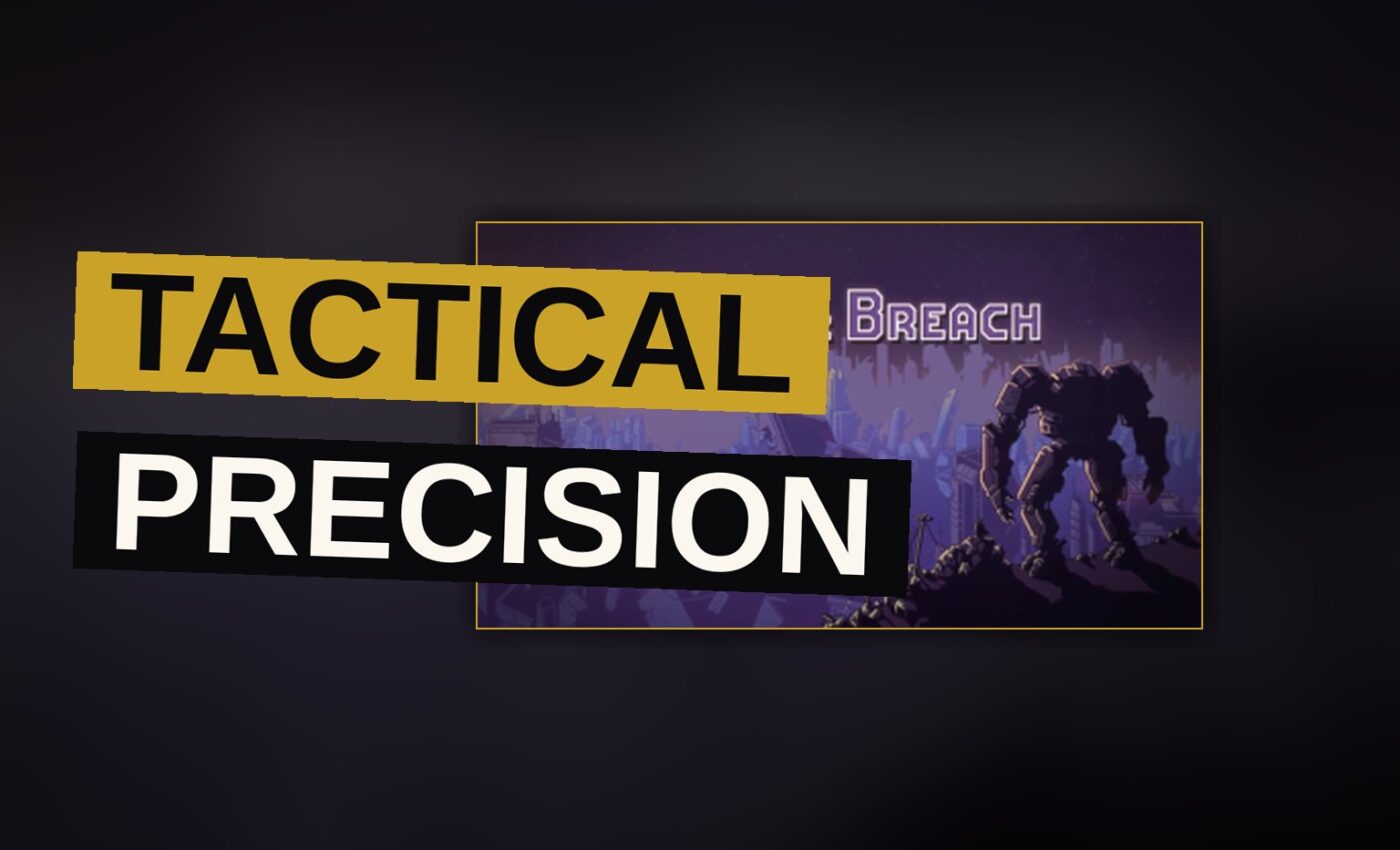
Into the Breach asks a simple question: what if the aliens had already won, and you got to watch them do it one turn at a time?
Subset Games built its second game around that idea. The indie studio — Jay Ma and Matthew Davis — followed FTL: Faster Than Light with a turn-based strategy game about giant mechs defending the last of humanity from the Vek, an army of monsters breeding beneath the earth. It came to PC in February 2018 and to the Nintendo Switch that August, with Chris Avellone on writing and Ben Prunty on music.
Trailer, via Jay Ma.
Three Mechs and a Power Grid
Every map hands you three mechs, one objective, and a fixed number of turns. The enemy moves first in the sense that matters: Vek units telegraph their attacks, showing the direction of the strike, how many moves each unit can take, and its remaining health. You are never surprised. You are only out of options.
The real target is the power grid. Civilian structures feed it, the grid feeds your mechs, and every structure the Vek wreck weakens it. Mechs take limited damage before going inoperable, though a mech can idle a turn to repair. Battle damage is otherwise wiped clean between maps.
Pilots who kill a Vek earn experience and unlock new skills. New Vek keep appearing each turn. The board never stops filling.
Chess With a Countdown
The comparison to chess is fair but incomplete. Chess does not tell you where the knight is going next. Into the Breach does, and then dares you to do something about it. You can kill a Vek, shove it off its attack line, dodge, or intercept something that has not spawned yet.
That transparency is the whole design. It moves the game away from luck and toward calculation, and it is why a lost run feels like your fault rather than the dice’s. The random generation keeps the challenges new, but the information is always honest.
The pieces you get to work with:
- Three mechs per battle, each carrying its own weapons, armor and equipment
- Telegraphed Vek attacks showing direction, movement range and health
- Civilian structures that feed the power grid your mechs depend on
- Idle-turn repairs for damaged mechs
- Pilot experience that unlocks new skills
What a Turn Actually Costs You
Order matters more than anything else on the board, and the game makes you feel it. Here is how a turn tends to break down:
- Read the telegraphed Vek attacks and find which civilian structure is exposed.
- Move the mech that can reach the threat, not the mech you like best.
- Fire once, then accept that the other two mechs are cleaning up, not winning.
- Repair instead of attacking when a mech is one hit from inoperable.
- Count the turns left and decide what you are willing to lose.
Skip step four and the run usually ends there.
Where It Bites Back
The structure is spare, and spare cuts both ways. A run can end because three mechs were not enough for the map the game rolled, and the repair system means one bad turn can cost you a pilot’s progress with no way to claw it back. The writing and the music dress a machine that is otherwise almost pure system.
What holds up is the discipline. Subset Games resisted the urge to hide information or pad the turn count. The Vek tell you what they intend. Your job is to answer.
A Puzzle That Fights Back
Into the Breach is a strategy game that respects the player enough to show its hand, then punishes anyone who cannot read it. It is smaller and colder than FTL, and it will not reward the players who wanted FTL again. It rewards the ones who wanted a puzzle that fights back.
Ranked against what the studio had already done, this is the more exacting game and the less generous one. The randomness is real, the grid is fragile, and the margin for error is thin by design. That is the point, and it mostly lands.
Get the Notebook.
The day's best stories and every fresh verdict, in plain English, in your inbox by seven. One email a day, no more.