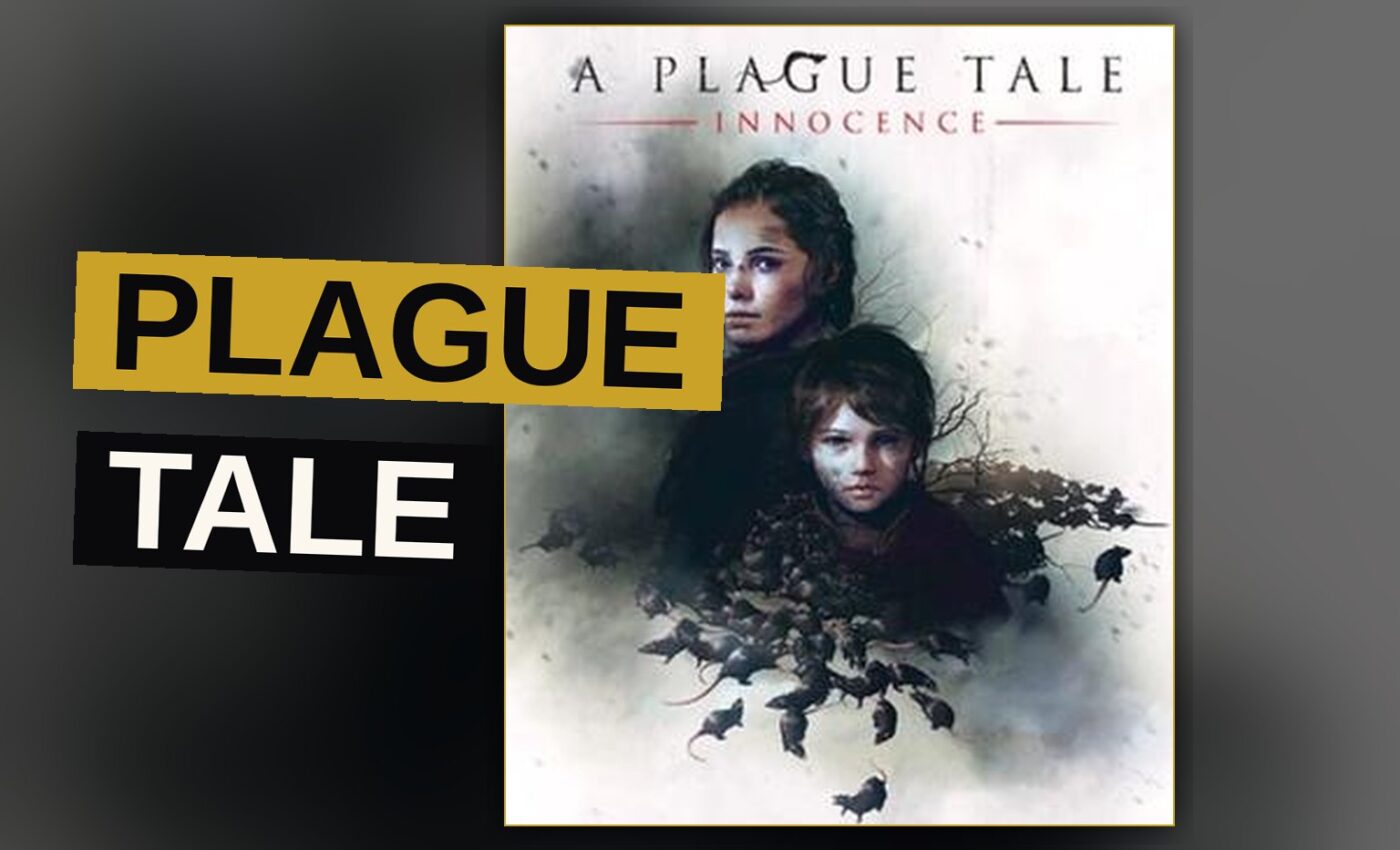
Asobo Studio built A Plague Tale: Innocence around a single, ugly idea: that the worst thing in 14th-century France is not the English army, not the Inquisition, and not the plague. It is the rats. Thousands of them, moving as one body, stripping a man to bone in seconds. Everything else in the game exists to keep you away from them.
The game came out in May 2019 for PlayStation 4, Windows, and Xbox One, published by Focus Home Interactive. PlayStation 5 and Xbox Series X/S versions followed in July 2021, alongside a cloud version for the Nintendo Switch. It is the first entry in the A Plague Tale series, and it sold over one million units by July 2020. A sequel, A Plague Tale: Requiem, arrived in 2022. The published critic aggregate across 15 outlets sits at 8.1 out of 10.
A Plague Tale: Innocence is an action-adventure stealth game. You play Amicia de Rune, a 15-year-old French noble, from a third-person perspective. For most of the runtime you are not fighting. You are hiding, and the game punishes sloppiness hard: enemies kill Amicia instantly if they catch her.
Trailer, via PlayStation.
Amicia de Rune and the Sling
Amicia’s main tool is a sling. She throws rocks to break chains, create distractions, or stun guards long enough for the rats to finish them. A headshot kills an enemy outright if the head is unprotected.
That is the whole combat vocabulary, and it is thin on purpose. The game wants you to feel like a child with a toy weapon, not a soldier. It works.
The crafting system extends the sling into something closer to a toolkit. Amicia can make fire-starting sulfur stones that ignite braziers, stink bombs that attract rats, and fire suppressants to extinguish torches carried by enemies. Each one solves a specific problem, and the game is disciplined about not letting you brute-force past them.
Hugo, Lucas, and the People Amicia Keeps
Hugo de Rune is five years old and has been ill since birth. His mother, Beatrice, is an alchemist who has sheltered him on the family estate while trying to devise a cure. Amicia can direct Hugo toward specific tasks when she is busy, and he can reach areas she cannot.
It is also a liability. Hugo panics if left alone, and a panicking Hugo attracts attention. Later in the game you take control of him directly. He cannot craft items, but he can control rats and squeeze through small spaces.
The supporting cast is small and mostly orphaned. Lucas, an apprentice to the doctor Laurentius, joins the siblings after Laurentius falls ill with the plague. The thieves Mélie and Arthur help them escape English capture, though Arthur is taken as the others get away.
- Amicia de Rune: playable protagonist, 15, armed with a sling and crafted ammunition
- Hugo de Rune: her five-year-old brother, ill since birth, able to control rats later in the game
- Beatrice de Rune: their mother, an alchemist, seemingly killed during the escape from the estate
- Lucas: Laurentius’s apprentice, joins the siblings after his master falls ill
- Mélie and Arthur: sibling thieves who help the children escape the English
Fire Is the Only Rule That Matters
The rats will seldom enter the radius of a burning torch or brazier. That single rule generates most of the game’s puzzles.
You are constantly looking for a light source, or making one, or moving one. Sulfur stones ignite braziers. Fire suppressants put out the torches your enemies carry, which turns their own safety into a rat ambush. Stink bombs pull the swarm toward a spot you choose.
The game consists of a series of survival puzzles built on these pieces. Gain access to a new area, or redirect the horde toward someone else. It is a clean design, and it never runs out of ways to make you nervous about the dark.
| Tool | What it does | Best used for |
|---|---|---|
| Sling with rocks | Breaks chains, distracts, stuns guards | Buying seconds, setting up rat kills |
| Sulfur stones | Ignite braziers | Creating safe ground where there was none |
| Stink bombs | Attract rats | Turning a horde into a weapon |
| Fire suppressants | Extinguish enemy torches | Removing an enemy’s protection |
November 1348, Aquitaine
The story opens in November 1348, in Aquitaine, during the Hundred Years’ War between England and France. Amicia lives a sheltered life on the family estate, largely separated from Hugo.
While hunting with her father Robert, Amicia finds an unusual substance on the ground. Her dog, Lion, is gruesomely consumed by an unseen entity. Then the Inquisition arrives.
Troops led by Lord Nicholas come to the estate looking for Hugo. They execute Robert and slaughter the family servants. Beatrice helps her children escape and tells Amicia to take Hugo to a doctor named Laurentius. Beatrice is then seemingly killed.
Wanted by the Inquisition, the children find the local village and monastery overrun with rats spreading the black plague. They reach Laurentius’s farm and find him severely ill. He begs Amicia to finish her mother’s work seconds before the farm is overrun. The siblings flee with Lucas toward the Chateau d’Ombrage, which once belonged to the de Rune family.
The Prima Macula
Crossing a battlefield patrolled by English soldiers, Lucas explains what is actually happening. Hugo’s blood carries a supernatural evil called the Prima Macula, dormant in certain noble bloodlines since the Plague of Justinian.
Beatrice and Laurentius had been trying to find an elixir to ease Hugo’s symptoms. Vitalis Benevent, the Grand Inquisitor of France, wants to harness Hugo’s power so the Inquisition can rule France. That is the real plot. The rats are the weather.
This is where A Plague Tale: Innocence stops being a survival story and becomes something stranger and more interesting. The Inquisition is not hunting a sick boy. It is hunting a weapon.
What Asobo Gets Right
The relationship between Amicia and Hugo carries the game. She is 15 and has been kept away from her brother for most of his life. Now she is the only thing standing between him and everyone else.
Asobo makes you feel that weight through mechanics, not cutscenes. Directing Hugo somewhere is a risk. Leaving him is a risk. The game turns sibling care into a resource you spend, and that is the sharpest thing in it.
The rat swarms are the other achievement. They read as a single organism, and the fire rule gives every dark room a clear, legible threat. You always know what kills you.
Where the Stealth Falls Short
The stealth is thinner than the puzzles. Enemy guards are not especially smart, and the instant-death rule means failure often comes from a patrol you could not see rather than a mistake you made. That gets old in the back half.
Combat, when it opens up, is the weakest part. A sling headshot is a satisfying answer to an armored man exactly once. The game knows this, which is why it keeps taking your options away, but the sections where it does not are the ones that sag.
The plot also front-loads its mysteries. By the time Lucas explains the Prima Macula, the game has spent its best reveals, and the stretch that follows has to run on momentum rather than discovery.
What A Plague Tale: Innocence Adds Up To
A Plague Tale: Innocence is a stealth game that understands restraint. It gives you one weapon, one rule about fire, and one small person to keep alive, then builds an entire country’s worth of horror on top of them.
The rats are the marketing, but Amicia and Hugo are the game. Asobo’s decision to make care a mechanic rather than a cutscene is what separates this from the crowded field of historical stealth games, and it is why the sequel was inevitable.
Seven years after its 2019 release, the rats still work. The Inquisition subplot is where the game reaches past its grasp, and the stealth encounters do not hold up to the puzzle design around them. Neither flaw is fatal.
An 8.1 out of 10 is the right score. A Plague Tale: Innocence is not a great stealth game and not a great horror game. It is a great game about a girl and her brother, wearing both of those things as a coat.
Get the Notebook.
The day's best stories and every fresh verdict, in plain English, in your inbox by seven. One email a day, no more.