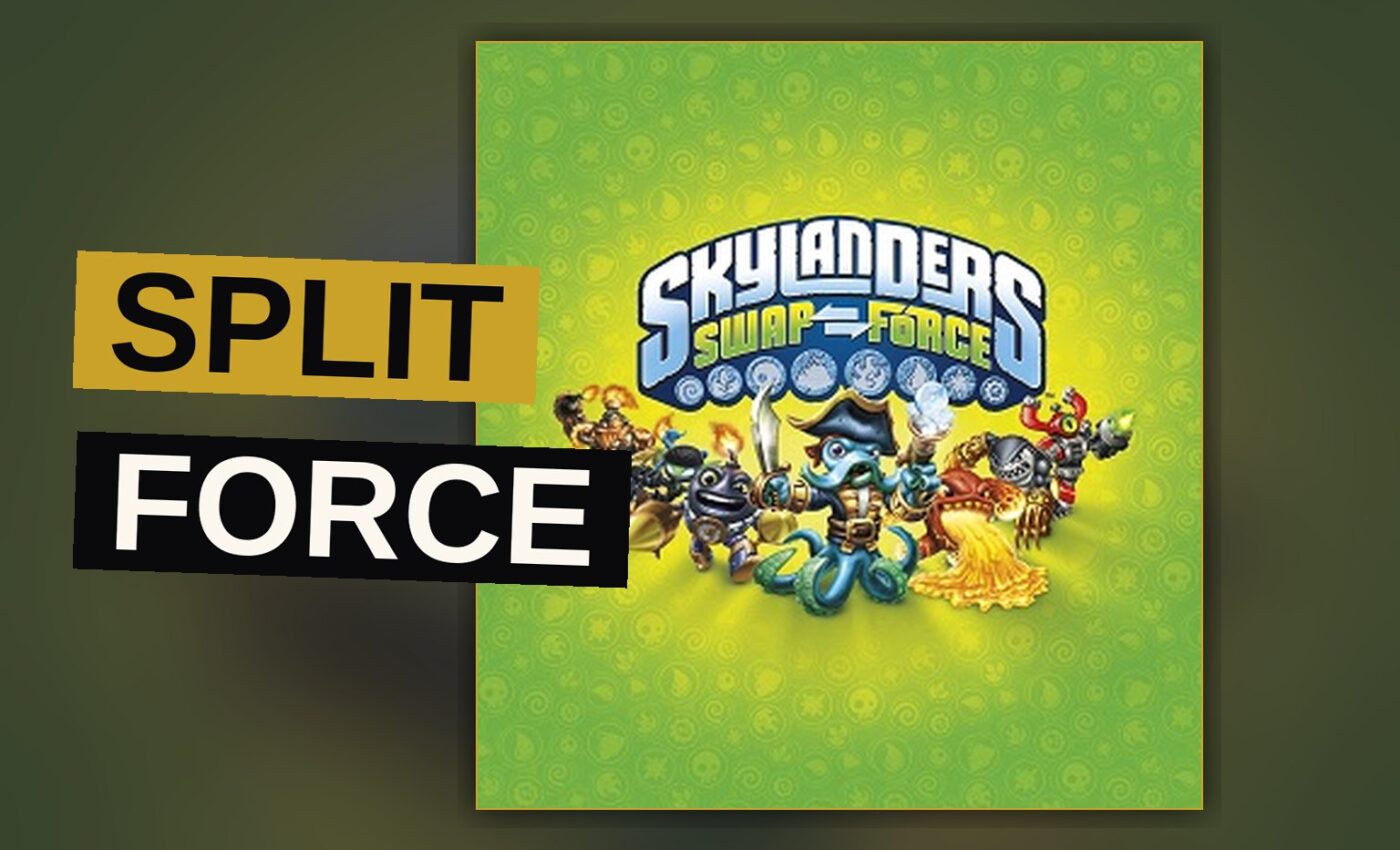
Skylanders: Swap Force arrives as the second game in the Skylanders series, and it wants to prove the toy-to-life formula still has room to grow. The game splits each character into two pieces, a top half and a bottom half, each with its own set of abilities. That single change shifts nearly everything about how the game plays, how it looks, and how players collect new characters. The result is a sequel that feels less like a minor update and more like a full redesign of the original.
Trailer, via SkylandersGame.
Two Pieces, One Character
In Skylanders: Swap Force, each figurine carries two separate parts. Players can switch between the top and bottom halves during play, changing a character’s look and skills on the fly. This is the central mechanic, and it shapes almost every system in the game.
The split means players no longer choose a single character type at the start. Instead, they can swap between a top half and a bottom half mid-battle, mixing abilities from two different classes. That flexibility gives players more freedom than the original game offered, though it also adds complexity to the learning curve.
New Characters, New Abilities
The roster grows again in Skylanders: Swap Force. New characters join the cast, each with their own unique abilities tied to their top and bottom halves. Some characters carry heavy weapons, others move fast, and some focus on magic.
Players collect new figures through the game’s hub world and from special shops scattered across the map. The process of collecting remains simple: buy a figure, scan it in, and the character appears ready to use. It’s a familiar loop, but the new split adds variety to the way each character performs.
Level Design and Pace
The game moves faster than its predecessor. Levels are built around constant motion, with enemies placed to force players to keep moving and switching between their two halves. The pacing rewards quick thinking, since swapping between top and bottom halves often changes what a player can do in a given situation.
Boss fights ask players to use both halves strategically. A boss fight might require the heavy damage of a top half early, then switch to the fast movement of a bottom half later. The design forces players to think about which half is best suited to each moment. That constant switching keeps players engaged throughout each encounter.
Visual Style and Presentation
Skylanders: Swap Force pushes the visual style further than the first game. Characters are larger, environments are brighter, and the cel-shaded art direction stays distinct from other games in the genre. The game’s presentation remains one of its strongest features, giving the toy-to-life concept a polished look.
The presentation holds up well in motion. Scans happen quickly, and the game rarely stalls while players add a new character to their collection.
Comparing the Two Games
| Feature | Skylanders | Skylanders: Swap Force |
|---|---|---|
| Central mechanic | Single character per figurine | Top and bottom halves, switchable in play |
| Character collection | Simple scan-in process | Same, but expanded roster |
| Level design | Calmer pace | Faster, more dynamic |
| Boss fights | Standard encounters | Require switching between halves |
| Visual style | Distinct cel-shaded look | Pushes the style further |
The table shows how the sequel builds on the first game rather than replacing it wholesale. The core systems are recognizable, but the additions make the experience feel fresh.
Sound and Performance
The soundtrack matches the bright visuals. Music swells during boss fights and slows during quieter exploration sections, giving the game a consistent tone throughout. Voice acting is limited, but the sound effects remain clear and responsive.
Performance holds steady across platforms. Load times are short, and the scanning process rarely causes delays. These are small details, but they matter when players spend hours building their collection.
Final Score
Skylanders: Swap Force earns an 8.3 out of 10. The split character design is a clever idea that pays off across most of the game, and the presentation remains sharp. The game is not perfect — the learning curve is steeper than the first installment, and some players may find the constant swapping tiring after long sessions — but the strengths outweigh the weaknesses.
It’s a strong sequel that proves the toy-to-life formula can still surprise players with new ideas. The split character design is a clever idea that pays off across most of the game, and the presentation remains sharp. The game is not perfect, but it succeeds at what it sets out to do: give players a bigger, better version of the world they fell in love with before.
Get the Notebook.
The day's best stories and every fresh verdict, in plain English, in your inbox by seven. One email a day, no more.