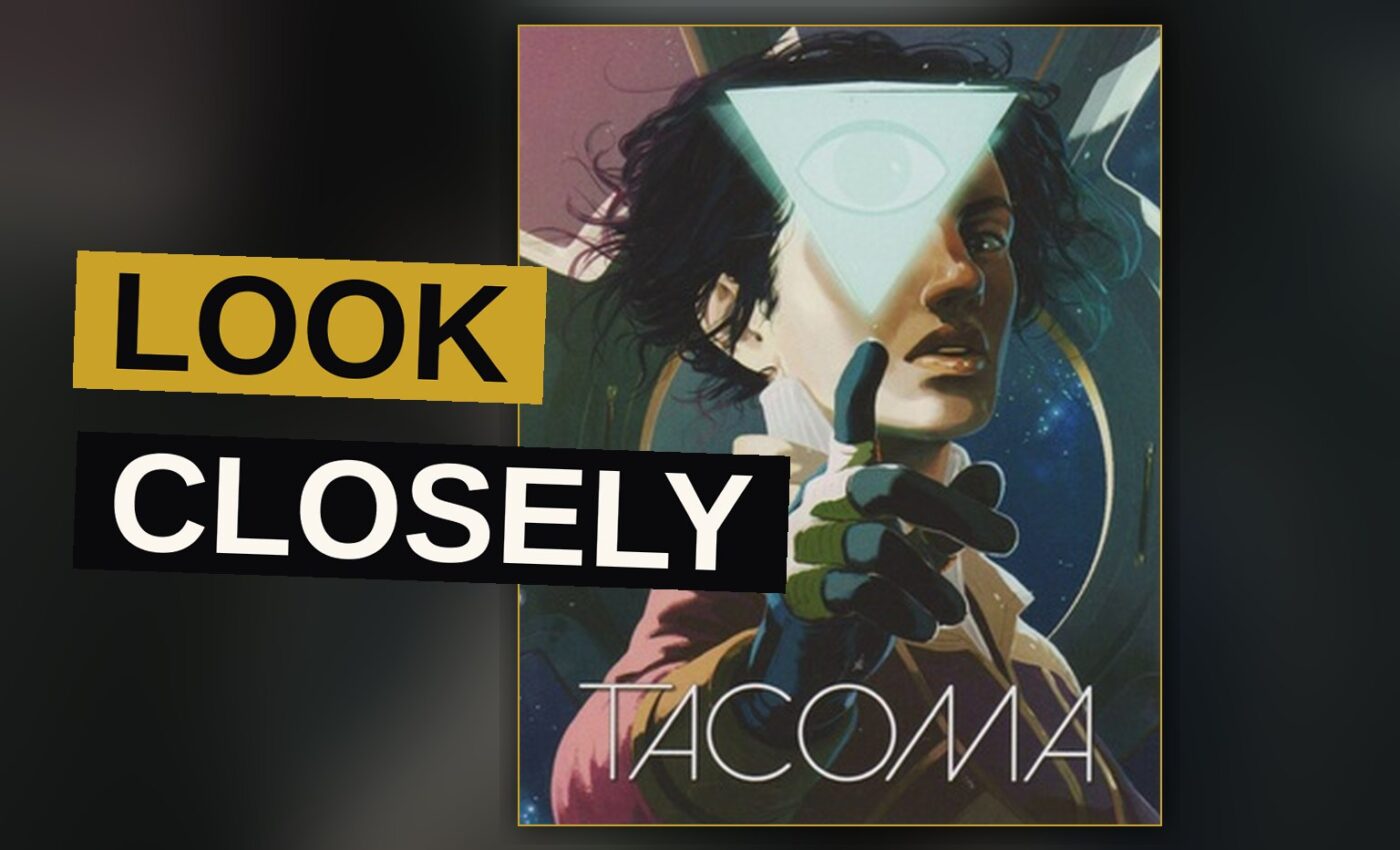
Tacoma drops players into a ghost ship in space, and it asks them to look closely at the ghosts themselves. The 2017 game from developer Giant Sparrow puts players on board the orbiting station Tacoma, abandoned for years after an explosion. The story unfolds through recordings, memos, and the traces left behind by the crew who lived there. It is a quiet, methodical puzzle box dressed as a mystery, and it mostly earns its slow pace.
Trailer, via Tacoma.
The Ship and Its Rooms
Players move through a series of rooms, each holding clues about the people who once worked there. The station itself is the main character, and the way it is laid out rewards patience. Doors lead to other doors, and finding the right path forward often means stepping back and looking at a room from a new angle.
Reading the Room
Tacoma’s core mechanic is reading. Players pick up audio recordings, emails, and small objects that fill in the gaps between the people the game wants you to meet. These pieces of evidence stack on top of each other, building a portrait of a company, a team, and a disaster that changed everyone involved.
Story Structure
The narrative is built around a loop of discovery. Players find a clue, follow it, and then return to a room they have already visited to see it in a new light. This structure can feel repetitive, but it also forces attention on details that might otherwise pass unnoticed.
Performance Across Platforms
Tacoma launched on PS4, Linux, PC, and Mac, and the performance across those platforms was mixed. On PC, the game ran smoothly with few hiccups. On Linux, the experience was less stable, with occasional frame rate drops. The PS4 version held up well, though some players noted minor texture issues during longer play sessions.
| Platform | Key Features |
|---|---|
| PS4 | Stable performance, minor texture issues |
| Linux | Some frame rate drops |
| PC | Smooth, few hiccups |
| Mac | Standard release |
Sound Design
The sound design carries much of the emotional weight. Ambient noise, distant conversations, and the hum of machinery give the station a sense of presence even when no one is on screen. Music is sparse, used only sparingly to mark key moments.
Where It Falls Short
The pacing drags in stretches, particularly in the middle act where the mystery slows down. Some players found the repetition of returning to earlier rooms frustrating rather than rewarding. The game also leans heavily on text, which could make it difficult for players who struggle with reading large amounts of information.
Final Word
Tacoma is a game about memory, presence, and absence, and it handles those themes with a steady hand. The world-building is strong, the writing is sharp, and the central mystery is genuinely engaging. It is not a game for everyone, and its slow burn will test the patience of players who want constant action.
The game’s best moments come when the pieces finally fall into place, revealing the full picture of what happened on that ship. That payoff justifies the slower stretches, even if the journey there is uneven.
Tacoma is a solid, thoughtful experience that rewards careful observation. It is a game about looking, and it asks players to trust that looking pays off.