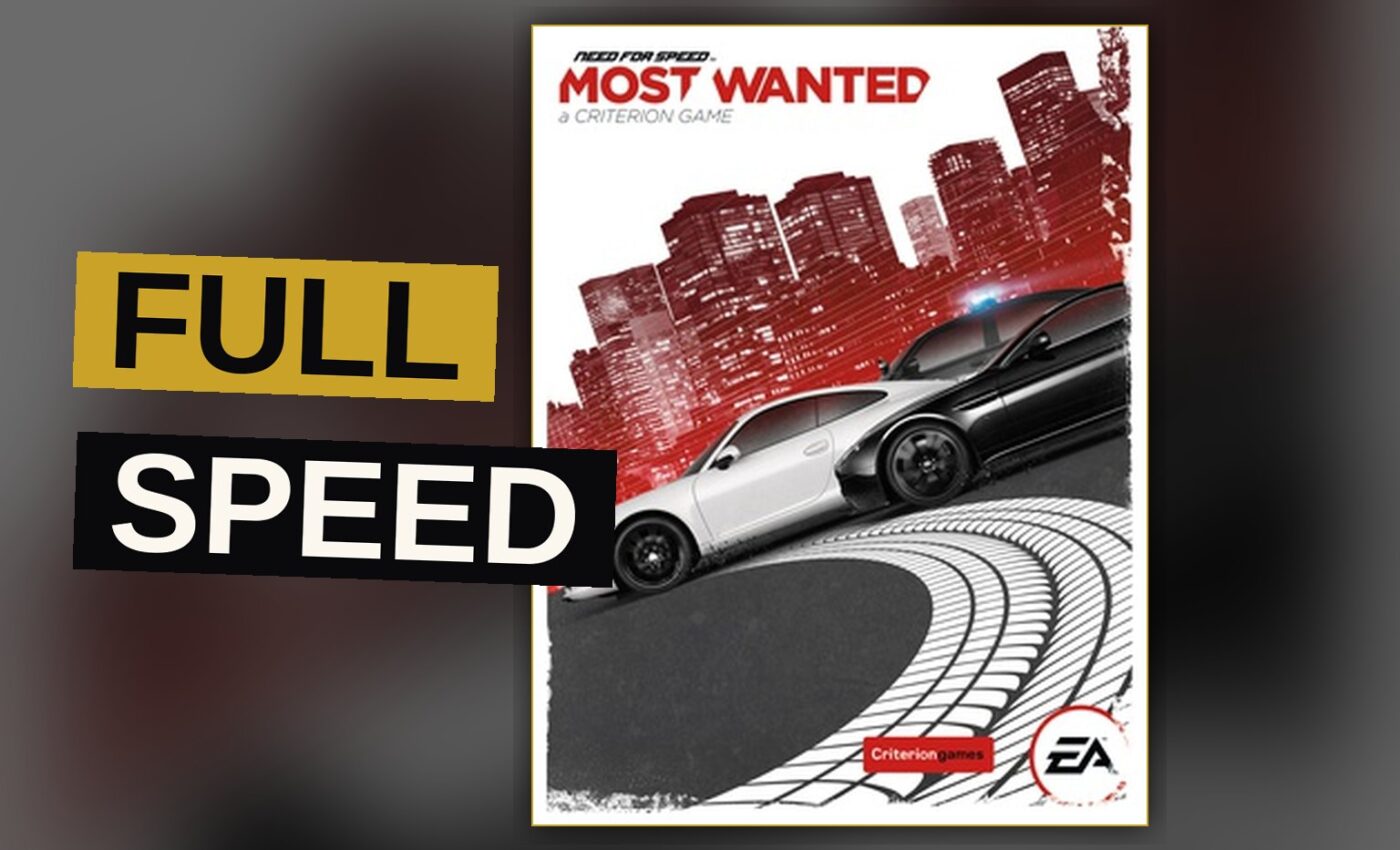
Need for Speed: Most Wanted takes the open-world racing formula and turns it loose. EA and Criterion Games built a city full of cars, cops, and rewards, and let players drive through it without much friction at all. The result is a fast, chaotic, and mostly satisfying package that earns its reputation as one of the best entries in the series.
Trailer, via Need for Speed.
The City That Never Sleeps
The setting is a fictional urban sprawl, dense enough to feel alive without being overwhelming. There are residential streets, industrial districts, and wide highways that connect everything. The map is large enough to reward exploration, but small enough that getting lost feels like a mistake rather than a punishment.
Cops patrol the roads constantly, and the game uses a heat system to track your wanted level. As you pass a cop car, the heat rises. Reach a certain threshold and the entire city goes after you. This creates a constant tension: should you make a quick getaway or try to shake off the police and keep racing? The answer depends on your situation, and the game never tells you which choice is right.
The Heat System in Action
The heat system is the heart of the game’s design. When you are wanted, the pressure builds fast. Cops appear in groups, and they call for backup. Helicopters circle overhead, and roadblocks seal off escape routes. The game forces you to think about where you are driving and what you are doing, because a single wrong turn can send you straight into a wall of police cars.
The system also feeds back into the rewards structure. Clearing a pursuit earns you cash, and spending that cash unlocks new cars and upgrades. The cycle is simple but effective: earn, spend, repeat. It keeps you moving forward even when the chase feels frantic.
The Cars and Their Upgrades
The vehicle lineup is solid, with a mix of sports cars, muscle cars, and exotic machines. Each car handles differently, and the upgrade system lets you tailor performance to your taste. You can boost acceleration, improve handling, or add nitrous for a short burst of speed.
The upgrades are meaningful. A few dollars spent on a better engine can change how a car performs in a race or a pursuit. The game tracks your progress across multiple stats, so you always know what you need to buy next.
- Engine power
- Handling
- Brakes
- Nitrous capacity
The list is short but essential. Nothing feels wasted.
The Races and Their Variety
There are three main types of events: street races, checkpoint runs, and pursuits. Street races pit you against other drivers in a timed course. Checkpoint runs require you to hit markers while avoiding obstacles. Pursuits are the centerpiece, and they are where the heat system comes into play.
Each type offers a different challenge. Street races test your timing and your ability to read the track. Checkpoint runs demand precision and quick reflexes. Pursuits force you to balance speed with evasion. The variety keeps the game from feeling repetitive, even after dozens of hours.
The Look and Feel of the Chase
The graphics hold up well on PS3, PC, and Xbox 360. The city looks dense and lived-in, with traffic moving on the roads below. The car models are detailed, and the lighting gives the environment a sense of scale. The frame rate stays steady during chases, which is crucial when the action gets hectic.
The sound design is just as strong. Engine roars, tire squeals, and police sirens fill the air. The music is electronic and energetic, matching the pace of the game. Together, the audio and visual elements create a immersive experience that pulls you into the world.
The Flaws That Hold It Back
The game is not perfect. Some players will find the difficulty curve steep early on, especially in pursuits where the police seem to know exactly where you are going. The AI can be unpredictable, sometimes forcing you into dangerous situations that feel unfair.
There are also moments where the game feels unfinished. Certain areas of the city feel empty, and some missions are repeated more than necessary. These are minor complaints, but they do chip away at the overall experience.
A Game Worth Returning To
Despite its flaws, Need for Speed: Most Wanted remains a standout entry in the series. The heat system, the chase design, and the upgrade progression all work together to create a loop that is easy to jump back into. It rewards skill and punishes carelessness, and it does so with a sense of style that sets it apart from other racers of its era.
The game is best enjoyed in short bursts. A single pursuit can last ten minutes, and that is often enough to satisfy. Longer sessions can start to wear thin, but the desire to unlock a new car or clear a high score always brings you back.
The Final Word
Need for Speed: Most Wanted is a strong, confident racer that knows exactly what it wants to be. It delivers excitement, challenge, and replay value in equal measure. The heat system is the star, and the rest of the game supports it well.
The game is available on PS3, PC, and Xbox 360, and it plays well on all three. Whether you are playing on a big screen or a laptop, the core experience holds up.
Get the Notebook.
The day's best stories and every fresh verdict, in plain English, in your inbox by seven. One email a day, no more.