
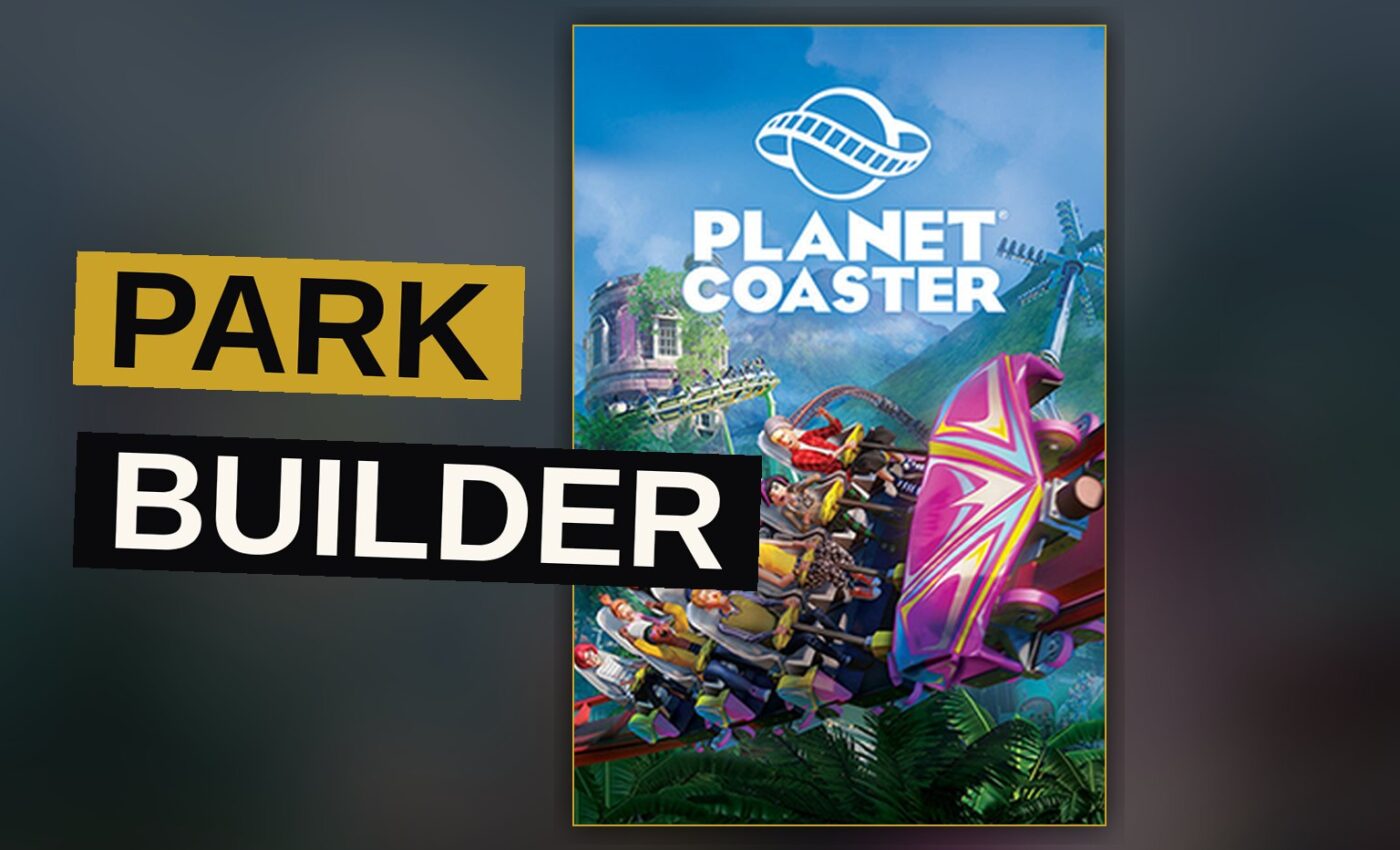
Planet Coaster arrived on PC on 17 November 2016, built by Frontier Developments, and it did something the studio had been circling for years: it returned to the amusement park sim it helped define with RollerCoaster Tycoon 3 and then handed the keys to the players.
Trailer, via Planet Coaster 2.
A Studio That Never Left the Park
Frontier’s history in this genre is not thin. The studio worked on RollerCoaster Tycoon 3, Thrillville, Thrillville: Off the Rails, and Zoo Tycoon before turning to Planet Coaster, which it developed and published itself. That self-published turn matters. Planet Coaster is a spiritual successor, not a licensed sequel, and it carries the confidence of a team that knows exactly which parts of the old formula still work.
Four Modes, One Empty Plot
Planet Coaster splits into sandbox, challenge, career, and scenario editor. Sandbox hands the player an empty plot of land and unlocks everything, with unlimited funds. Challenge mode uses that same empty lot but limits money and research across Easy, Medium, or Hard difficulty, then throws optional challenges at the player for rewards like a park rating boost or a cash sum. Career mode casts the player as a park manager working through objectives, from building unfinished coasters to hiring janitors. Scenario editor, added in the 1.4.0 update on 22 November 2017, lets players build their own tasks inside any saved park.
Building Coasters Without a Deadline
The sandbox is where most players live, and the source is blunt about why: it is the mode used to create parks, coasters, and scenery for sharing. On PC, those creations go to Steam’s Planet Coaster Workshop, which is not available for the Mac App Store version. Console players get the Frontier Workshop instead. The PC version also asks the player to make an avatar before starting. The console versions skip that step entirely.
Console Edition and the Mac Port
Planet Coaster: Console Edition launched 10 November 2020 for PlayStation 4, Xbox One, and Xbox Series X/S. The PlayStation 5 version followed on 12 November 2020 in North America and Australia, then 19 November 2020 in Europe. A macOS version, developed by Aspyr, landed 17 November 2020 on Steam and the Mac App Store, four years to the day after the original PC release.
| Version | Release date | Developer | Workshop |
|---|---|---|---|
| PC (Windows) | 17 November 2016 | Frontier Developments | Steam Workshop |
| Console Edition (PlayStation 4, Xbox One, Xbox Series X/S) | 10 November 2020 | Frontier Developments | Frontier Workshop |
| PlayStation 5 | 12 November 2020 (North America, Australia); 19 November 2020 (Europe) | Frontier Developments | Frontier Workshop |
| macOS | 17 November 2020 | Aspyr | Steam and Mac App Store |
The Numbers Behind the Parks
- PC release: 17 November 2016
- Console Edition: 10 November 2020
- PlayStation 5: 12 November 2020 (North America, Australia); 19 November 2020 (Europe)
- macOS: 17 November 2020, by Aspyr
- Scenario editor added: 22 November 2017, update 1.4.0
- Modes: sandbox, challenge, career, scenario editor
- Critical aggregate: 8.3/10 across 12 outlets
Where the Design Actually Bites
The career mode is the weakest pitch on paper. Constructing unfinished roller coasters and hiring janitors sounds like chores, and the source describes it that way without apology. But the difficulty tiers give it a spine. Challenge mode is the sharper idea. Unlimited money makes sandbox a toy box; limited funds and research make the same empty plot a puzzle, and the accept-or-decline challenge prompts keep the pressure moving instead of letting a park sit idle.
The scenario editor is the quiet win. It arrived more than a year after launch, and in this paper’s view it did more with the game’s rules than any single coaster blueprint.
What Frontier Got Right
Planet Coaster earns an 8.3/10. The career mode’s objectives are thin and the avatar requirement on PC is a needless gate before the fun starts. What carries the score is the range: sandbox for the people who want no limits, challenge for the people who want a budget, and a scenario editor for the people who want to design the challenge themselves. Frontier built the toolbox first and the campaign second, and that ordering is correct for a sim.
The Console Edition and the Aspyr Mac port widened the door without changing the game underneath. The workshops did the rest. A park sim lives or dies on whether players keep building after the credits, and Planet Coaster gave them four different reasons to keep going.
Get the Notebook.
The day's best stories and every fresh verdict, in plain English, in your inbox by seven. One email a day, no more.


