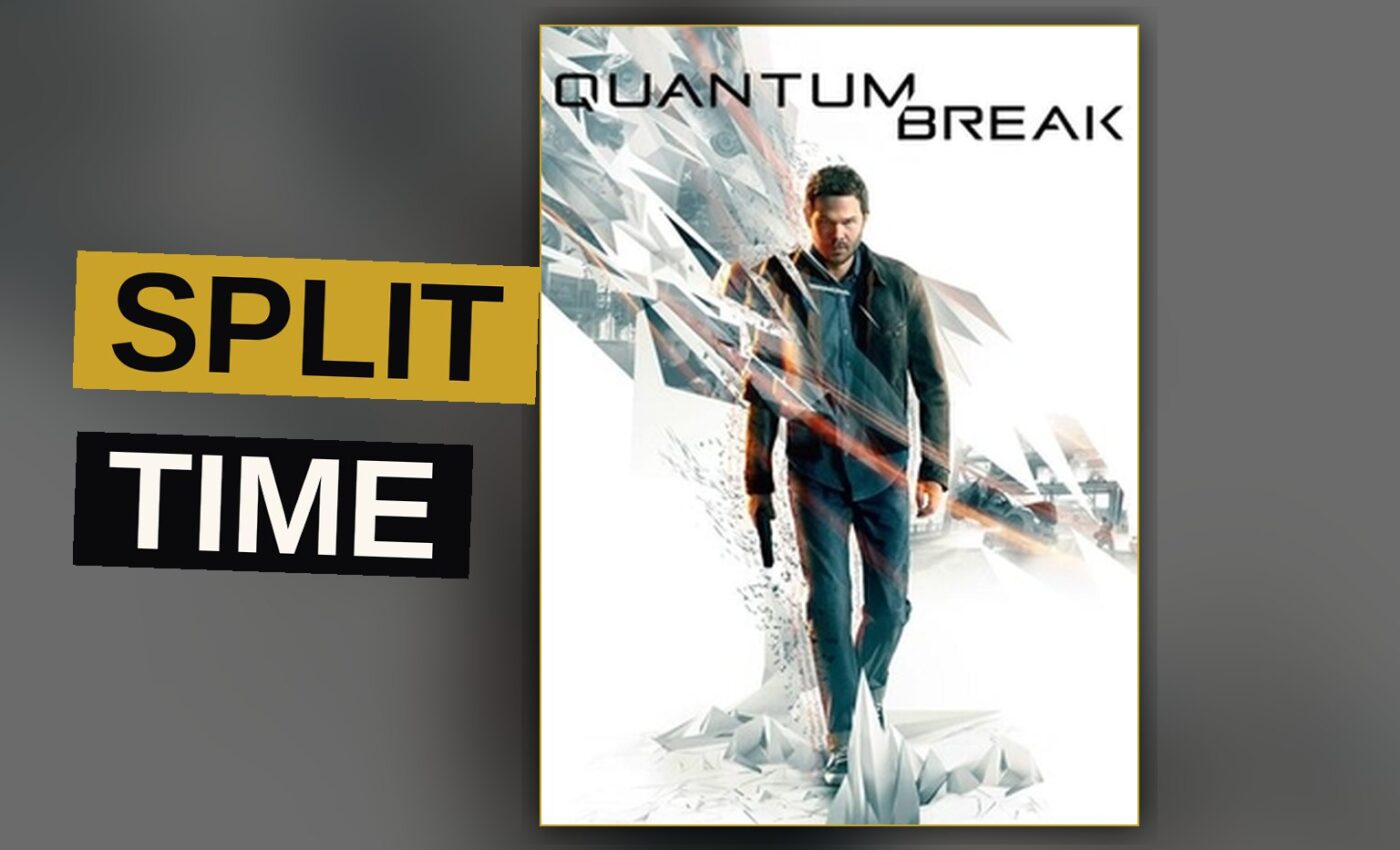
Quantum Break splits its time between a shooting gallery and a live-action TV show, and that split is the whole idea. Remedy Entertainment built the game around two distinct formats, and they mostly work together, though not always at once. The shooting holds up better than the acting, and the acting holds up better than the writing, which means the middle stretch drags even when the action is firing on all cylinders.
Trailer, via IGN.
The Split Format
The premise is simple to state but hard to pull off. Players control Jack Harlow, a physics student who becomes central to a crisis involving time dilation, while the story cuts away to a live-action cast led by Alan Tudyk, Mackenzie Davis, and Shawn Ashmore. The game plays out across several years, and the player’s choices affect the timeline in ways that ripple through the narrative.
It is a bold approach, and it mostly pays off. The live-action sequences look polished and professional, with a budget that shows on screen. The actors sell their performances, and the dialogue carries some weight, even when the plot grows increasingly convoluted. But the format is also awkward at times, with the game shifting between cinematic scenes and hands-on gameplay without much warning. That constant back-and-forth can break immersion, especially during quiet stretches where the pacing suffers.
The Shooting Holds Up
The shooting sections are the strongest part of the package. Jack Harlow wields a range of weapons, from pistols to sniper rifles, and the cover system is tight and responsive. The gunplay feels solid, and the combat arenas offer enough verticality to keep fights interesting. Players can slow down time, and the game leans on that mechanic to create tense moments where a single shot determines who survives.
The stealth sections are less successful. They exist, but they feel tacked on rather than integrated, and they often ask players to move through spaces in ways that contradict the game’s momentum. The AI is competent, but it is not particularly clever, and enemies tend to follow familiar patrol routes. These moments are brief, but they stand out because they break the flow of everything else.
The Writing Struggles
The problem is not the performances, which are uniformly strong across the cast. It is the script itself, which strains under the weight of its own ambition. The game tries to juggle multiple timelines, nested flashbacks, and a sprawling conspiracy involving government agencies, private corporations, and quantum physicists. That is a lot to track, and the writing does not always keep pace.
The plot twists come fast in the final act, and some of them land poorly. Characters make decisions that feel arbitrary rather than earned, and the resolution leaves several threads unresolved. There is a sense that the story was rushed to meet a deadline, and the pacing suffers as a result. Some players will find the payoff satisfying regardless. Others will find it hollow.
Technical Performance
The technical side is solid, though not exceptional. The game runs well on both PC and Xbox One, with few major bugs reported. The lighting effects are striking, and the environments are detailed, though some textures can look rough up close. The sound design is strong, with a score that shifts effectively between tense action cues and quieter, atmospheric pieces.
Performance varies by platform. The Xbox One version runs at a lower frame rate than the PC build, which is noticeable during extended combat sequences. The load times are long, which disrupts the flow of the game’s pacing. None of these issues sink the experience, but they are persistent enough to be irritating.
What Works
- The shooting mechanics are satisfying and varied.
- The live-action segments are well-produced and engaging.
- The visual effects are impressive and used effectively.
- The music score supports the tone consistently.
What does not work as well:
- The stealth sections feel tacked on and underdeveloped.
- The plot twists sometimes land as cheap rather than earned.
- The pacing sags in the middle of the game.
- The Xbox One version struggles with performance compared to PC.
The Bottom Line
Quantum Break is ambitious, and it mostly succeeds at delivering something genuinely different. The split format is a risk, and it pays off more often than it fails. The shooting is a highlight, the performances are strong, and the production values are high. But the writing lets the game down in its final hours, and the middle stretch drags more than it should.
For players who want a shooter with a twist, this is worth playing. For those looking for a tightly constructed story, the middle chapters will test patience. The game earns a 7.7 out of 10.
Get the Notebook.
The day's best stories and every fresh verdict, in plain English, in your inbox by seven. One email a day, no more.