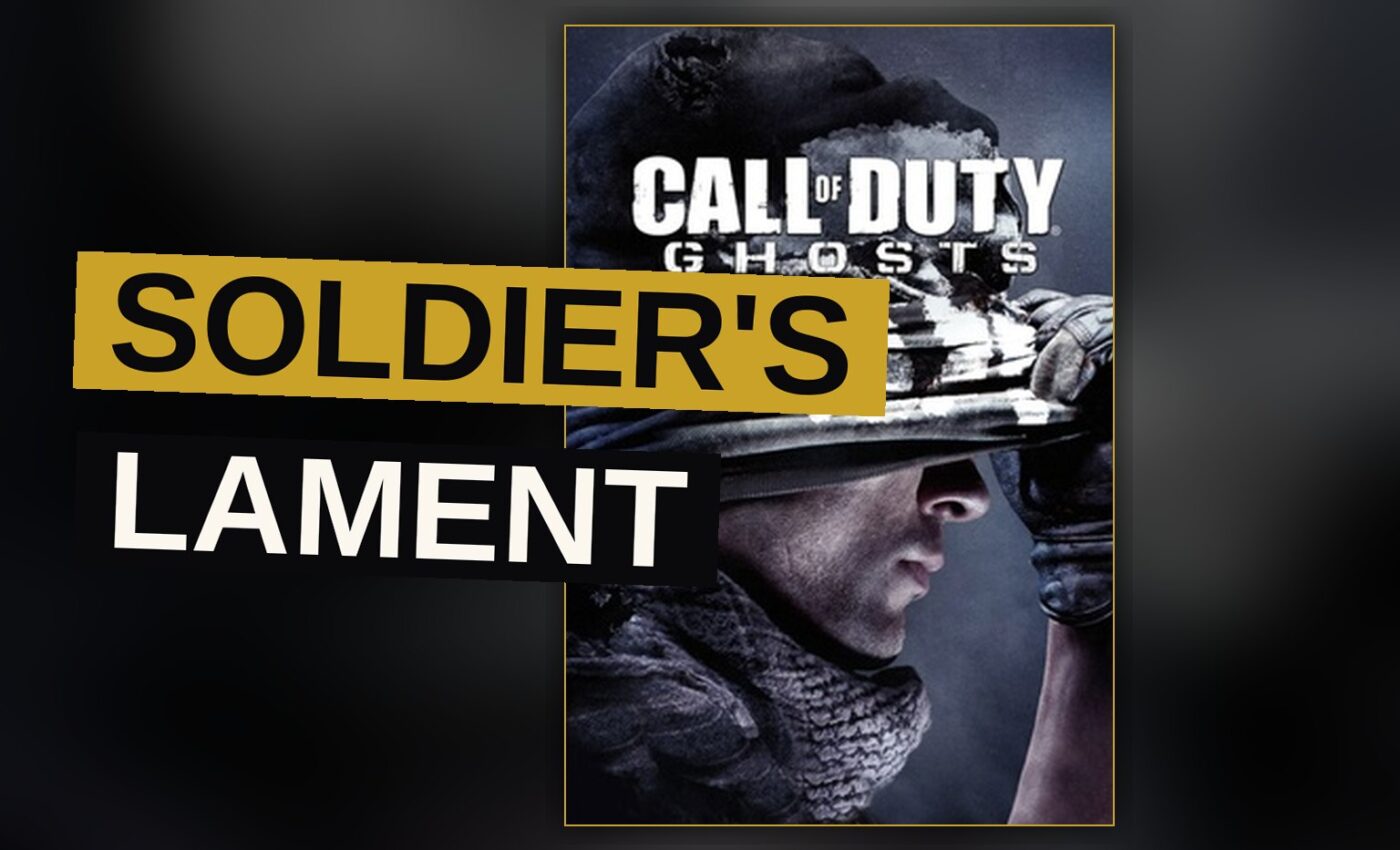
Call of Duty: Ghosts arrived in November 2013 as the tenth major installment in Activision’s shooter series. It shipped on PlayStation 3, PlayStation 4, PC, Wii U, Xbox 360 and Xbox One. Four studios built it: Neversoft Entertainment, Infinity Ward, Raven Software and Treyarch. The game is a standalone installment, set in the near future rather than in the World War II, Black Ops or Modern Warfare lines that came before it.
Trailer, via Call of Duty.
The Federation Strikes First
The campaign opens with a global energy crisis. A conflict in the Middle East destroys the region’s oil fields. South American oil-producing nations then unite into the Federation of the Americas, a military dictatorship that conquers Central America and Mexico. The Federation seizes an American orbital weapons platform and turns it on cities across the southwestern United States.
Ten years later, brothers Logan and Hesh Walker serve on the fortified border dividing what is left of the U.S. from Federation territory. A traitor named Rorke, a former Ghost broken by brainwashing, hunts the Ghosts unit. The brothers’ father leads the squad, and the fight becomes a race to stop the Federation’s second orbital weapon.
Squads, Cranked and Blitz
Multiplayer is where Ghosts does its real work. Maps now carry destructible elements, so cover does not last. New modes include Cranked and Blitz, and Squads adds AI-controlled teammates to the mix. Extinction, a four-player co-op mode, sends waves of alien creatures called Cryptids at the squad. It is a clear successor to the Zombies mode that Call of Duty: World at War introduced.
Here is how the pieces line up:
| Mode | Players | What it adds |
|---|---|---|
| Campaign | Single player | Logan Walker, the Ghosts, Rorke |
| Multiplayer | Online | Destructible maps, Cranked, Blitz |
| Squads | Solo or online | AI-controlled teammates |
| Extinction | Four-player co-op | Cryptids, wave defense |
What Holds and What Doesn’t
The near-future setting is the biggest shift, and it gives the series orbital superweapons and a tactical bent it had not carried before. The science fiction here is not a one-off. The source notes that the campaign’s science fiction elements were further explored in Advanced Warfare and Infinite Warfare, which makes Ghosts read as a test run rather than a detour.
The campaign is the weak link. It rehashes familiar beats and does not push anywhere the series had not already been. Extinction and the multiplayer carry the package. Squads is the more interesting experiment of the two, because AI teammates change how a match reads without asking anyone to coordinate with strangers.
Ghosts is a standalone installment that behaves like a bridge. It takes the core structure of earlier titles, adds a new setting and a co-op mode, and leaves the campaign as the part nobody will defend. That is a strange shape for a tenth entry, but it is an honest one.
For anyone coming to the series fresh, the multiplayer and Extinction are worth the time. For anyone hoping the campaign would match them, it does not. Advanced Warfare and Infinite Warfare took the setting further, which is what the source says happened — not a verdict on what the studio found.
Get the Notebook.
The day's best stories and every fresh verdict, in plain English, in your inbox by seven. One email a day, no more.