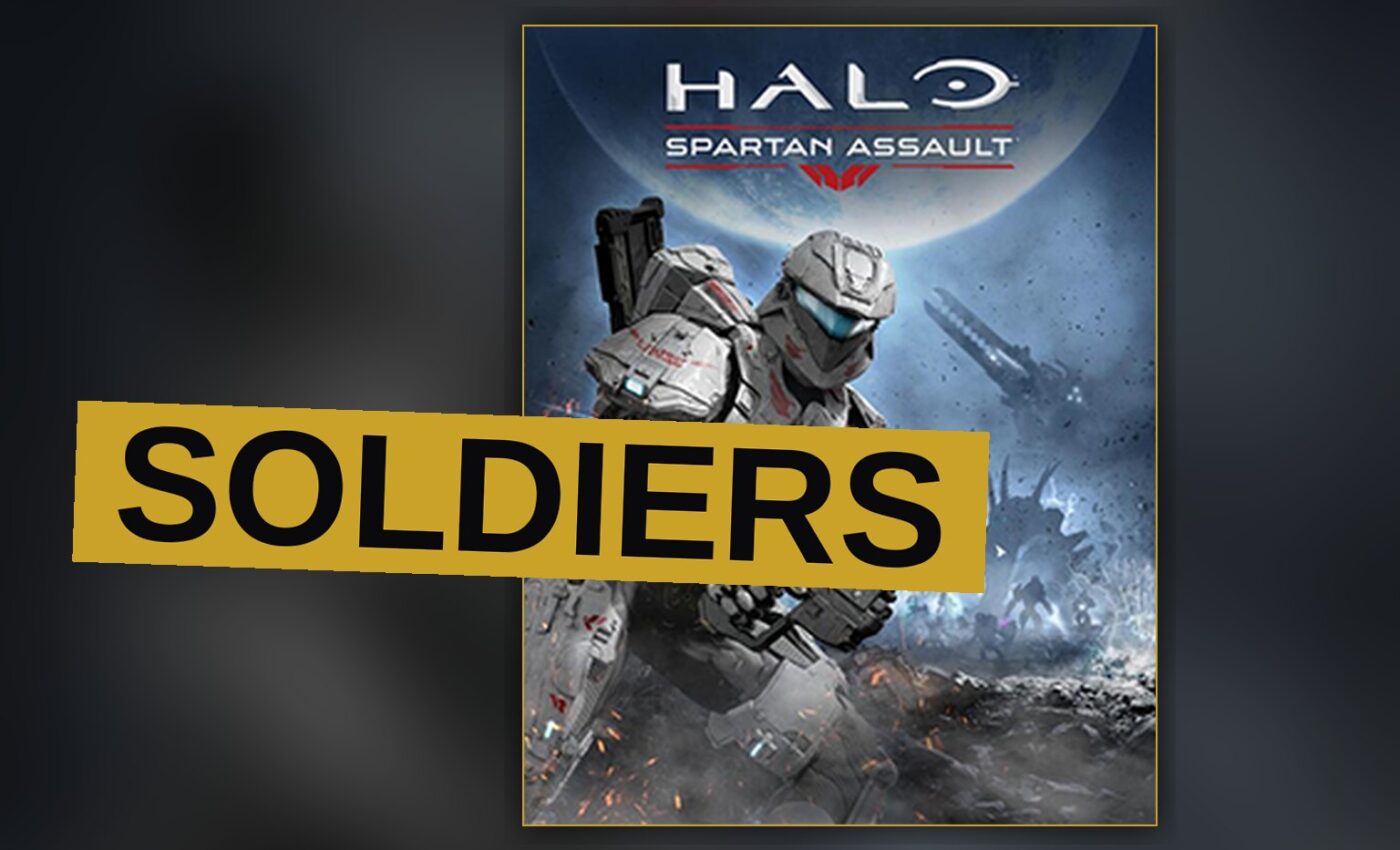
Halo: Spartan Assault arrived on July 18, 2013, for Windows 8 and Windows Phone 8, and it was the first mobile game in the Halo franchise. That fact is the whole pitch and the whole problem. 343 Industries and Vanguard Games built a twin-stick shooter for a phone, then ported it to Xbox 360, Xbox One, Steam and iOS. The game is set between Halo 3 and Halo 4, and it puts players behind Sarah Palmer and Edward Davis as they fight a Covenant splinter faction that ignored the ceasefire. It is a real Halo game. It is also a small one.
Trailer, via VentureBeat.
Sarah Palmer and Edward Davis on Draetheus V
The setup is thin but serviceable. Palmer and Davis are Spartans stationed on the planet Draetheus V when a breakaway Covenant group attacks the colony. That faction is led by Merg Vol, and it discovers that Draetheus’ moon is not a moon. It is a Forerunner weapon. Merg Vol’s forces activate it, the planet starts coming apart, and the humans evacuate. Davis dies holding the line so the rest can escape. Palmer hunts Merg Vol down, kills him, sabotages the weapon and gets off the moon.
That is a full Halo story compressed into a top-down shooter. The campaign runs 25 single-player missions at launch, divided into chapters and then into individual missions. An additional campaign arrived later as downloadable content. The Operation Hydra campaign sends Palmer back to X50 chasing a signal, which turns out to be a distress call from Davis. She reaches the core and finds him dead. The moon has been using his remains to build an unknown device, and she extracts it for study.
Twin Sticks, Virtual Joysticks, and the Control Problem
The control scheme depends on what you are playing on, and this is where the game splits in two. On touchscreen devices, the left virtual stick moves Palmer or Davis and the right stick aims fire, with buttons along the screen edge. On Xbox 360 and Xbox One, you use a physical gamepad. On Windows, you can use a gamepad or keyboard and mouse. Many weapons auto-target enemies in the direction you are firing, which softens the aiming problem on glass.
The Windows Phone and Windows PC versions support cross-play. You can start a mission on one device and finish it on another. That is a genuinely useful feature for a game designed to be played in short bursts, and it is the clearest sign that the developers understood their platform.
A Horde Mode Worth the Console Port
The Xbox 360 and Xbox One versions add a cooperative mode that the mobile versions do not have. Two players hold out against waves of Flood across five stages, with new Spartan abilities and weapons built for the mode. It is separate from the campaign by design, and it is the best reason to play Spartan Assault on a console rather than a phone.
The progression loop ties back to the wider series. Playing earns experience points and content for use in Halo 4. Missions and rotating weekly challenges pay credits, which buy boosts or different weapons for each mission. If you would rather not grind, you can spend real currency instead. The game leans on classic weapons and vehicles from the franchise, and they look right.
Players control the human soldiers Sarah Palmer and Edward Davis as they fight a new splinter faction of the alien Covenant.
That sentence is the game’s entire identity, and it is also its ceiling.
What Spartan Assault Gets Right, and What It Cannot Fix
The critical reception was mixed, and the aggregate score sits at 6.6 out of 10 across 10 outlets. Reviewers agreed on one thing: the game nails Halo’s look. The aesthetic holds up. The problem is everything around it. Mobile versions scored lower on average than the console releases, which tells you where the friction lives.
Here is what the game offers, plainly:
- 25 single-player missions at launch, plus a downloadable campaign
- A cooperative horde mode on Xbox 360 and Xbox One only
- Cross-play between Windows Phone and Windows PC
- Credits, weekly challenges, and progression that feeds Halo 4
Spartan Assault was followed by a sequel, Spartan Strike, in 2015. That sequel exists because this one proved the format could work at all. After years of rumored or cancelled handheld Halo projects, Spartan Assault shipped. That matters more than its review scores suggest.
Our verdict is that Spartan Assault is a competent proof of concept wearing a franchise’s clothes. The Palmer and Davis story has real stakes — a planet destroyed, a Spartan dead, his remains turned into something Palmer has to carry home — and the game tells it in missions short enough for a commute. The horde mode is the strongest piece of design here, and it is locked to consoles, which undercuts the entire point of a mobile Halo. The touch controls work, but they never feel like Halo. They feel like a game about Halo.
The 6.6 is fair. Spartan Assault does not fail at anything it attempts. It just attempts less than the name promises, and the gap between the franchise and the format is visible in every mission. Play it on a console for the co-op, or on a phone for the cross-play, and you will get a small, clean slice of the universe. Expect nothing larger.
6.6 of 10.
Get the Notebook.
The day's best stories and every fresh verdict, in plain English, in your inbox by seven. One email a day, no more.