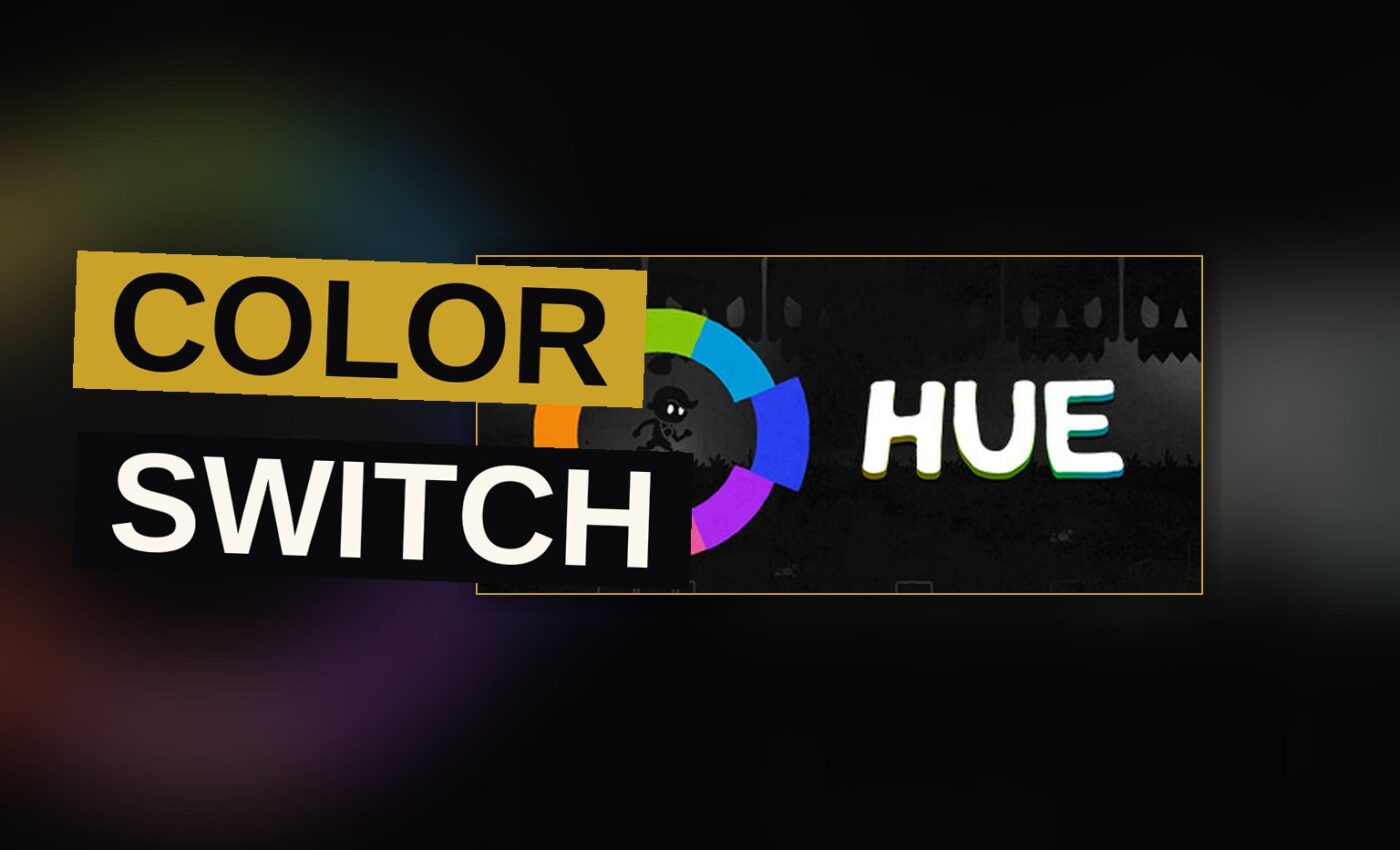
Hue changes color, and the world bends around it. The puzzle game asks players to switch the color of light passing through a room, and each change alters what objects can be seen and walked on. It is a simple idea that rarely feels tired across its dozen levels.
Trailer, via Curve Games.
The Core Idea
The core trick is the whole game. Players pick a new color, and walls, floors and enemies become visible or invisible depending on what hue is chosen. A wall that blocks the path in one color becomes a walkable floor in another, and the puzzles built on this ask players to move through rooms in ways that make sense only after the color shifts.
Level Design
The levels are arranged around a central hub, and each one adds a new rule to the color system. Some rooms test memory, asking players to return later once a new color is available. Others force players to juggle multiple colors at once, switching between them while moving through tight spaces.
Hue’s best moments come when the color switch forces a rethink of a space the player just crossed.
Presentation
The art style leans on flat, bright shapes, and the color changes are easy to read even when the screen fills with several hues at once. The soundtrack matches the visual calm with gentle piano music that stays out of the way.
Pace and Length
The game moves fast. Levels rarely drag, and the difficulty rises gently enough that failure feels like a missed step rather than a harsh blow. The dozen levels can be finished in under three hours, though extra modes and a level editor extend the life of the game for players who want more.
Weak Points
Not everything lands. Some puzzles repeat the same trick twice in a row, and the final few levels lean harder on timing than the earlier ones do. The level editor, while generous, does not offer the same polish as the main game.
Where It Stands
Hue is strongest when it trusts its own idea and weakest when it stretches it too thin. Here is how the parts rank:
- The core color switch mechanic — the heart of the game
- Level design — varied and mostly satisfying
- Presentation — clean, readable, pleasant to look at
- Extra modes and editor — generous but less polished
- Final levels — rely on timing more than earlier puzzles
The Verdict
Hue earns a 7.8 out of 10. It is a small game that commits fully to one idea and carries it through, warts and all. The color switch remains the highlight, even when the rest of the package shows rough edges.
Get the Notebook.
The day's best stories and every fresh verdict, in plain English, in your inbox by seven. One email a day, no more.