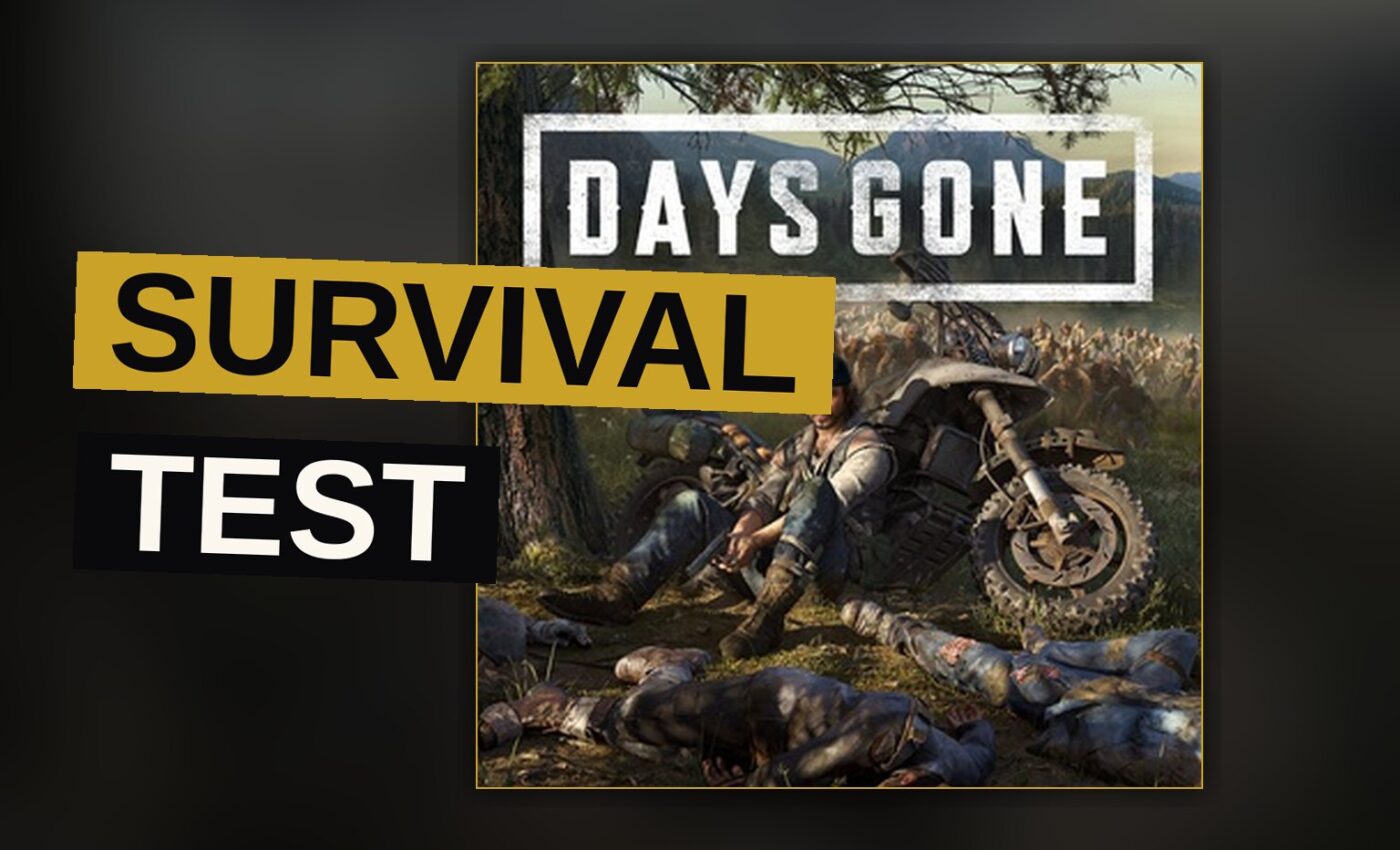
Days Gone drops players into a ravaged Pacific Northwest where a virus has turned most of humanity into violent, hulking creatures called the Fated. The game asks players to survive as Deacon St. John, a former outlaw and motorcycle courier who now runs missions for a local gang while hunting down his ex-wife, Sarah. It is a game about scarcity, fear, and the slow grind of living in a world that wants to kill you. It is also a technical showcase for Bend Studio, the developer behind the project, and a study in how far a linear narrative can stretch across an open map before it snaps.
The setup is simple. Deacon rides a bike through a forested region overrun by the infected, and he takes jobs to fund his search for Sarah. That search is the emotional core of Days Gone, and the game spends a good portion of its runtime circling around it. The problem is that the open-world design, built around a map that rewards exploration, keeps getting in the way of the story it wants to tell.
Trailer, via IGDBcom.
The World Map
The map itself is the first thing players will notice. Days Gone uses a terrain system that breaks apart underfoot, with grass bending and dirt crumbling beneath Deacon’s boots. Trees sway in the wind, and the sky shifts color depending on the time of day. This is a game that understands the power of visual detail, and it shows in almost every corner of its world.
The problem is that this beauty comes at a cost. The map is dense with collectibles, side quests, and optional encounters, but many of these are filler rather than meaningful content. Players can spend hours riding from one waypoint to another, only to find a mission that asks them to drive a vehicle into a group of infected or to clear out a small camp. These tasks rarely feel essential, and they break the momentum of the main story.
Deacon’s Tools
Deacon carries a backpack full of gear, and the inventory system is one of the game’s strengths. He can craft weapons, repair vehicles, and cook food to keep his health up. The crafting loop is satisfying, even if it is repetitive. Finding the right parts in the wild, combining them into a useful tool, and then using that tool to solve a problem feels good, even when the problems themselves are easy.
The combat is where Days Gone stumbles. Deacon can fight with melee weapons, guns, and explosives, but the enemy AI is inconsistent. Infected will sometimes ignore him entirely, while others will charge him without warning. This inconsistency makes fights feel unpredictable, and it takes away from the sense of control that an action game should offer.
Riding Through the Ruins
The motorcycle is the star of the show. Deacon’s bike can be upgraded with better engines, tires, and armor, and riding it across the open roads is a joy. The physics are solid, and the handling is tight enough that players can drift around corners without losing speed. It is a pleasure to ride from one settlement to another, even when the road between them is empty.
The bike also serves a practical purpose. It can be used to escape from groups of infected, and it can be used to ram through barricades. The game encourages players to use the bike creatively, and those moments stand out as some of the best in the entire experience.
The Story’s Weak Points
The narrative suffers from pacing issues. The main plot moves forward in fits and starts, with long stretches of side content that do little to advance the story. Characters are introduced and then forgotten, and the emotional beats of Deacon’s relationship with Sarah feel underwritten. The game tries to build tension around her fate, but the writing never quite delivers on the promise.
There is also a problem with the structure. Days Gone is designed to be played in long sessions, but its checkpoints are sparse, meaning players often lose progress when the game crashes or when they simply want to stop. This is a frustrating issue, especially in a game that relies heavily on player investment.
Performance and Technical Issues
Days Gone launched with a patchwork of technical problems. The frame rate drops during large battles, and the draw distance can suffer in dense environments. The game also has a history of performance issues, particularly on the PS4, which has led to a perception that the game is less polished than it should be.
On PC, the game performs better, but it still requires a strong machine to run smoothly. The load times are long, and the game can stutter during transitions between areas. These issues are not fatal, but they do detract from the overall experience.
What Works Well
Despite its flaws, Days Gone has several moments that stick. The setting is atmospheric, and the sound design does a great job of building dread. The infected, while predictable in their behavior, are unsettling to encounter in large numbers. The game also does a good job of showing the decay of society, with abandoned homes, empty streets, and scavenged camps giving the world a lived-in feel.
The character of Deacon himself is likable, even if his motivations are thin. He is a man who has lost everything, and his determination to find Sarah feels genuine. His interactions with other survivors are some of the more memorable scenes in the game, even when the dialogue is not particularly sharp.
The Score
Days Gone is a game of highs and lows. Its technical ambition is admirable, and its world is one of the most detailed in recent memory. But its storytelling struggles to match that ambition, and its open-world design often frustrates more than it entertains. The result is a game that is worth playing for its craft, but one that falls short of greatness.
Here is a rough ranking of the game’s strongest and weakest elements:
- The motorcycle and its handling
- The atmospheric setting and sound design
- The crafting and inventory systems
- The main storyline
- The enemy AI and combat consistency
- The side content and filler missions
- The technical performance on PS4
Final Word
Days Gone is a flawed but ambitious survival game. It succeeds in creating a believable post-apocalyptic world and giving players a fun way to move through it. It fails in telling a coherent story and in providing a satisfying open-world experience. The game is worth a playthrough for anyone interested in the genre, but it is not a game that will hold up to repeated visits.
Its score reflects this split. Days Gone earns a 7.5 out of 10.
Get the Notebook.
The day's best stories and every fresh verdict, in plain English, in your inbox by seven. One email a day, no more.