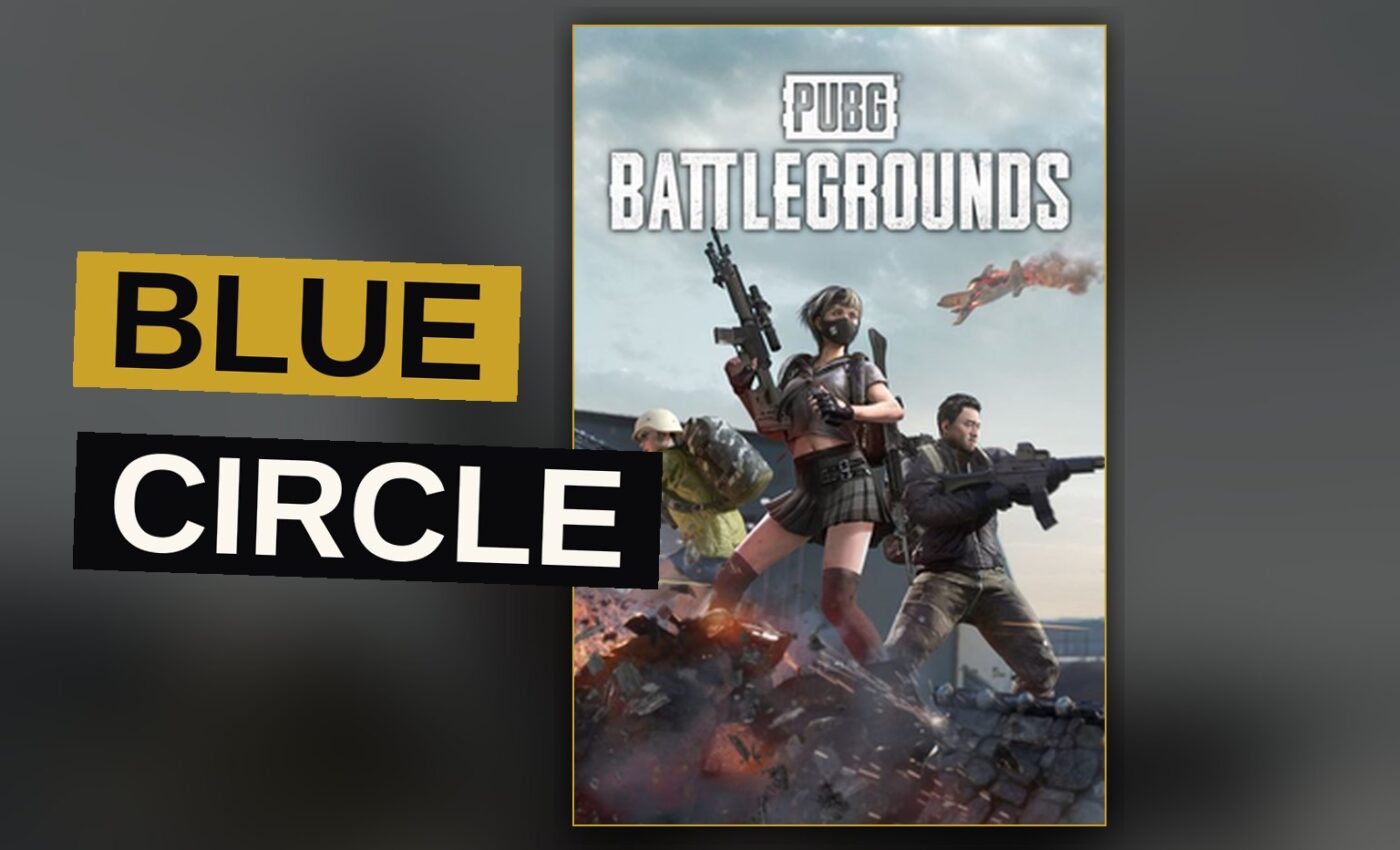
PUBG: Battlegrounds arrived on Steam in March 2017 as an early access title, and it did not look like much. It ran badly. It was ugly in places. It was also the most important shooter of its decade, because it understood something the rest of the industry was slow to see: that the tension of a hundred strangers hunting each other across a shrinking island is worth more than any amount of polish.
Trailer, via IGDBcom.
A Hundred Strangers and One Island
The premise is simple enough to explain in a sentence and deep enough to hold for years. Up to one hundred players parachute onto an island, search for weapons and equipment, and fight to be the last one standing. Players enter solo, as a duo, or in a squad of up to four. The last person or team alive wins.
That is the whole game. Everything else is pressure applied to that idea.
The Shrinking Circle Does the Work
Every few minutes, the playable area of the map shrinks toward a random point. Anyone caught outside the safe zone takes damage in increments and is eventually eliminated if they do not get inside in time. Players see the boundary as a shimmering blue wall that contracts over time.
The result is a game that refuses to let anyone camp comfortably. The circle forces encounters. It turns a large map into a small one, and it turns patience into a gamble with a deadline.
Eight Maps and Nothing to Start With
Each match begins with a plane crossing one of eight maps, which range in size and terrain from 1 to 64 square kilometers. The flight path changes every round, so players must decide fast when to eject and where to land.
Everyone starts with nothing but customized clothing, and the clothing does not affect gameplay. Everything else is found:
- Weapons, vehicles, armor and other equipment scattered through buildings and ghost towns
- Loot distributed procedurally at the start of each match
- Better gear concentrated in high-risk zones
- Gear stripped from killed players, who can be looted
That last point matters most. In PUBG: Battlegrounds, every fight you win makes you a bigger target, because the person you killed had things someone else wants.
Two Camera Angles, One Rule
Players choose between first-person and third-person perspective, each with its own advantages and disadvantages in combat and situational awareness. Server-specific settings can force everyone into one perspective to remove certain advantages.
As of 2026, all official competitive modes are third-person only. That is a real constraint on the game’s competitive identity. The mode that decides tournaments is the one that lets players see around corners without exposing themselves.
Greene Built It in ARMA First
PUBG: Battlegrounds did not appear from nowhere. Brendan “PlayerUnknown” Greene created the battle royale game modes in the ARMA series and in H1Z1: King of the Kill before working with a veteran team at PUBG Corp. to build this game under his creative direction.
The game itself was inspired by the Japanese film Battle Royale from 2000. Greene’s ARMA mods were the proof of concept. PUBG: Battlegrounds was the product.
From Early Access to Free to Play
The game hit Windows through Steam’s early access beta program in March 2017 and got a full release that December. Microsoft Studios put it on Xbox One the same month through the Xbox Game Preview program, with a full release in September 2018.
It was later ported to PlayStation 4, Xbox Series X/S, PlayStation 5, and the Stadia streaming platform. A mobile version, PUBG Mobile, came to Android and iOS. The game was renamed PUBG: Battlegrounds in 2021 and has been free-to-play on all platforms since January 2022.
It is still developed under the games as a service model, which means it is never finished, only updated.
What Still Holds Up
The technical flaws are real and were real at launch. The game stutters. It has never been as smooth as its imitators. Reviewers in 2017 noted those flaws and still came away impressed, because the gameplay underneath was a genuinely new type of experience.
That assessment has aged well. The battle royale format PUBG: Battlegrounds established now runs through the entire shooter market, and most of the games that copied it sanded off the rough edges without matching the dread of the original.
The shrinking blue wall remains the best idea in the genre. It solves a problem every large-scale shooter has: how to make a big map feel urgent. PUBG: Battlegrounds answers that with a timer nobody can ignore.
Our Score
Here is where this paper lands. PUBG: Battlegrounds is not a great piece of software. It is a great piece of design wrapped in a serviceable one. The parachute drop, the loot scramble, the blue wall, the last two players crawling through grass — those are the parts that matter, and they still work.
The third-person-only competitive rule is the weakest part of the package. Forcing every official competitive mode into one perspective hands an advantage to players who play the angles rather than the fight, and it narrows a game that was built on choice.
Everything else holds. The eight maps, the procedural loot, the squad play, the free-to-play turn in 2022 — all of it keeps the original tension intact. PUBG: Battlegrounds is the rare game that changed its industry and stayed worth playing after the imitators arrived.
Get the Notebook.
The day's best stories and every fresh verdict, in plain English, in your inbox by seven. One email a day, no more.