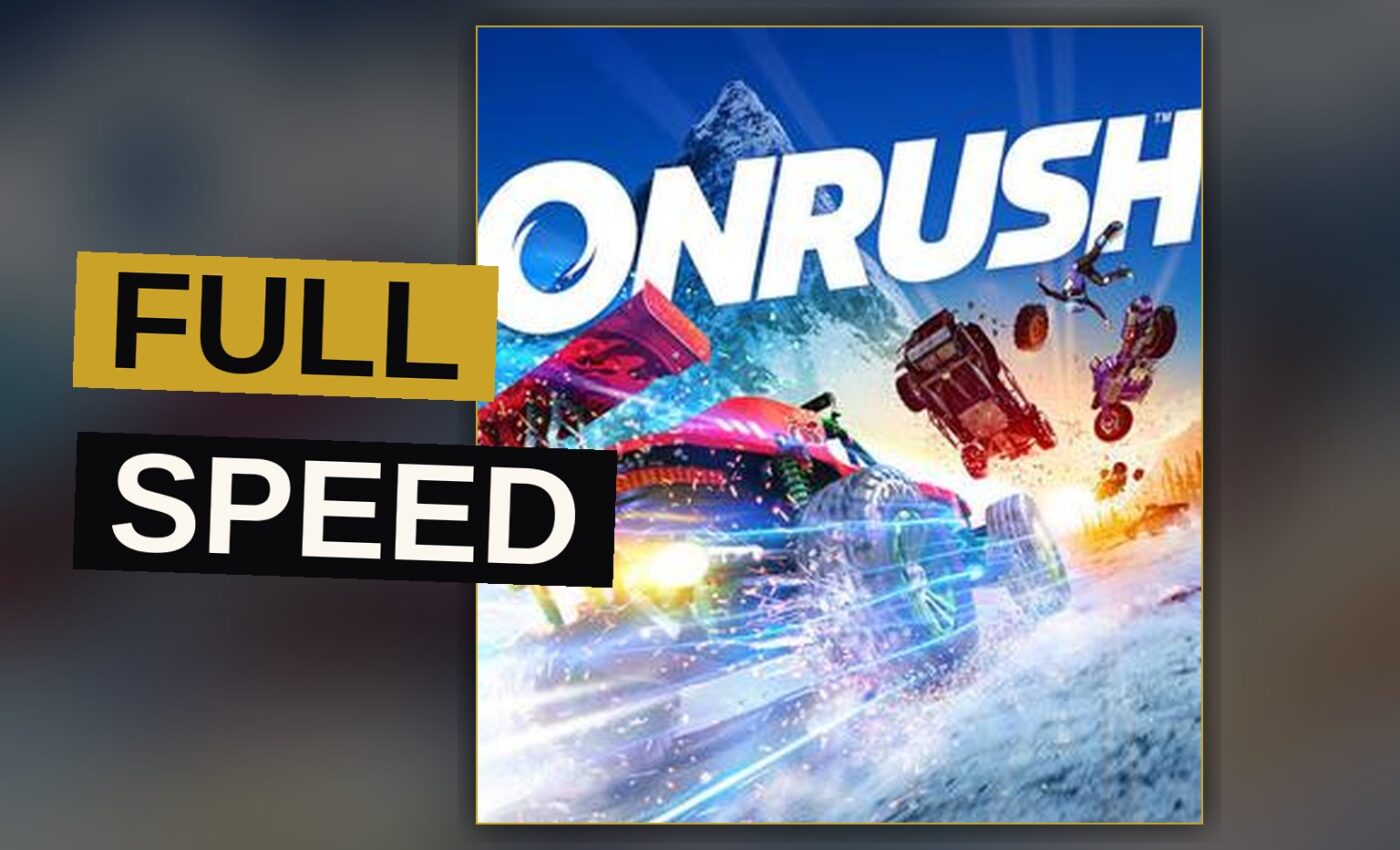
Onrush arrived on PS4 and Xbox One in 2018 as Codemasters’ answer to the racing games that had come before it. The studio wanted a game built around fast, aggressive driving, and it wanted players to feel like they were always in the fight. The result is a game that rewards aggression and punishes hesitation in equal measure, and it succeeds far more often than it fails.
Trailer, via IGDBcom.
The Core Idea
Onrush takes the arcade racer formula and strips away most of the patience that comes with it. There are no long straightaways where you can drift or cruise at ease. The tracks are narrow, the turns are tight, and the cars move at full speed through corners. The game is built around collisions, boosts, and power-ups that change the rules of the race mid-race.
“The game is built around fast, aggressive driving.”
That single idea shapes everything about Onrush, from how it handles to how it looks to how it plays.
Handling and Control
The handling model in Onrush is where the game’s identity becomes clearest. Cars drift and slide through corners, but the physics push you toward the center of the track. If you enter a corner too wide, the car fights you. If you enter it too tight, the car fights you again. The game wants you to find a rhythm, and it will punish you for breaking it.
Boosts matter. They let you slip past other racers, and they stack on top of each other. That means a long string of successful overtakes can leave you moving faster than anyone else on the track. The feeling of momentum building up is one of the best parts of the game.
Power-ups add a layer of chaos. Some give you extra speed, some slow down your rivals, and some make you invincible for a short period. Using them at the right moment can turn a losing position into a winning one, and learning when to hold back and when to strike is part of the skill floor.
Tracks and Variety
The tracks in Onrush are varied, but they share a common trait: they are designed to keep you moving. Some are built around tight winding roads, others around open straights with boosts scattered across them. Each track forces you to choose between taking the safe line and risking a big gain.
The variety holds up across multiple playthroughs. Because the power-ups and boosts are randomized, a race on the same track can feel entirely different depending on what you draw. That replayability is one of the game’s strongest points.
Multiplayer and Chaos
Onrush is at its best when you’re playing with others. The online mode is where the chaos really shines, because you’re constantly dodging, boosting, and fighting for position. The game rewards players who are willing to commit fully to a race, and it punishes those who sit back and wait.
The matchmaking system works well enough that you rarely have to wait long to get into a race. The game also supports split-screen multiplayer, which is a welcome addition for those who want to play with friends in the same room.
Presentation and Style
The presentation in Onrush is loud and energetic. The cars are sleek and futuristic, and the tracks are bright and colorful. The sound design is full of engine roars and boost noises, and the whole package feels alive.
The game’s visual style is consistent across all its modes, whether you’re racing on your own or competing against others online. The menus are clean and easy to navigate, and the loading times are short.
Comparing Modes
| Mode | Focus | Best For |
|---|---|---|
| Arcade Career | Story-driven career progression | Players who want a longer campaign |
| Time Trial | Solo racing against the clock | Players who want to chase personal bests |
| Online Racing | Competitive multiplayer | Players who want chaos and competition |
The arcade career mode is a solid way to learn the ropes, but it’s not the main reason to play. The online racing is where the game truly shines, and it’s the mode that keeps players coming back.
Where It Falls Short
Onrush isn’t perfect. The game’s focus on aggression means that some players might find it frustrating, especially when they’re new to the controls. The game doesn’t offer much in the way of tutorials beyond letting you try things out, so you’ll likely spend some time figuring out how the physics work.
There’s also a noticeable drop in performance on PS4 compared to Xbox One. The frame rate can stutter during large battles, and the game doesn’t handle the PS4 hardware as well as it handles the Xbox One hardware. That’s a shame, since the PS4 is the platform most people will play on.
Final Verdict
Onrush succeeds because it commits fully to its idea. It’s a game about aggression, and it delivers on that promise without compromise. The handling is demanding, the power-ups are chaotic, and the tracks are built to reward boldness. It’s not a game for everyone, but for those who enjoy the thrill of a close race, it offers some of the most satisfying moments in the genre.
The game is at its best when you’re pushing it to its limits. When you’re dodging other cars, boosting through a corner, and drawing a power-up at the exact right moment, Onrush feels like nothing else on the market. Those moments are rare, but they’re unforgettable.
Onrush is a strong entry in the arcade racer genre. It’s a game that demands your attention and rewards your effort, and it’s best enjoyed with others. It’s not without flaws, but the highs are high enough to justify the lows.
Get the Notebook.
The day's best stories and every fresh verdict, in plain English, in your inbox by seven. One email a day, no more.