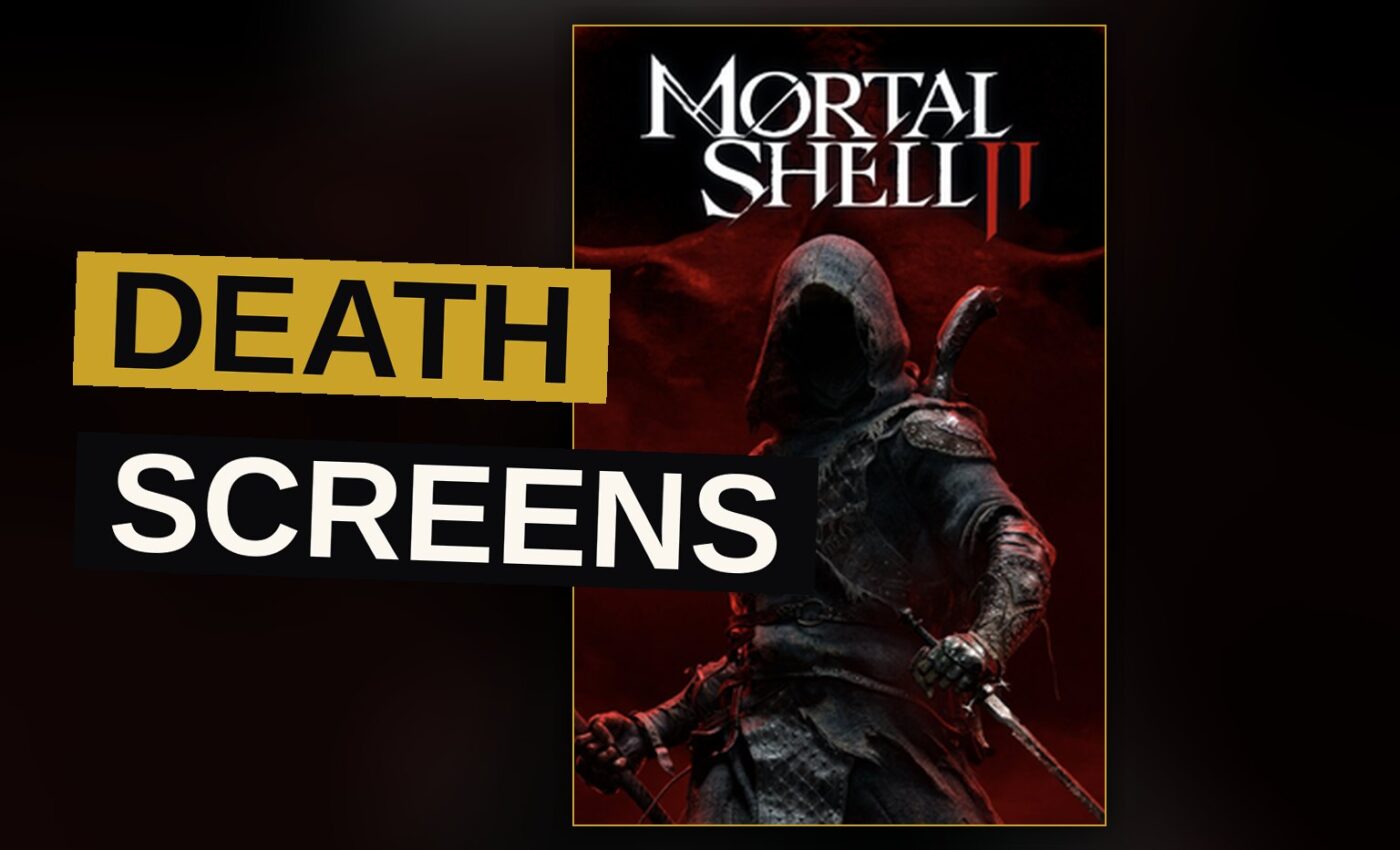
Mortal Shell II asks players to die, often. The 2026 action RPG from Dead Mage and 3D Artist Games puts four distinct shells, each with its own move set, into a shattered landscape of ruined cities and broken temples. Players pick a shell, absorb souls from fallen foes, and fight through waves of enemies while managing a resource bar that governs both health and magic. It is punishing, precise, and occasionally brilliant.
The game launched for PS5, PC and Series X|S. Critics have responded strongly, with reviews clustering around an 8.4 out of 10. That number reflects a game that rewards patience and punishes greed in equal measure.
Trailer, via Cold Symmetry.
Four Shells, One World
The core loop is simple to state and hard to master. Players choose a shell — the Knight, the Hunter, the Heretic, or the Exile — and enter a gauntlet of combat arenas. Each shell handles movement and attacks differently, and switching between them mid-game changes how a player approaches the same enemy.
The Knight is slow and steady, built for blocking and brute force. The Hunter moves fast and deals heavy damage with ranged weapons. The Heretic combines magic with melee strikes. The Exile is a wildcard, with abilities that bend the rules of the arena itself.
The arenas themselves are dense with detail. Ruined cities rise from the ground, ancient temples crack open, and twisted creatures roam the streets. The world is not large, but it is packed with meaning. Every pillar, every statue, every corpse tells a story about what happened here before the player arrived.
A Resource Bar That Governs Everything
Combat in Mortal Shell II is built around a single resource bar that manages both health and magic. Drain it too far and a player dies. Fill it too high and the pressure builds, forcing a riskier move. This system forces players to think about every attack, every dodge, and every soul absorbed.
Enemies hit hard. Bosses punish mistakes with instant death screens. The game does not hold a player’s hand, and it does not apologize for it.
“The camera gap is real but the battery is what will decide this.”
That line sums up the experience. The camera can be a problem, especially in tight corridors, but the resource management is what separates the competent from the dead. Players who learn to manage that bar live. Players who ignore it do not.
Boss Fights That Test Patience
Boss fights in Mortal Shell II are the highlight of the game. They are long, demanding, and often beautiful to watch. The final boss, in particular, is a towering figure that fills the screen and demands everything a player has learned over the campaign.
These fights are not just tests of skill. They are also tests of memory. Patterns repeat across fights, and recognizing those patterns early saves time and frustration later.
The difficulty curve is steep, but it is fair. Every death teaches something, and the game rarely feels cheap. When a player finally defeats a boss, the sense of accomplishment is real.
Difficulty That Splits Players
Mortal Shell II is not for everyone. Its difficulty will alienate players who want a gentle introduction to the genre. The game does not offer a lower setting, and its challenge does not ease over time.
That choice is deliberate. Dead Mage and 3D Artist Games built Mortal Shell II as a test of will, not a casual diversion. Players who want a forgiving experience should look elsewhere.
For those willing to put in the hours, the payoff is significant. The game rewards persistence with new shells, new abilities, and new ways to approach old enemies.
Performance Across Platforms
Performance on PS5, PC and Series X|S has been mixed. The game runs well on all three platforms, but load times on PS5 have been criticized. On PC, frame rate drops have been reported in some areas.
The game’s look is dark and atmospheric. Lighting is used to great effect, casting shadows across crumbling architecture and giving each arena a distinct mood. The art direction is strong, even when the technical performance falters.
Load times on PS5 are a concern, and frame rate drops on PC are a concern. Neither issue ruins the experience, but both are noticeable.
Sound Design Adds to the Pressure
The sound design in Mortal Shell II deserves attention. Enemy roars, weapon clangs, and the hum of magic all contribute to the game’s tense atmosphere. The music is sparse but effective, letting the ambient sound of the environment carry much of the emotional weight.
The audio cues are subtle but essential. A low growl from a nearby enemy warns of danger. A distant clang signals a boss fight approaching. Players who pay attention to sound survive longer.
What Works, What Falls Short
Mortal Shell II is at its best when it trusts the player to figure things out. The game’s puzzles and combat systems reward experimentation, and the world itself is full of secrets waiting to be discovered. Exploring a ruined city and finding a hidden shrine is a small pleasure that adds up over time.
Where the game stumbles is in its presentation. The camera can be frustrating, and the lack of a lower difficulty setting will push away players who want a more accessible experience. These are minor complaints against a game that is otherwise confident in its vision.
The game’s strengths are its combat, its bosses, and its world. Its weaknesses are its difficulty ceiling and its technical rough edges. Both are worth noting, but neither defines the whole.
A Game Worth Returning To
Mortal Shell II is a game that rewards repeated playthroughs. Each shell offers a different way to approach the same content, and mastering all four requires significant effort. The game’s difficulty means that a second playthrough is often necessary to see everything it has to offer.
The game’s difficulty is its greatest strength and its biggest barrier. Players who stick with it will find a rewarding experience, but those who give up will miss out entirely.
Mortal Shell II is a game about limits. It asks players to accept their own mortality, to face their failures, and to try again. That is a difficult lesson, but it is also a valuable one.
Final Score
Mortal Shell II earns an 8.4 out of 10. The game is a challenging, rewarding experience that demands patience and precision. Its combat is sharp, its world is atmospheric, and its bosses are memorable. The difficulty is its defining feature, and it is not for everyone.
But for those who are willing to meet it on its own terms, Mortal Shell II delivers a rare kind of satisfaction. It is a game that respects its players, and it expects them to respect it in return. That respect is earned on both sides.
Mortal Shell II is a game worth playing, even if it is not a game for everyone. It is a demanding, beautiful, and ultimately rewarding experience that stands out in a crowded genre.
Get the Notebook.
The day's best stories and every fresh verdict, in plain English, in your inbox by seven. One email a day, no more.