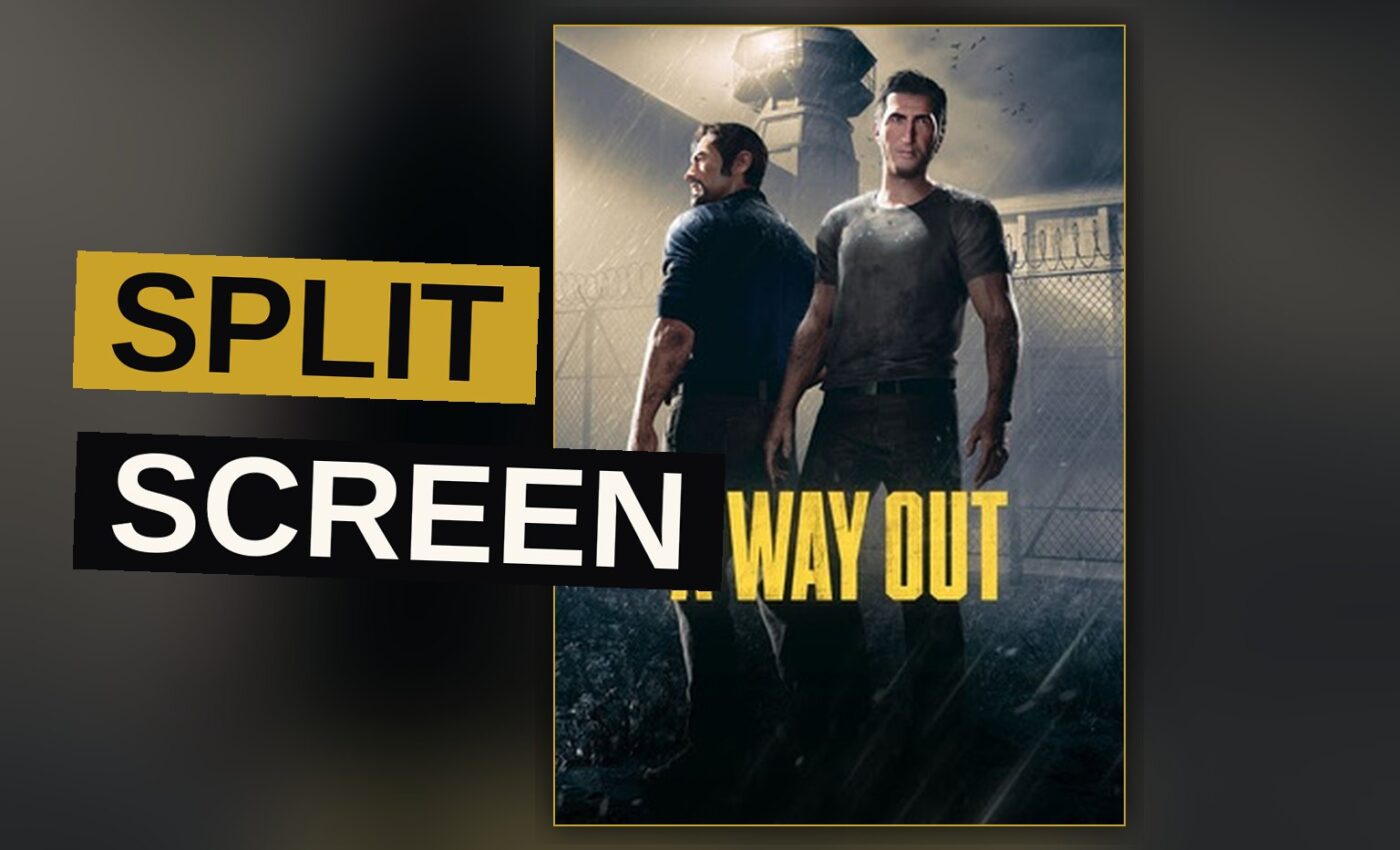
A Way Out asks players to split the screen and play together, and that single design choice defines everything about it. Released in 2018 for PS4, PC and Xbox One, the game pairs two players who control separate characters through a prison break and its aftermath, and it never lets either player act alone. That constraint is the whole idea. It is also the reason the game feels both fresh and limited.
The Setup
A Way Out drops two strangers into the same cell block, each serving time for crimes they did not commit. Leo, the main character, is a career criminal with nothing left to lose. Vincent, his partner, is a quiet man with a family he has not seen in years. The game opens with both men locked up, facing a life sentence, and the entire plot turns on a single question: can two people who barely know each other trust each other enough to escape?
The setup is simple, and it works. The game knows exactly what it wants to say about partnership, and it says it without wasting a scene. Every mission, every conversation, every failed attempt at freedom circles back to that central bond between Leo and Vincent. The writing stays focused on the two leads rather than trying to pile on side characters or subplots, and that focus holds the story together.
Playing Together
The core mechanic is shared control. Players take turns guiding their character through puzzles, conversations and fights, while the other player watches and responds to the situation on screen. This means one player might push a button to start a chain reaction, while the other player finishes the move seconds later. The timing requires practice, and the game leans heavily on it throughout.
This is where A Way Out earns its reputation for difficulty. Some puzzles demand exact coordination between the two controllers, and a single mistake can send a mission back to the start. The game does not explain these moments clearly, and it rarely tells players what went wrong. That frustration can build quickly, especially during missions where the stakes feel high and the solutions feel arbitrary.
The game also limits what each player can do. Leo can fight and intimidate, while Vincent relies on stealth and persuasion. This balance forces players to think about which skills to bring to a given room, and it gives the partnership a reason to exist beyond the split-screen gimmick. It is a clever way to make the pairing feel necessary rather than optional.
The Look of A Way Out
The game runs on Unreal Engine, and it shows. The prison scenes are grim and well-lit, with a muted color palette that keeps the setting grounded in reality. The outdoor levels, where Leo and Vincent escape into the countryside, are brighter but still restrained. Character models hold up well, and the animation carries genuine weight, especially during the action sequences.
The sound design matches the visuals. Footsteps echo through corridors, alarms ring out, and the score shifts between tense strings and quiet piano pieces. It is a game built to be played loud, with the screen split and the speakers turned up, and it delivers on that promise. The music swells at key moments, and the game knows when to let silence do the work.
Where It Falls Short
The pacing drags in the middle stretch. A Way Out starts strong, with a gripping prison break, and it ends with a satisfying finale, but the hours in between lean heavily on stealth missions and puzzle rooms that repeat the same tricks. Some of these levels feel thin, and the game does not always find new ways to use its split-screen mechanics. The result is a middle portion that sags rather than builds toward the climax.
The writing also stumbles occasionally. Supporting characters are drawn thinly, and some of the dialogue feels scripted rather than natural. The game tries to build emotional weight around Leo and Vincent’s relationship, but it leans on exposition rather than letting the two characters talk to each other directly. A few scenes fall flat because the script explains the feeling instead of showing it.
The Verdict
A Way Out is a game about trust, and it mostly earns that theme. The split-screen design is a genuine risk, and it pays off more often than it fails. The puzzles are clever when they land, and the action sequences are tense when the timing holds. The game is at its best when both players are engaged, working together to solve a problem or avoid a guard.
It is less successful when it asks players to sit and watch. Some missions require one player to wait while the other completes a task, and those stretches can feel tedious. The game also struggles with its length. At its full length, it asks for a commitment that some players may not want to make, and the middle portion does not always justify that investment.
| Element | Strength | Weakness |
|---|---|---|
| Split-screen design | Original and engaging | Requires coordination and patience |
| Story | Strong character work | Thin supporting cast |
| Pacing | Strong opening and ending | Middle portion drags |
| Visuals | Well-rendered environments | Some levels feel repetitive |
Final Word
A Way Out is a game worth playing with a friend, but it is not a game worth playing alone. The split-screen mechanic is the star, and everything else supports it. The puzzles, the action and the story all serve the partnership, even when the game stumbles along the way. It is a game that rewards cooperation and punishes isolation, and that trade-off is the point.
The game does not reinvent the genre, and it does not need to. What it does, it does well, and it does it with confidence. The score reflects that balance: a solid, memorable experience that falls short of greatness but delivers on its promise.
Get the Notebook.
The day's best stories and every fresh verdict, in plain English, in your inbox by seven. One email a day, no more.