
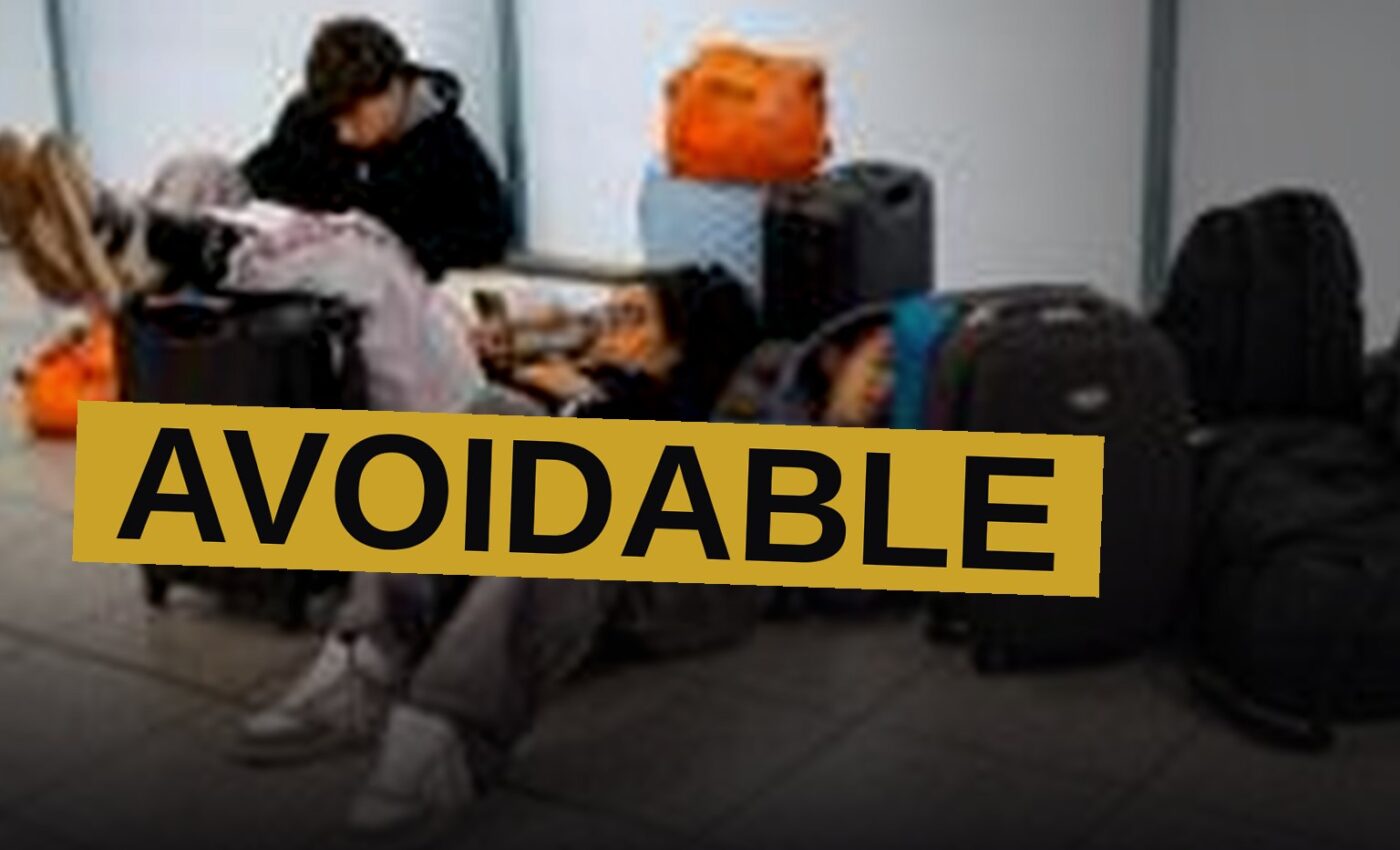
This week’s air traffic control breakdown, which triggered severe flight disruption across the country, could have been prevented, according to remarks made by the UK transport secretary.
The Commons was told by Heidi Alexander that she had instructed an independent examination by the aviation watchdog of the system run by Nats, which failed for four hours on Tuesday. Over 2,000 flights have been cancelled, with passengers still finding it difficult to travel in and out of the UK on the second day of disruption.
Alexander spoke with Martin Rolfe, the leader of Nats, before ruling out a cyberattack. She added: “I do not believe this issue was unavoidable.”
Alexander’s Statement
Nats has apologised for its third major technical fault in three years. Alexander said she discussed with Rolfe how Nats, which is 49% owned by the government, “responded to resolve and minimise the disruption as quickly as possible”.
The woman insisted there needed to be “tough questions about resilience of Nats systems”, appending: “We also need to think about consumer redress issues.”
On Wednesday, before the close of business, the government stated its trust in Rolfe, who has held the leadership of Nats for 11 years. Since then, airlines including Wizz Air and Ryanair have asked for him to resign.
Two Investigations Ordered
The request for a probe into the matter was directed at Nats, with a deadline of one week to deliver a report. Alexander stated that she has additionally requested that the Civil Aviation Authority carry out its own independent examination, with an update expected after six months.
Airlines UK, which represents the country’s carriers, said it had written to Alexander to “register serious concerns over yesterday’s technical failure at Nats – the third major system failure in three years – which has caused major disruption across the UK’s aviation network”.
Tim Alderslade, the chief executive of Airlines UK, made his view clear: airlines end up paying for the errors of other groups, even though those organisations rarely suffer any financial penalty themselves.
“Accountability should sit where responsibility lies and the Civil Aviation Bill offers the opportunity to address this.”
What Happened on Tuesday
Tuesday saw Nats confirm an investigation into a “technical issue”, with the announcement made at 13:46 BST on that day, “which is causing some disruption to flight departures”.
A problem happened at Nats’ Swanwick Centre in Hampshire, which serves as one of its two air traffic control locations. The second such site sits in Prestwick, Ayrshire.
It took about 90 minutes for it to determine that the problem involved its flight processing system, which handles flight plans and other operational data used by controllers to manage air traffic.
The system keeps flight details current as planes move through UK airspace, which helps controllers keep the air traffic flowing safely and without disorder.
Nats reported by 19:30 that the system problem had been fixed and that it was working on clearing the backlog of flights.
Passenger Rights
The UK Civil Aviation Authority has stated that passengers will probably not qualify for any compensation. The authority also recalled to airlines their duty to care for passengers whose flights were delayed or cancelled.
The authority said the trouble from the Nats problem is “likely to be considered the result of ‘extraordinary circumstances'”, which means passengers “are unlikely to be entitled to compensation for delays or cancellations that were directly caused by the incident”.
Not the First Outage
Nats has already endured disruption to its control system before, and it has happened more than once. In fact, the company has now faced three significant technical faults in just three years, and each one had its own distinct level of effect.
- The 2023 August bank holiday shutdown, which caused chaos for 700,000 passengers.
- The 2025 outage, which caused 150 cancellations.
- This week’s technical failure, which has led to more than 2,000 flight cancellations.
An engineer was unable to fix the problem from home and it took him three hours to reach his workplace in the 2023 incident.
The company operates under a public-private arrangement, where the government owns the largest share. The remaining portion sits across a number of UK carriers, including BA, easyJet and Virgin Atlantic, along with Heathrow and Nats staff.
The Three Failures Compared
| Incident | Year | Scale of Disruption |
|---|---|---|
| August bank holiday shutdown | 2023 | Chaos for 700,000 passengers |
| Smaller outage | 2025 | 150 cancellations |
| Tuesday’s technical failure | This week | More than 2,000 flights cancelled |
Airports Still Recovering
By Wednesday evening, the total count of flights that were cancelled or failed to take off since the fault first emerged had risen above 2,000, according to flight analytics firm Cirium.
FlightRadar24’s tracking shows that Heathrow, Gatwick, Manchester and Birmingham were hit hardest by the disruption.
A Heathrow spokesperson said on Wednesday its “operations are recovering”. “Flights are operating today but we are expecting knock-on impacts as aircraft and crew reposition,” it said.
A representative at Gatwick confirmed that “Flights have now resumed from London Gatwick. However, we still anticipate that it will take time for our operations to fully return to normal.”.
On Wednesday, five airports confirmed that flights had restarted: Manchester, Luton, Stansted, Bristol, and Belfast City. Of those, Bristol, Belfast and Luton also reported that ongoing ripple effects were still being felt.
A Honeymoon Interrupted
Yesterday afternoon, a couple from south London had planned to fly to Madeira for their honeymoon, but their trip was called off.
The pair tied the knot over the weekend, then went to board their flight from Gatwick Airport to Funchal, where they claim they were “turned right back around”.
The speaker refers to Sasha by name, which is “We spent three hours stranded in Wetherspoons, making the best of it,”.
After returning home to London for the evening, they managed to secure a spot on a separate flight departing from Gatwick on Wednesday afternoon.
What Happens Next
Whether the independent review uncovers systemic issues at Nats, and whether the government responds to its findings, are the central questions now being asked.
She has said what she thinks, and it is a firm view: the failure could have been prevented, and she now demands to know why it happened.
Accountability is what the airlines are asking for. Alderslade makes his argument plainly: under the present arrangement, carriers end up footing the bill for errors that are not their own.
Passengers can see a return to normal operations taking shape, though the consequences of the earlier disruptions are still unfolding. Air travel has resumed, yet the ripple effects persist.
In the years ahead, the Civil Aviation Bill provides an opportunity to reshape who bears responsibility and cost.
Source: bbc.co.uk
Get the Notebook.
The day's best stories and every fresh verdict, in plain English, in your inbox by seven. One email a day, no more.