
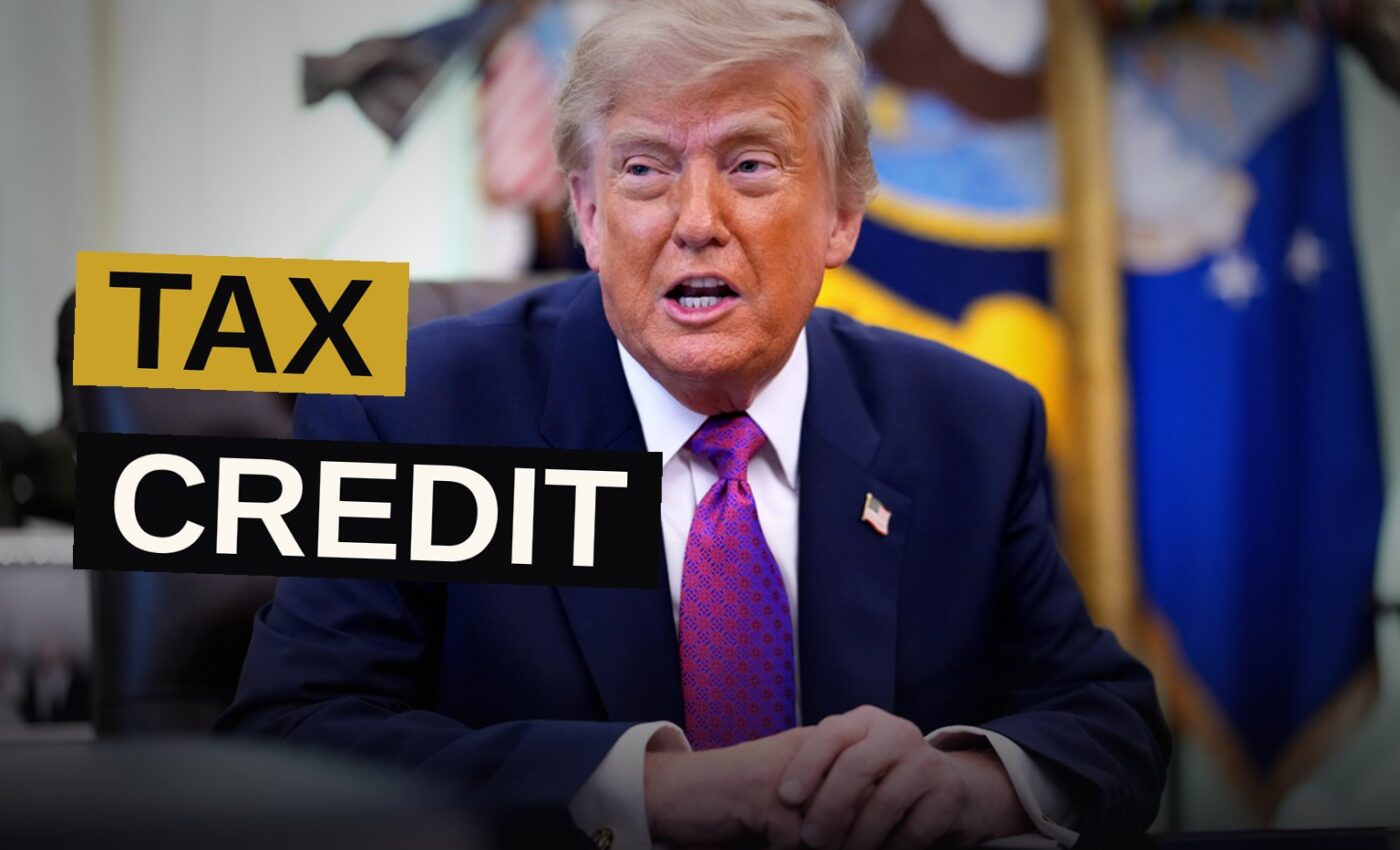
The federal tax break for film and television production has gained new strength, and its unexpected supporter is Donald Trump. The road to approval remains a long one, though, with lawmakers on both sides already pointing to the problems ahead.
Sen. Adam Schiff (D-CA) said the current push is the best chance in decades. “This is the best opportunity now we’ve had to get this done in really decades,” Schiff told CNN this week. He also cautioned that negotiations are far from finished. “Negotiations are ongoing,” he told Deadline.
The plan under discussion would offer a 20% incentive, with an additional 5% to 10% for productions in rural areas or spread across several states. A bill could be introduced this month, and an announcement on its status is expected when Congress returns next week. The details are not final.
Trump’s Backing and Its Limits
Earlier this month, Trump gave his backing to the incentive following a few words from his friend Jon Voight. That endorsement has built momentum, though it is not a guarantee. Trump could still change his mind, and proponents acknowledge that risk. There is room for something tied to entertainment to upset him and alter his position.
Schiff, who has long been a target of Trump’s personal and political attacks, said the president’s support has not been deterred by their history. Asked by Elex Michaelson whether his relationship with Trump would make passage harder, Schiff said Trump has “mentioned bipartisan support, mentioned my support for it, so he didn’t deterred at all by it. He thought that that was a positive.”
Policy, Schiff said, will not be held back by politics.
“Just because it’s this president, if it’s a good idea, I’m not going to oppose it. In fact, I fully support this.”
He made that comment on CNN.
Bipartisan Drafting
Members of Congress from both parties are working on the bill. The expected federal fund has backing from some House Ways & Means Committee members, who hold sway over spending, and that backing comes from across party lines.
Two people are said to be working on the legislation: Rep. Nathaniel Moran (R-TX) and Rep. Linda Sanchez (D-CA). Each person represents a state with a long record of production, current work and hopes for even more.
Proponents are also pushing to highlight Republican support, in part to emphasize that the legislation would not just benefit California and New York. That effort could counterweight the visibility of Schiff, one of the bill’s champions and one of the president’s biggest foes.
The Timing Problem
The legislative session comes to an end within days of the midterms, and there is no longer room to get a bill through, particularly one that has yet to be drafted.
Studio representatives and union officials, among other advocates, plan to step up their public relations push in the weeks ahead, especially if a specific proposal emerges. The timing depends on whether such a proposal actually materializes.
Whether lawmakers can strike a deal on an overall bill to keep the government funded through December 11 is the main question facing the lame-duck session. Given how things have played out before, the push for such an agreement is far more likely to attach itself to some end-of-year funding measure than to clear the Senate as its own stand-alone bill.
Midterm Results
Now that both Republicans and Democrats alike are said to have signed on to the legislation, the real test will come after November 3, when it becomes clear whether the initial momentum has held.
The question of whether polarization will tighten its grip after a Democratic landslide remains open. A related issue is what the appetite for cross-party legislation would be if the election’s outcome were challenged.
This year’s push for incentives legislation is urgent, driven by a desire to avoid starting over in the next Congress, where priorities might shift entirely.
The Cost Question
For a long time, advocates of state tax breaks have insisted that the advantages far exceed the expenses. Now, however, the actual balance between what is given up and what is gained will come under close examination.
The usual way of examining these matters is through an assessment by the Congressional Budget Office. Look for efforts to frame how the incentive will preserve or bring back jobs.
Whether the final incentive figure is sufficient to convince producers to abandon the UK, Australia, or even Canada and come to the United States is a central issue. A major criticism of California’s initial incentive scheme was that it arrived too small and too late, particularly since states such as New York and Georgia were already providing far larger sums of money.
Those supporting the proposal will need to argue that the incentive must be substantial enough to matter. The evidence suggests that most of what is being discussed in private meetings draws heavily on the design and operation of California’s annual program, which now stands at $750 million.
The aim of a federal incentive is to secure productions, series or films that were originally created elsewhere, or content that has already been guaranteed foreign credits but hasn’t yet begun production.
The Hollywood Factor
It is not difficult to view the entertainment industry as an easy target for criticism from the right. One can readily perceive the motive behind it as a bailout directed toward an elite sector of society that is widely seen as dominated by the left.
The Wall Street Journal editorial page quickly weighed in last week. The headline: “Handouts for Hollywood — Really? Adam Schiff and Donald Trump unite to subsidize the rich and famous.”
The Journal’s editorial team wrote “A production tax credit would provide a short-term stimulus for one industry, which primarily supports Democrats,” and it is a direct quotation from their own writing.
Related State Efforts
The governor frontrunner for California, Xavier Becerra, has expressed a desire to save Hollywood, though he has provided few details on how he would accomplish that goal.
Illinois recently boosted its state film tax credit.
State-level competition forms the setting for the federal drive. Should the federal incentive prove too small to match what the UK, Australia or Canada offer, producers may find no reason to move at all.
What Happens Next
What matters most right now is whether a bill is actually put before Congress this month, and what form it finally takes. The specifics are still open to change, and the numbers may shift.
The broader test is whether the coalition holds. Trump’s support is real but fickle. Schiff’s support is strong but polarizing. The bipartisan group of lawmakers is working, but the clock is short.
In Washington, most people who work to influence Congress believe that legislation rarely becomes law. That assumption may not hold for this proposal. Perhaps.
It is not yet settled whether the encouragement turns into something real or stays a wish that was never fully carried out. The coming weeks will reveal the answer to that question.
Source: deadline.com
Get the Notebook.
The day's best stories and every fresh verdict, in plain English, in your inbox by seven. One email a day, no more.