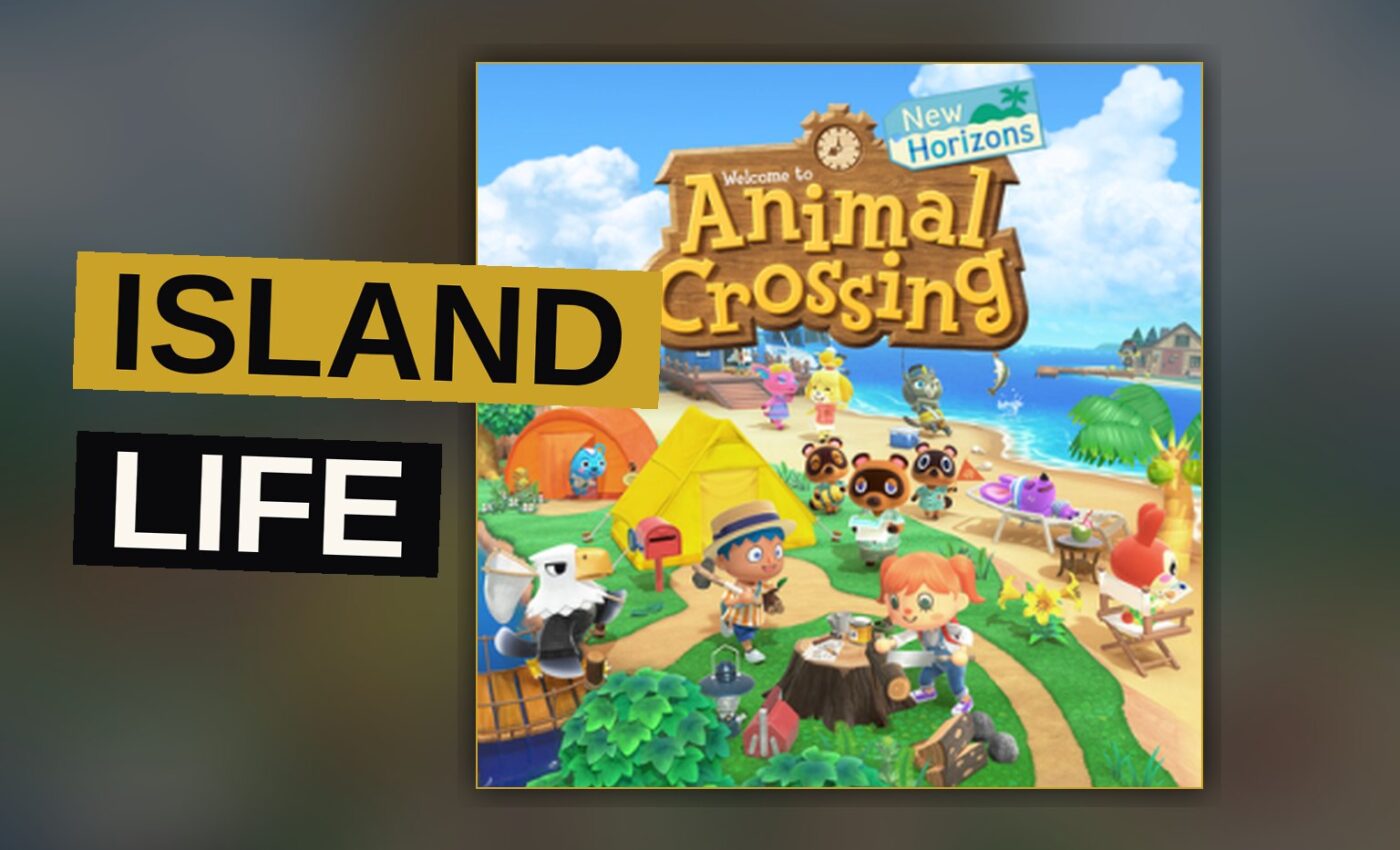
Animal Crossing: New Horizons is the game the world needed in 2020, and it still stands as the best the series has ever been. It drops you on a deserted island with little more than a tent, a phone, and two raccoons who run the local economy. What follows is a gentle, absorbing loop of gathering, crafting, and building that turned a simple life sim into a cultural phenomenon.
The pitch is simple: you owe a debt to Tom Nook, and you pay it off by making the island worth living on. You shake trees, catch bugs, fish the ocean, and dig up fossils. Every action feeds into a crafting system that lets you build furniture, tools, and eventually entire neighborhoods. The island starts empty, but it becomes yours in a way no previous Animal Crossing game ever managed.
Trailer, via Nintendo of America.
Island Life and the Daily Loop
The core of Animal Crossing: New Horizons is its daily rhythm. Each real-world day brings new events, new visitors, and new chances to improve your island. You might spend a morning planting flowers, an afternoon rearranging your house, and an evening helping a villager find a lost item. The game never demands urgency, but it rewards consistency.
That structure is what makes the game so effective. The real-time clock means the island changes with the seasons, and the weather shifts from sunny to rainy to snowy as the year passes. The game tracks your progress through the Nook Miles system, a set of achievements that nudge you toward new activities without ever feeling like chores. It is a loop that respects your time while quietly encouraging you to keep coming back.
Crafting adds a layer of hands-on involvement that earlier games lacked. You gather wood, stone, and iron from the island’s resources, then combine them into tools and furniture. The recipes unlock gradually, and the satisfaction of building your first proper house from scratch is real. It gives the game a sense of agency that the series had only hinted at before.
Terraforming Your Own Town
The biggest change in Animal Crossing: New Horizons is the terraforming tool. Once you unlock it, you can reshape the island’s cliffs, rivers, and beaches to your exact specifications. You can carve out a waterfall, build a bridge over a canal you dug yourself, or flatten a hill to make room for a park. It is a powerful feature, and it turns the island into a blank canvas.
The placement of buildings matters more than ever. You decide where the museum goes, where the shops sit, and where your neighbors live. You can move buildings later, but the early choices shape how the island feels. The freedom is almost overwhelming at first, but the game’s gentle pacing keeps it manageable.
The villagers themselves are the heart of the island. Each one has a distinct personality, and they react to your actions in ways that feel alive. They sing, they exercise, they get into arguments with each other. They will ask you for favors, send you letters, and occasionally give you gifts for no reason at all. Their dialogue is warm and funny, and it makes the island feel inhabited rather than simply populated.
Music and Sound Design
The music in Animal Crossing: New Horizons is a quiet triumph. Each hour of the day has its own track, and the melodies shift with the weather and the season. The soundtrack is soft and lo-fi, with gentle piano lines and breezy percussion that never intrude. It is the kind of music that makes you want to stay a little longer, just to hear what comes next.
The sound design does the rest. The rustle of leaves, the splash of a fish, the crunch of footsteps on grass — every sound is crisp and satisfying. The game’s audio is a major part of why it feels so relaxing. It is a world that sounds as good as it looks.
Multiplayer on the Switch
Animal Crossing: New Horizons supports up to eight players on one island, and it lets you visit friends’ islands online. The multiplayer works, but it is not the focus. You can trade items, fish together, and show off your designs, but the game is fundamentally a solo experience. The online connection requires a Nintendo Switch Online subscription, and the process of visiting another player’s island involves a loading screen that can feel slow.
Local play is smoother, with up to four players on the same console. The game handles this with a drop-in, drop-out system that lets you play together without splitting the screen. It is a nice option, but the real magic of Animal Crossing: New Horizons is in the solitary act of building your own little world.
Crafting and Its Costs
The crafting system is a double-edged sword. It gives you control, but it also creates friction. Tools break after extended use, and repairing them requires gathering materials again. This is a deliberate design choice — it keeps you engaged with the island’s resources — but it can feel tedious when you are in the middle of a project and your axe snaps.
The Nook Miles system helps offset this. You earn miles for almost everything you do, and you can spend them on exclusive items and upgrades. It gives the grind a purpose, and it rewards you for playing the way you want to play. The game is generous with its rewards, and it rarely punishes you for taking your time.
The biggest complaint about Animal Crossing: New Horizons is the lack of content updates. The game launched with a solid core, but some players wanted more. The seasonal events, like the fishing tournaments and the bug-off, add variety, but the game’s post-launch support has been uneven. The 2.0 update, released later, added a lot of content, but the base game can feel sparse in its later stages.
Final Score
Animal Crossing: New Horizons is a masterpiece of pacing and tone. It is a game that asks nothing of you except your presence, and it rewards that presence with a world that grows and changes around you. It is the kind of game that you can play for ten minutes or ten hours, and both sessions feel equally valuable.
The game’s strengths are its freedom and its warmth. It gives you the tools to make something beautiful and then trusts you to use them. It is a game about patience, about small joys, and about the quiet satisfaction of building a home. It is the best Animal Crossing has ever been, and it is one of the best games on the Switch.
| Feature | Animal Crossing: New Horizons | Animal Crossing: New Leaf (3DS) |
|---|---|---|
| Setting | Deserted island | Established town |
| Terraforming | Yes, full control | No |
| Crafting | Central mechanic | Absent |
| Multiplayer | Up to 8 players online | Up to 4 players locally |
| Main goal | Build and customize island | Maintain and improve town |
The comparison shows how far the series has come. New Leaf gave you a town to look after; New Horizons gives you an island to create. The difference is the difference between managing a space and owning it. That shift is what makes Animal Crossing: New Horizons feel new, even to longtime fans.
It is not a perfect game. The tool durability is annoying, and the online multiplayer is clunky. But those flaws are small against the game’s achievements. Animal Crossing: New Horizons is a game about making a place your own, and it succeeds completely.
It is a game that will be remembered for years.