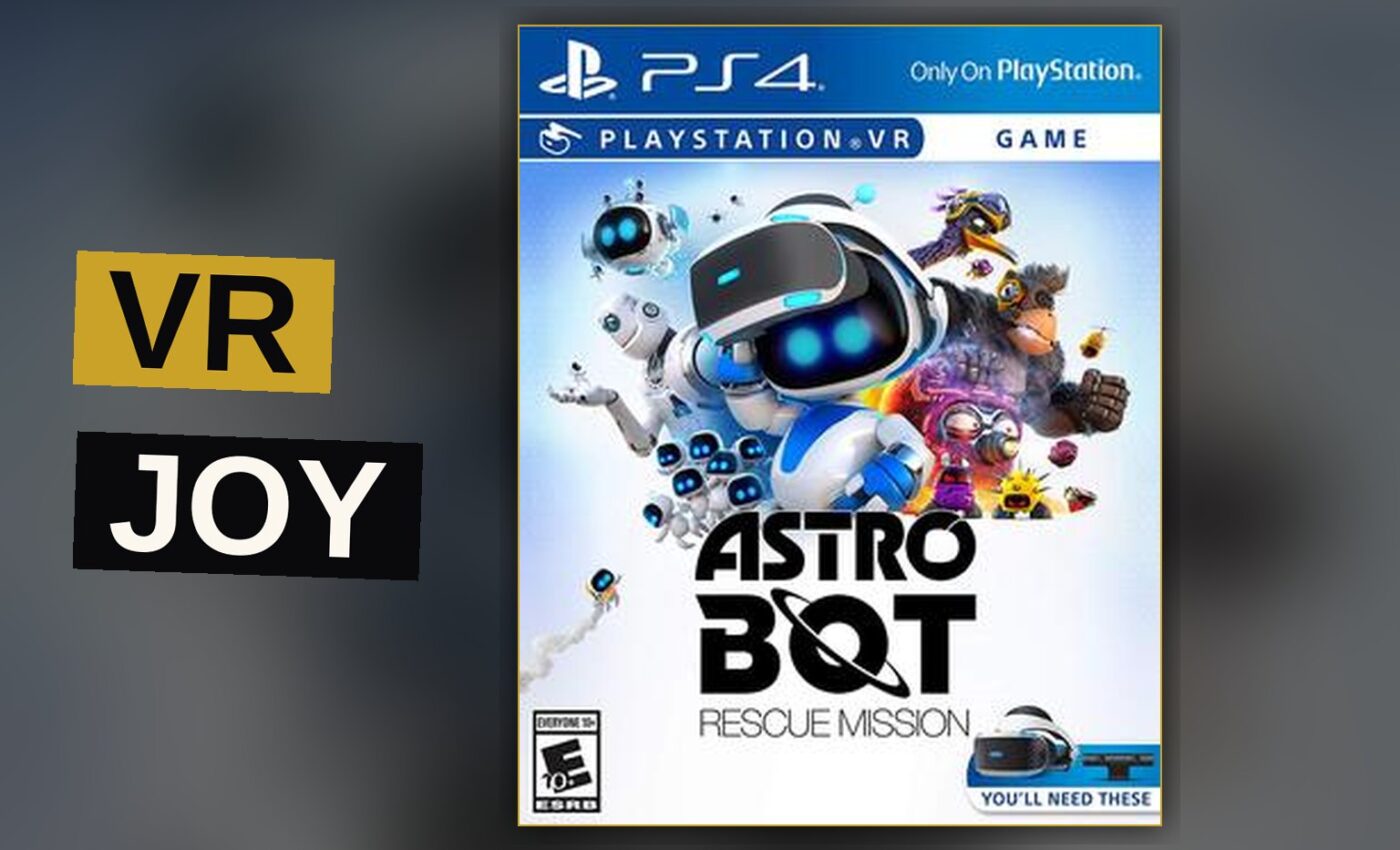
Astro Bot: Rescue Mission is the best reason to own a PSVR. It is a platformer built entirely around virtual reality, and it understands the hardware better than almost anything else on the system. Where other VR games feel like tech demos stretched thin, this one feels like a full, polished game that happens to live inside a headset.
The setup is simple. Captain Astro’s crew has been scattered across five worlds by a giant alien squid, and you have to save them all. You play as the invisible helper guiding Astro through each level, and the camera does the heavy lifting. Levels wrap around you in 360 degrees, so you are constantly turning your head to spot platforms, enemies, and hidden bots tucked behind pillars or dangling from ropes. You play with a standard DualShock 4, and it works perfectly.
Trailer, via PlayStation Europe.
Why the Camera Changes Everything
The core trick of Astro Bot: Rescue Mission is that you are not looking at a screen. You are standing inside the level. Astro runs along paths that curve behind you, and you have to physically rotate to keep an eye on him. It changes how you read a platforming challenge. A gap that looks small straight ahead becomes a leap of faith when it is over your shoulder.
The game uses your head position as a camera, but it also uses it as a tool. You can lean in to peek around a corner or duck to see under a ledge. In one early level, you have to tilt your head to line up a shot with a hookshot. In another, you blow into the microphone to spin a windmill. These moments land because they are built into the level design, not bolted on.
The levels themselves are dense and clever. Each world has a theme — a jungle, a beach, a sky castle — and each one introduces a new mechanic without overstaying its welcome. The game never repeats itself into boredom.
A Boss Fight You Have to Stand For
The boss battles are huge, and they use the VR perspective to make you feel small. One fight has you dodging a giant bird that swoops past your face, so close you flinch. Another has you punching a mechanical snake by moving your head to aim Astro’s fists.
The best fight is the first one, against a giant gorilla. It throws barrels and rocks at you, and you have to duck and weave in real life to avoid them. It is the moment the game clicks. You are not just watching a character dodge. You are dodging.
That physicality is the whole point. When you fall off a ledge, you feel it in your stomach. When you land a jump, you feel it in your chest. The sensation is the foundation of the design.
Hunting Down Every Lost Bot
The main game is about finishing levels, but the real goal is collecting. Each level hides seven crew members, and finding them all is the heart of the experience. Some are in plain sight. Others are buried underground, hidden behind false walls, or locked behind a timed challenge. You will replay levels just to find them, and the replay is never a chore.
The game also hides special chameleon bots that unlock challenge stages. These are short, brutal tests of precision that push the platforming to its limit. They are optional, but they are where the game shows its teeth.
There are also puzzle pieces scattered around. Collect them all, and you unlock a bonus level that is a love letter to PlayStation history.
The presentation is clean and bright. The art style is cheerful, and the music is bouncy and memorable. The load times are short, and the frame rate holds steady, which matters in VR.
One real complaint stands out.
The game is short. You can finish the main campaign in about eight hours, and the completionist run takes maybe twelve. The game also requires a PSVR, which is a real barrier. If you do not own the headset, this is not a reason to buy one alone. It is a reason to keep one.
The controls are simple, but that is a strength. There is no VR motion sickness here. The game is designed to be comfortable, and it succeeds. You can play for an hour without feeling queasy.
Here is how the game ranks against its own goals:
- Platforming precision: excellent, with tight jumps and clear visual cues.
- VR integration: best in class, using head movement as a core mechanic.
- Level variety: strong, with five distinct worlds and no filler.
- Collectible design: rewarding, with hidden bots that encourage replay.
- Replay value: moderate, driven by completion rather than new content.
Astro Bot: Rescue Mission is not just a good VR game. It is a good game, period. It proves that virtual reality can host a classic platformer, and it does so with charm and skill. If you own a PSVR, you should play it. If you do not, this is the game that might change your mind.
The game holds an 8.9/10 on the IGDB critic aggregate, based on reviews from 5 outlets.
Get the Notebook.
The day's best stories and every fresh verdict, in plain English, in your inbox by seven. One email a day, no more.