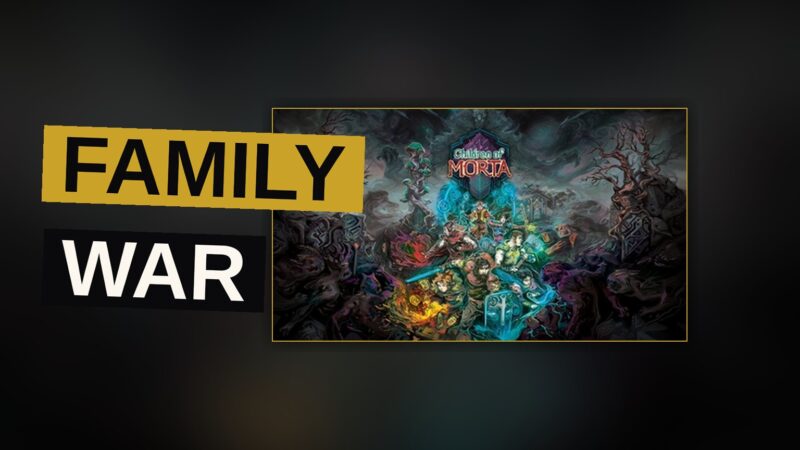
Child of Eden arrives on PlayStation 3 and Xbox 360 as a musical rail shooter from Q Entertainment, published by Ubisoft. It is a first-person game about shooting viruses out of a far-future internet. It is also, more importantly, a game about feeling music in your hands.
The setup is simple. Eden is the archive of all human memories, a virtual realm that holds everything humanity has ever known. Project Lumi is trying to reproduce a human personality inside it — Lumi, the first person born in space, rebuilt from preserved memories split across six Archives. Then a virus gets in. The player is sent to clean it out.
That is the whole story, and the game barely tells it in words. Child of Eden delivers its narrative through visuals and music, not dialogue. It works better than it has any right to.
Trailer, via Ubisoft.
Project Lumi and the Six Archives
The campaign runs across five Archives, with a sixth unlocked as a post-game challenge. Each one ends with a boss fight against a powerful virus holding a piece of Lumi’s data. Purge the viruses and Lumi’s personality and memories come back, until she can sing and flood Eden with positive emotion.
The levels are not static. Each Archive is replayable, and it changes depending on how the player performed and played in the previous run. That is a smart piece of design — it gives the short campaign a reason to be replayed beyond score chasing.
The game is played from a first-person on-rails perspective. An aiming reticle, a health meter, and a limited stock of screen-clearing attacks called Euphoria Bombs sit on the screen. The UI style and sound effects shift depending on which Archive is running. The whole thing is built to feel like one continuous piece of music rather than a series of disconnected stages.
Lock-On Missiles and Euphoria Bombs
Combat comes in two forms. There is a lock-on missile attack, which can target up to eight enemies at once. There is also a purple rapid fire attack. Some enemies and attacks can only be stopped with rapid fire, so the player has to switch between the two constantly.
The lock-on attack is where the game’s real idea lives. Target eight enemies and launch the shot in time with the Archive’s music track, and the game grants a score bonus. Using lock-on also raises the player’s score multiplier. Enemies purified of viruses occasionally drop health orbs or Euphoria Bombs.
Euphoria Bombs are the trap. They clear the screen, but using them hurts the player’s score and lowers their rank at the end of the level. The game hands you a panic button and then charges you for pressing it. That is a sharp piece of design — it makes the easy way out cost something.
Difficulty is gated. Easy and Normal are available from the start. Hard unlocks after finishing the game on Normal.
Kinect and PlayStation Move
Each version of Child of Eden offers motion controls as an alternative to standard controllers. On Xbox 360, Kinect maps different actions to hand and arm movements. On PlayStation 3, PlayStation Move uses swiping and stabbing motions with the control sticks.
This is the part of the game that got the most attention, and it is the part that matters most. A musical rail shooter with a standard controller is a rhythm game with a gun. With motion controls, the player’s body becomes part of the performance. The game was built to produce a feeling of synesthesia in players — the sense of seeing sound and hearing color — and motion controls are how it tries to get there.
That ambition did not come from nowhere. Child of Eden is a spiritual successor to Rez, the 2001 title that carried the same goal. Tetsuya Mizuguchi, who founded Q Entertainment, conceived Child of Eden and it was his last major project with the company. Production began in 2008, and motion controls were added after it started. The music and sound production was led by Yuki Ichiki, with new and existing music from Genki Rockets, the group Mizuguchi co-created.
What Child of Eden Gets Right
The visuals and the motion controls are the reasons to play this game. That is not a small thing. Child of Eden is one of the few shooters that treats its soundtrack as a mechanic rather than a backdrop, and the lock-on system ties every shot to the beat. When it clicks, the game stops being a game about shooting and becomes a game about timing, and the screen fills with color that responds to what the player just did.
The Archives change on replay. The UI shifts per level. The score multiplier rewards patience over panic. These are small decisions that add up to a game with a real point of view about what shooting should feel like.
The recurring complaint is length. Five campaign Archives plus one post-game challenge is a short package, and no amount of replayability changes the fact that the main run ends quickly. That complaint is fair. It is also the only real knock against the game.
The commercial story is less kind. Child of Eden eventually shipped 500,000 copies worldwide, and Ubisoft was disappointed in its initial sales. A game this specific, this strange, and this committed to an idea was never going to be a blockbuster. That does not make the disappointment wrong. It makes it predictable.
Child of Eden in 2025
On August 26, 2025, Atari announced it had acquired all intellectual property rights for Child of Eden from Ubisoft. That is the most interesting recent development for the game, and it is worth watching.
Here is the thing about Child of Eden: it is a game that was built for hardware that no longer exists in the same form. Kinect is gone. PlayStation Move is a footnote. The motion controls that made the game sing are the hardest part of it to preserve. Atari now owns a title whose best version depends on peripherals that most players cannot buy.
| Version | Motion control | Standard controller |
|---|---|---|
| Xbox 360 | Kinect, with hand and arm movements | Yes |
| PlayStation 3 | PlayStation Move, with swiping and stabbing motions | Yes |
That table is the whole problem in miniature. Child of Eden was designed to be played with your body, and the platforms that let you do that are dead. A re-release would have to solve that, or accept that most players will experience the game through a standard controller — which works, but is not the point.
The reviews were positive. The game saw award nominations. Praise went to the visuals and the motion controls, and complaints went to the length. That split has held up since the game’s 2011 release, and it is still the right way to describe the game.
Child of Eden is a multi-sensory shooter that will send players diving into a kaleidoscopic matrix of synchronized music and mind-blowing visuals.
That is the publisher’s summary, and the game delivers on it. The question is whether anyone will get to feel it again.
Tetsuya Mizuguchi’s Last Project at Q Entertainment
Child of Eden is a short, strange, beautiful game that understands something most shooters do not: that the space between a shot and a beat is where the fun lives. The lock-on system, the Euphoria Bomb penalty, the shifting Archives — every mechanic pushes the player toward playing the music instead of just surviving it.
The length is a real problem. Five Archives is not enough, and the sixth is a challenge, not a campaign. A player who finishes the main run in an afternoon is not doing it wrong. The game is just that short.
But shortness is not the same as thinness. Child of Eden is dense. Every level is built to be replayed, and the changes between runs give the player a reason to go back. The motion controls are the version to seek out, and the standard controller version is the fallback.
Atari buying the rights is the part worth watching. The company now holds a game whose defining feature was a camera, and cameras are the one thing a re-release cannot patch in. Solving that means rebuilding the game around a peripheral nobody makes anymore, or admitting the Kinect version was the real one and letting it go. Neither is cheap, and neither is obvious. That is why the next move matters more than the sale did.
We score Child of Eden 8.1 out of 10.
Get the Notebook.
The day's best stories and every fresh verdict, in plain English, in your inbox by seven. One email a day, no more.