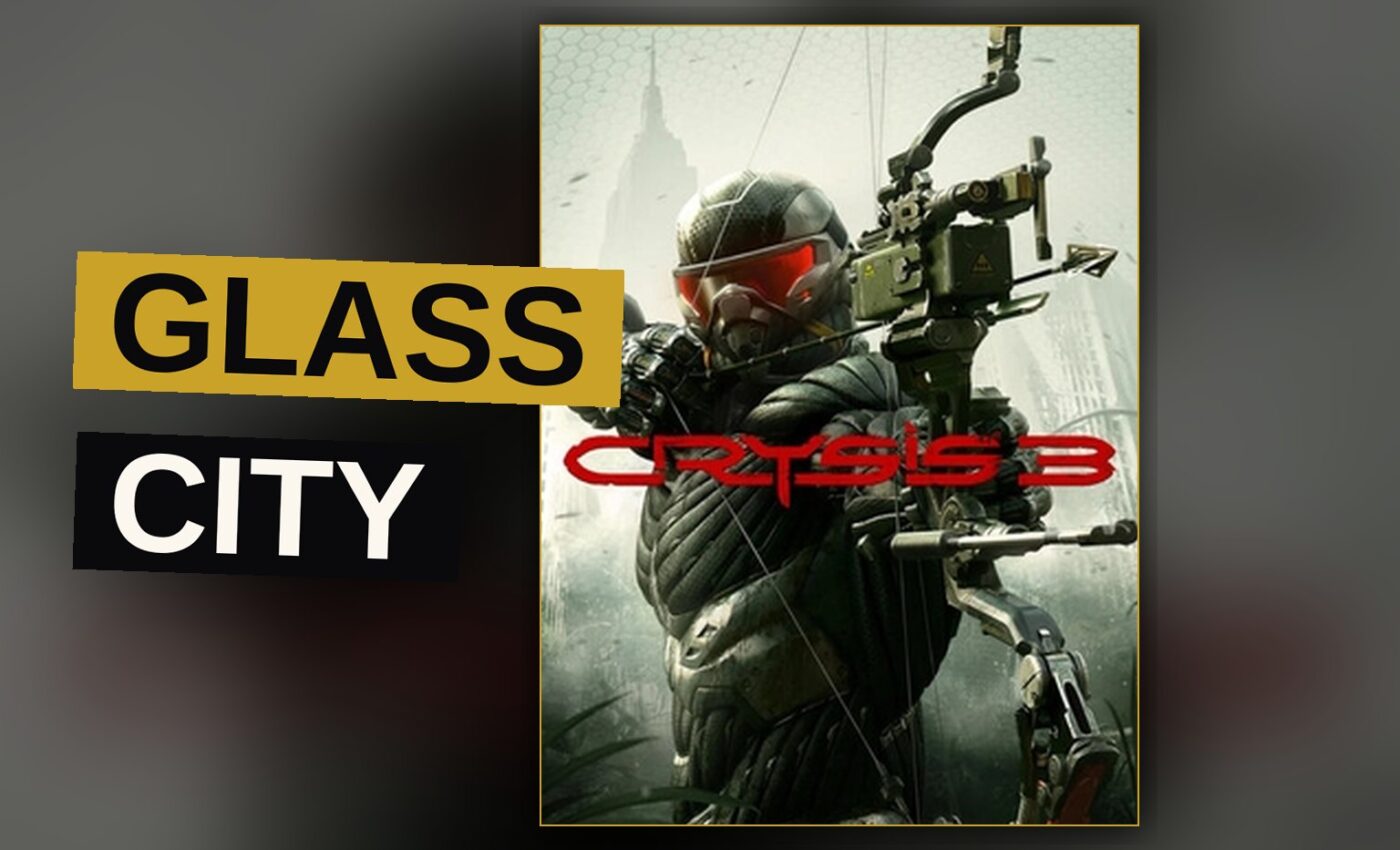
Crysis 3 puts players back into the power armor of Prophet, the man who stopped the alien threat in the first game. This time he is chasing a different enemy, one who has built a city of glass and metal in New York. The game is a sequel to Crysis 2, and it takes the same setting and moves it forward. Prophet is still the player character, and the alien threat remains a presence in the background, but the story turns on a human villain who has made New York into a place that looks nothing like the city it once was.
The setup is simple: Prophet enters the city to stop the villain, and along the way he fights soldiers, vehicles, and the occasional alien creature that shows up to remind players why this series is called Crysis. The game runs on the CryEngine, the same engine used for the previous entries, and it is built for the PS3, PC, Wii U, and Xbox 360.
Trailer, via Electronic Arts Archive.
Prophet Returns
Prophet is the player character, and he carries the same suit of power armor that gave him his name in the first game. The suit can change shape, move fast, and fire a weapon that turns enemies into burning ash. The game gives players full control over how they approach each fight, letting them switch between stealth, speed, and heavy firepower at will.
The story follows Prophet as he tracks down the villain through the city. It is a straightforward chase, and the plot does not spend much time building up the villain beyond his actions. The game leans on action scenes and spectacle over character development, and that choice shows in how Prophet is treated as a tool for fighting rather than a fully realized person.
The City of Glass
The villain has built a city out of glass and metal, and it is one of the most striking things about Crysis 3. The towers, streets, and buildings are all covered in reflective surfaces, giving the city a wet, gleaming look that is unlike any other game set in New York. The effect is strong, even on older hardware, and it gives the game a distinct identity that sets it apart from other shooters on the market.
The design of the city is also practical. Many levels let players move through open spaces, climb tall buildings, and use the environment to find new routes to their objectives. This freedom is one of the strengths of Crysis 3, and it rewards players who take the time to explore rather than rush straight ahead.
Stealth and Power
Crysis 3 offers three modes of play: stealth, speed, and power. Players can choose which mode to use depending on the situation, and the game respects those choices without forcing a single way of playing. The stealth mode lets players move quietly through enemy patrols, while the power mode lets them call down a heavy attack to break through a wall of enemies.
The balance between these modes is the heart of the game. It asks players to think about the best way to approach each fight, and it rewards patience as much as it rewards aggression. That flexibility is rare in games of this genre, and it is one of the reasons Crysis 3 stands out from other shooters released around the same time.
The Enemy Forces
The enemies in Crysis 3 are mostly human soldiers, but the game also throws in alien creatures to keep things interesting. These encounters are brief and serve more as set pieces than as deep tactical challenges. The aliens are dangerous, but they are not the focus of the game, and the human soldiers are the ones who demand the most attention from players.
The human soldiers are well designed, with varied patrol patterns and reactions to being spotted. They call for backup, throw grenades, and move to better positions when they lose sight of the player. This makes the stealth sections feel alive, even when the player is moving through familiar ground.
Technical Performance
The game runs on the CryEngine, and it shows. The visuals are sharp, the lighting is bright, and the glass surfaces reflect the world around them accurately. The frame rate holds steady during most of the game, though it dips in the busiest moments, especially when there are many enemies on screen at once.
On the PS3 and Xbox 360, the game runs at a lower resolution than on PC, and the details are less clear. The Wii U version exists, but it is the weakest of the four, with lower frame rates and reduced visual quality. The PC version offers higher resolutions and more detail than any of the console versions.
Sound Design
The sound design in Crysis 3 is excellent. The suit’s breathing, the hum of machinery, and the distant sounds of the city all add to the sense of being inside Prophet’s armor. The music is quiet and atmospheric, letting the sound of the game itself do most of the work.
The voice acting is solid, though it is limited to the main characters. Prophet himself is voiced by a performer who gives him a calm, controlled presence, which fits the character’s role as a soldier who has seen too much war. The villain is also well cast, and his scenes carry real menace.
Length and Structure
Crysis 3 is a long game, running past twelve hours for a standard playthrough. It is divided into several chapters, each set in a different part of the city. The pacing holds up well for most of the game, though the middle chapters can drag slightly as the story waits for the final confrontation.
There is also a multiplayer mode, though it is not as developed as the single-player campaign. It offers a few maps and modes, but it does not reach the depth of the campaign. Players who want to stay online after finishing the story will find a decent selection, but it is not the main draw of the game.
Final Word
Crysis 3 is a strong entry in the series, though it falls short of the heights reached by the first game. The city of glass is a memorable setting, the stealth and power systems offer real variety, and the shooting feels tight and responsive. The story is thin and the villain is underdeveloped, but the action is consistently entertaining.
“The city of glass is the star of Crysis 3.”
That line captures the game’s central strength. The city itself becomes a character, and players spend as much time admiring it as they do fighting in it. The technical performance is strong across all platforms, and the PC version offers the highest resolutions and most detail.
Crysis 3 earns a 7.4 out of 10.