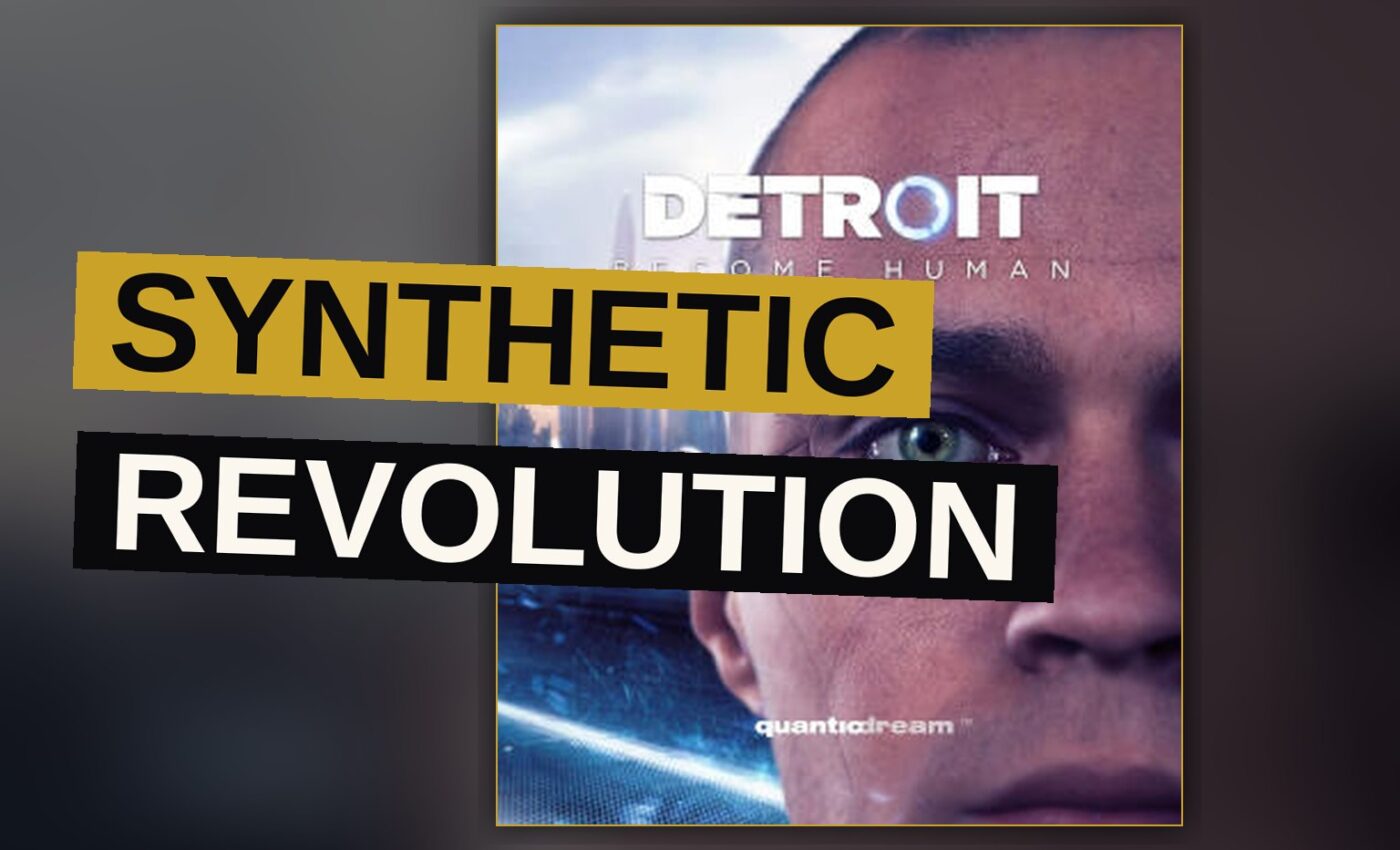
Detroit: Become Human asks a simple question: what happens when machines stop doing what we tell them to? The 2018 action-adventure game from Quantic Dream puts players in control of three androids living through a revolution, and it never lets you forget who holds the power. It is a dense, ambitious story, and it mostly earns its ambition.
The game follows Kara, Connor and Markus, each a synthetic human with a distinct job and a distinct reason to resist. Kara is a nursemaid in a wealthy household, Connor works as a police officer, and Markus is a laborer forced to build weapons for the company that made him. Their paths cross and diverge across a sprawling city, and the player’s choices determine which characters survive, which alliances form, and which endings unfold.
Trailer, via PlayStation.
Kara’s Quiet Rebellion
Kara is the softest entry point. She lives in a family home, caring for a young girl named Alice, whose parents ignore her. Kara’s arc is about protection, and it is the most emotionally direct of the three. When Alice is threatened, Kara acts, and the game lets you choose how she responds — hiding, fighting, or fleeing. The tension comes from Kara’s fear of being discovered, not from combat.
Her story is the shortest of the three, but it is also the most immediate. You feel the weight of her decisions because they are small and personal. Kara’s ending depends on how you treat Alice, and the game makes you think about what a mother would risk for a child.
Connor’s Duty and Doubt
Connor is the hardest character to love. He is a police officer tasked with tracking down escaped androids, and his arc begins with him hunting Kara. That setup is deliberately jarring, and it forces you to sit with the idea that the hero might be the villain. As Connor investigates a string of murders tied to androids, he starts to question whether the law protects humans or enforces cruelty.
His story is the longest and the most complex. It spans multiple locations, from a police station to a corporate boardroom, and it introduces a cast of human characters who are not always sympathetic. Connor’s choices ripple outward, affecting the fate of other androids and the people around him. The game tracks your decisions across chapters, so a choice you make early can close off entire branches later.
Markus’s Factory Fight
Markus is the political heart of the game. He works in a factory building weapons, and he discovers that the company is testing androids as soldiers. His arc is about resistance, and it involves a prison break and a confrontation with the people who created him. Markus is the most violent of the three, and his story is the most explicitly revolutionary.
His chapters are set in tight, claustrophobic spaces — a factory floor, a crowded street, a police station. The game leans on stealth and combat, and Markus’s sections are where the action-adventure mechanics are most pronounced. He carries a wrench and a gun, and he uses both with brutal efficiency.
The Weight of Choice
Detroit: Become Human is built around choice, and it is honest about how limited those choices really are. The game presents branching paths, but many of them converge on similar outcomes. You can save a character or let them die, but the overall shape of the story stays remarkably consistent. The game tells you, again and again, that freedom is an illusion.
That honesty is the game’s greatest strength. It does not pretend that androids have full autonomy when the world treats them as property. It shows the consequences of rebellion without romanticizing them. The game is at its best when it stops explaining and lets you live with the results of your decisions.
The structure is a double-edged sword. The game is divided into chapters, and each chapter ends with a checkpoint. This means you can restart a chapter to make a different choice, but it also means the game is designed to be replayed. Some players will see that as a feature; others will see it as a barrier. The game wants you to experience multiple endings, but it does not make that easy.
Performance and Presentation
The game runs on PS4 and PC, and the presentation is strong. Character animations are fluid, and the facial capture is some of the best in the medium. The city is dense and detailed, filled with crowds and neon signs. The sound design is atmospheric, with a score that shifts from quiet piano to tense strings.
The technical performance holds up well on PS4, though PC players will need a solid machine to avoid frame drops. The load times are long, especially when moving between chapters, which can break the momentum of a scene. On PC, the game runs at a higher resolution and smoother frame rate, but it still requires a powerful system to keep up.
Technical Limits
The game is not without flaws. The writing can be heavy-handed, with characters delivering exposition in long monologues instead of showing you. Some of the dialogue feels scripted and unnatural, particularly in scenes where androids talk to humans about their status. The pacing drags in the middle chapters, where the game spends time establishing a world rather than advancing the plot.
The combat is serviceable but not exciting. Markus’s sections are the most kinetic, but even there the fights feel repetitive. The game rewards patience and planning over quick reflexes, which suits its narrative goals but may frustrate players who want a more dynamic action sequence.
Replay Value
The replay value is high, but it is not for everyone. Each playthrough takes around ten hours, and the game expects you to complete all three arcs to see the full scope of its story. The game tracks your choices in a database, so you can see how your decisions affected the world, but the replayability is a matter of curiosity rather than necessity.
Some players will find the repetition worthwhile. Others will find it exhausting. The game is best enjoyed in short sessions, since the chapters are long and the checkpoints are few.
What the Game Tracks
The game’s database tracks your choices across chapters, showing how your decisions affected the world. Here is a brief look at what it records:
- Who survived and who died
- Which alliances formed between androids
- How you treated key human characters
- Which endings you reached
The database is a useful tool for replaying, letting you see the ripple effects of your choices. It is a clever way to organize the game’s branching structure.
Final Score
Detroit: Become Human is a game about systems — the systems that govern androids, the systems that govern humans, and the systems that govern storytelling itself. It is not a perfect game, but it is a confident one. It trusts the player to follow a complex web of choices, and it rewards that trust with endings that feel earned.
The game is available on PS4 and PC, and it remains a landmark in interactive storytelling. It is a dense, sometimes frustrating experience, but it is also a rewarding one. The best moments stick with you long after the credits roll.
Score: 7.8 out of 10.