In 2008, superhero movies were not the guaranteed box office force they are today. The genre was still finding its footing, often favoring brooding heroes and dark, gritty tones. Then Iron Man arrived, and it changed the game not just with its special effects, but with its sheer, unforced charisma. It is a film that works because it understands its lead character so completely, and it launched a cinematic universe on the strength of a single, perfectly cast performance.
Trailer, via Marvel Entertainment.
Robert Downey Jr. Carries the Film
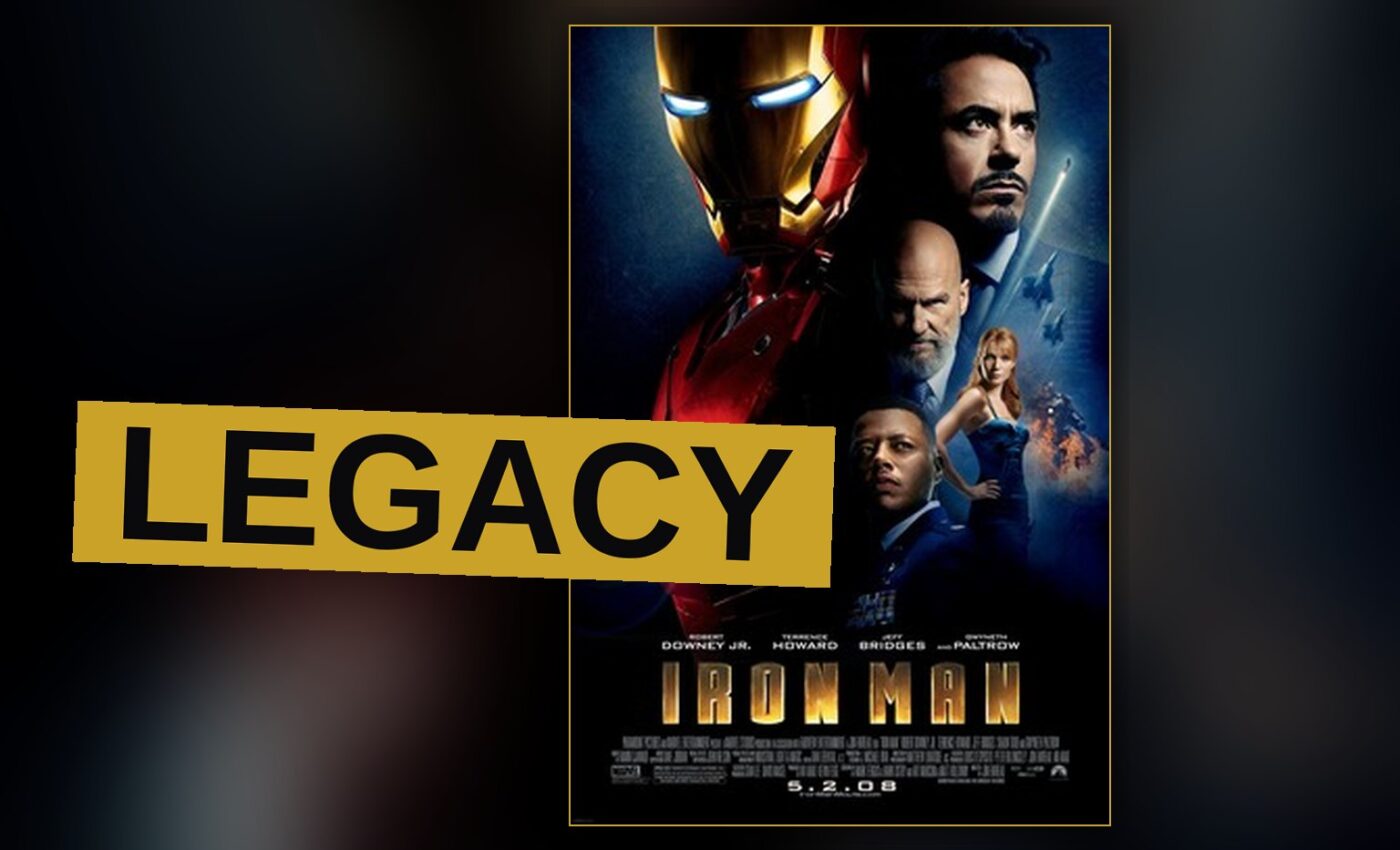
The entire movie rests on the shoulders of Robert Downey Jr., and he delivers a performance that is nothing short of definitive. Before this film, Tony Stark was a B-list Marvel character, known primarily to comic book readers. Downey Jr. transformed him into a household name. He plays Stark as a brilliant, arrogant, and deeply flawed genius, a man who is charming precisely because he does not try to be. His rapid-fire dialogue and effortless wit make the character feel alive in a way that few comic book heroes had managed on screen before.
The supporting cast is equally strong. Gwyneth Paltrow brings a grounded warmth to Pepper Potts, Stark’s long-suffering assistant, and the chemistry between her and Downey Jr. is the quiet heart of the film. Jeff Bridges plays Obadiah Stane, Stark’s mentor and business partner, with a folksy menace that hides a cold ambition. He is a villain who feels real, a corporate shark rather than a cartoonish threat. The film’s conflict is not just about a suit of armor; it is about betrayal and the corruption of power.
The script gives these actors sharp material to work with. The dialogue is snappy and memorable, filled with the kind of quotable lines that fans still repeat today. The film never takes itself too seriously, but it also never undercuts its own stakes. It finds a balance between humor and drama that many later entries in the genre would struggle to replicate.
A Familiar Origin, Well Told
The plot follows a familiar but effective structure. Tony Stark is a wealthy weapons manufacturer who is kidnapped by terrorists and forced to build a missile for them. Instead, he builds a suit of armor to escape. The experience changes him. He sees the destruction his weapons cause firsthand, and he decides to shift his company’s focus away from arms dealing. This is the core of the story: a man of privilege who is shocked into a new sense of responsibility.
The movie takes its time with this setup. The first act is devoted to establishing Stark’s life of luxury and his cavalier attitude. We see him in Afghanistan, demonstrating the Jericho missile, and then later captured in the same region. The kidnapping is sudden and brutal, and it serves as the necessary catalyst for his transformation. The scenes in the cave, where he builds the first, crude version of his armor, are some of the best in the film. They are tense, resourceful, and they show Stark’s genius in action.
Once he returns home, the film shifts into a different gear. Stark announces that he is stopping weapons production, a decision that puts him at odds with his company’s board and his partner, Stane. The middle section of the film is about Stark refining his technology, testing new versions of the suit, and dealing with the fallout from his decision. The sequence where he tests the Mark II suit in his workshop, struggling with icing at high altitudes, is a highlight. It is a fun, practical problem-solving scene that grounds the fantastic technology in a sense of reality.
Action, Suit Design, and Setting
The action sequences in Iron Man are solid, though they are not the main draw. The final battle between Iron Man and Stane, who has built his own, larger suit, is a loud and chaotic affair. It lacks the precision of later superhero fights, but it gets the job done. The earlier escape sequence from the cave is more effective, primarily because it is smaller and more personal. The film understands that the character is more interesting than the spectacle.
The design of the Iron Man suit itself is a major achievement. It looks like a real piece of machinery, with visible panels, joints, and lights. The CGI is used to enhance the practical elements, and the result is a suit that feels tangible. The gold and red color scheme is striking, and the suit has a sleek, powerful silhouette. This is in stark contrast to the clunky, gray suit that Stane uses, which visually reinforces the difference between the two men. Stark’s suit is a product of his genius and his desire to do good, while Stane’s is a crude imitation of power.
The film also benefits from a strong sense of place. The scenes in Afghanistan have a dusty, dangerous feel, and the scenes in Stark’s Malibu mansion are sleek and modern. The production design is top-notch, creating a world that feels both glamorous and grounded. The film looks expensive, and that money is on the screen.
Legacy and Tone
The most significant achievement of Iron Man is its tone. It is a superhero movie that is not afraid to be fun. It does not wallow in misery or angst. Instead, it embraces the joy of its central concept: a genius billionaire who builds a flying suit of armor. This approach was a breath of fresh air in 2008, and it set the template for the Marvel Cinematic Universe that followed.
The film’s famous post-credits scene, where Nick Fury appears to talk to Stark about the “Avenger Initiative,” was a revelation at the time. It signaled that this was not just a standalone movie, but the beginning of something larger. That single scene changed the way studios approached franchise filmmaking, turning the post-credits sequence into a standard practice.
The movie is not perfect. The villain is underdeveloped, and the final fight is a bit of a letdown. The third act relies on a common superhero trope: two characters in suits punching each other. But these flaws are easy to forgive because everything leading up to them is so entertaining. The film is carried by its lead performance, its sharp script, and its confident direction from Jon Favreau.
| Scene | Key Moment |
|---|---|
| Afghanistan Demonstration | Stark presents the Jericho missile |
| The Ambush | Stark is attacked and kidnapped |
| The Cave | Stark builds the Mark I suit |
| The Press Conference | Stark announces he is stopping weapons production |
| The Final Battle | Iron Man fights Obadiah Stane |
The film’s pacing is excellent. It never drags, and it never feels rushed. It moves from set piece to set piece with a confident rhythm, keeping the audience engaged throughout its two-hour runtime.
That rhythm holds.
Iron Man earns its reputation. It is a complete, satisfying, and hugely entertaining piece of cinema. It is a film that works as a standalone story, and it is also a foundational entry in a major franchise. It holds a 7.7/10 audience score on TMDB from 28,780 votes. For that, it is a success on nearly every level.