
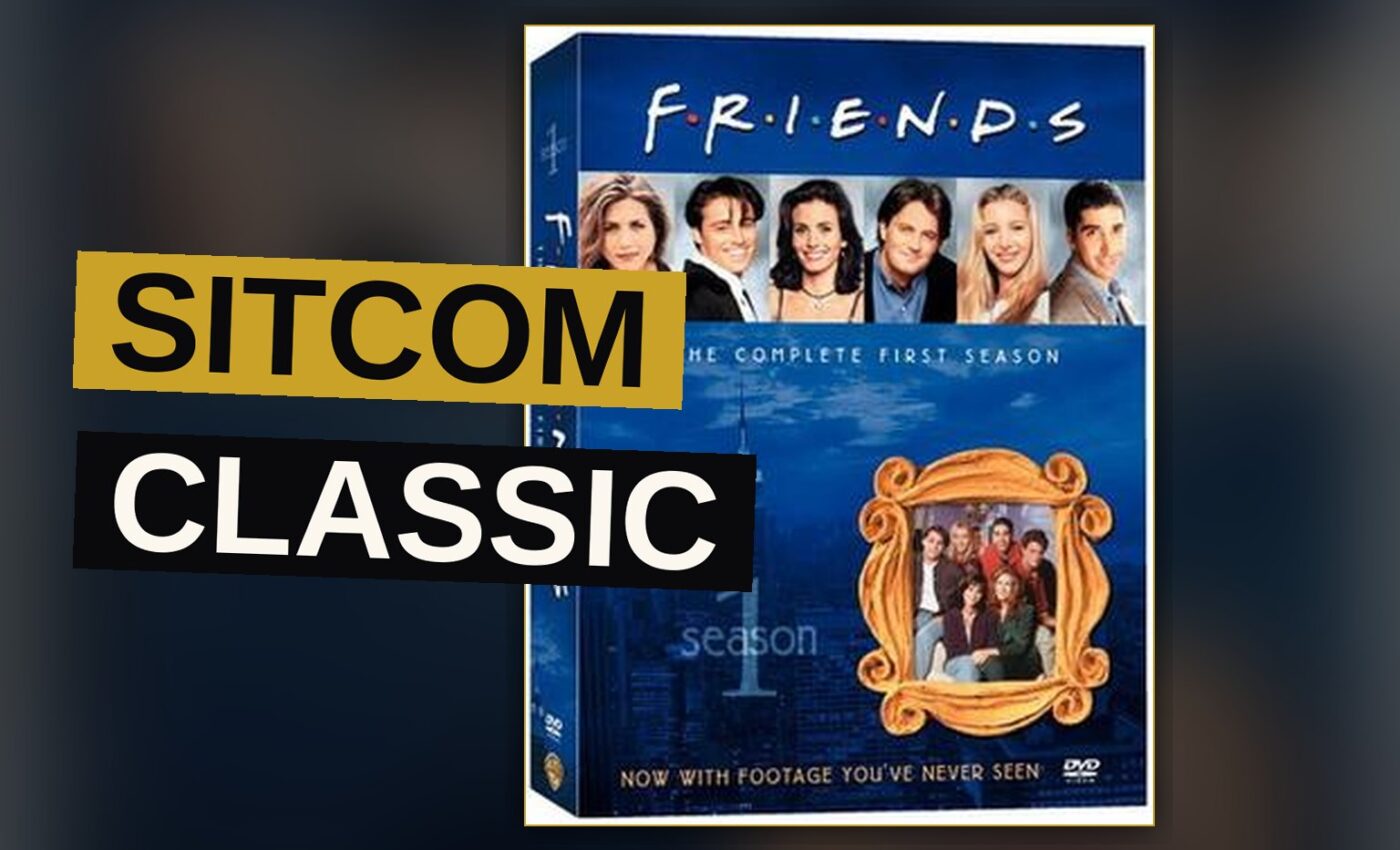
Friends premiered on NBC on September 22, 1994, and for the next decade it did something that seems simple in hindsight but is almost impossible in practice: it made six people in a New York apartment feel like the center of the universe. Created by David Crane and Marta Kauffman, the sitcom ran for ten seasons and 236 episodes, becoming a cultural landmark that still dominates streaming charts and meme feeds 32 years later. The audience score has settled at 8.4 out of 10 from over 9,000 votes, and that number feels right — not because the show is flawless, but because its strengths are so durable that its weaknesses barely matter.
The premise is famously thin. Monica Geller (Courteney Cox) lives in a rent-controlled Greenwich Village apartment. Her brother Ross (David Schwimmer) is a paleontologist with a tragic romantic history. Their childhood friend Chandler Bing (Matthew Perry) works in statistical analysis and data reconfiguration, a job nobody understands. Chandler’s roommate Joey Tribbiani (Matt LeBlanc) is a struggling actor. Across the hall live Rachel Green (Jennifer Aniston), a runaway bride, and Phoebe Buffay (Lisa Kudrow), a masseuse and folk singer. They drink coffee, they talk, they fall in and out of love, and they do it all in front of a fountain.
Trailer, via Warner Bros. Rewind.
Cast Chemistry as the Engine
The show’s engine is its ensemble chemistry, which was apparent from the first episode. The six actors were cast young, mostly unknown, and their rapport grew into something that feels like genuine friendship rather than professional obligation. Aniston became a style icon and a household name. Perry delivered sarcastic one-liners with a wounded tenderness underneath. Kudrow turned Phoebe’s eccentricity into something warm rather than grating. Schwimmer made Ross’s whiny earnestness both funny and oddly sympathetic. Cox anchored the group with Monica’s obsessive competitiveness. LeBlanc gave Joey a sweet, dim charm that never tipped into parody.
That balance is the show’s real trick. Each character has a defined comic function, but none of them is a pure archetype. Ross is the nerd, but he also has a desperate romantic streak. Chandler is the joker, but his jokes often mask deep insecurity. Monica is the neat freak, but her need for control comes from a place of real anxiety. The writers gave each actor room to play against type, and the result is a group that feels like actual people rather than punchline dispensers.
Jokes, Callbacks, and Catchphrases
Crane and Kauffman built the show on a simple structural principle: scenes happen in the coffee shop, the apartment, or the hallway, and the comedy comes from characters talking past each other. There are no elaborate set pieces, no guest-star-driven plot contortions in the early seasons. The jokes land because the setup is clear and the payoff is quick. A classic example is the episode where Ross tries to help Rachel pack for a skiing trip, and the conversation spirals into a fight about whether they were on a break.
The show coined phrases that entered the language. “How you doin’?” became a pickup line. “We were on a break” became shorthand for relationship dispute. “Smelly Cat” became a genuine earworm. The writing is dense with callbacks and running gags, rewarding viewers who pay attention. The writers also knew when to let a joke breathe, giving the audience a beat to laugh before moving on.
Ross and Rachel’s Long Arc
At its heart, Friends is a love story about Ross and Rachel, and the show’s longevity depends on that will-they-won’t-they tension. The first season builds it carefully, from Rachel’s arrival at Central Perk to the moment Ross finally tells her he loves her. The show then spends the next several seasons putting them together, breaking them apart, and putting them back together again. It is a pattern that frustrates some viewers, but it also gave the series its emotional spine.
The “we were on a break” storyline, which aired in season three, remains the show’s most debated plot point. Ross sleeps with another woman after a fight with Rachel, and the aftermath drives them apart for years. The show never fully resolves the argument, which is probably the right call. It keeps the audience engaged and gives both characters a reason to be unhappy in ways that feel real.
Later Seasons and the Soft Decline
There is no honest way to review Friends without noting that the later seasons are weaker than the early ones. The show ran for ten years, and the writing began to rely on broader jokes and bigger guest stars. The season eight storyline, which involves Rachel’s pregnancy, feels more grounded than what follows. The season nine and ten arcs, which center on the baby and Ross and Joey’s brief romantic rivalry with Rachel, feel less grounded than the early apartment-bound comedy. The characters become wealthier and more successful, which undercuts some of the relatable scrappiness of the early years.
But even a weaker Friends episode is still watchable, which is more than most sitcoms can claim. The cast’s chemistry carries material that would sink a lesser show. The season eight episode “The One Where Rachel Has a Baby” is a strong hour, mixing comedy and genuine tension as Ross and Rachel navigate the delivery room. The series finale, which aired on May 6, 2004, drew an estimated 52.5 million viewers in the United States, making it one of the most-watched television finales in history. That number reflects the show’s grip on the public imagination.
Streaming’s Second Life
Friends left NBC and found a second life on streaming platforms. It became one of the most-watched titles on Netflix before moving to HBO Max in 2020, where it remains a flagship offering. The show’s popularity with younger audiences who were not alive when it first aired is a reminder of its timeless appeal. The humor is dated in places — there are jokes about fat-shaming and casual homophobia that would not be written today — but the core dynamic of six friends navigating adult life still resonates.
The reunion special, which aired on HBO Max in 2021, brought the cast back together for a scripted conversation about the show’s legacy. It was a nostalgic hit, drawing large viewership and reminding audiences why the characters mattered. The special did not include a new scripted episode, which was probably the right decision. The show’s ending, in which Ross and Rachel finally get back together and the friends leave Monica’s apartment for the last time, is a satisfying conclusion that does not need to be reopened.
Breaking Down the 8.4 Audience Score
The 8.4 out of 10 score reflects a broad consensus among audiences, drawn from 9,376 votes on TMDB. It is not a perfect score, and it should not be. The show has flaws: the later seasons sag, some jokes have aged poorly, and the central romance is sometimes more frustrating than romantic. But the score also reflects the show’s enormous influence. Friends defined the sitcom format for a generation, and its DNA is visible in countless shows that followed, from How I Met Your Mother to New Girl to The Big Bang Theory.
The show’s structure — a group of friends who function as a chosen family, meeting in a familiar location to talk about their lives — became the template for a decade of television. The show also proved that a sitcom could be both broadly popular and well-regarded by the people who watched it, a balance that many shows have tried and failed to strike.
What Holds Up Best
- Ensemble chemistry: The six leads are perfectly matched, and their interactions feel spontaneous.
- Writing density: The jokes are quick, layered, and often reward rewatching.
- Emotional grounding: The show takes its characters seriously, even when the plots are silly.
- Cultural reach: Catchphrases, fashion, and even the coffee shop set have become iconic.
The show also handles grief and change better than most sitcoms. The death of Ross and Monica’s grandmother, the birth of Ross’s son, and Monica and Chandler’s fertility struggles are all treated with genuine weight. The show is not afraid to pause the comedy for a sincere moment, and those moments are often the most memorable.
“Welcome to the real world. It sucks. You’re gonna love it.”
That line, spoken by Monica to Rachel in the pilot, sums up the show’s philosophy. Life is messy, jobs are confusing, and relationships are hard, but having friends makes it bearable. The show never pretends that these six people are solving the world’s problems. They are just trying to get through the week, and that small-scale ambition is part of why the show endures.
Saying Goodbye to the Couch
Friends is not the greatest sitcom ever made, and it does not need to be. It is a show that knows exactly what it wants to do and does it consistently for ten seasons. The cast is perfect, the writing is sharp, and the emotional beats land. The later seasons are weaker, but the early years are so strong that they carry the whole run.
The show’s cultural footprint is enormous. It turned coffee into a social ritual, made “the one with” a standard episode title format, and gave the world a lasting image of six people sitting on a couch in a New York apartment. For that alone, it earns its place in television history.
An 8.4 out of 10 is a fair score. It acknowledges the show’s flaws while honoring its achievements. Friends is a comfort watch, a cultural touchstone, and a masterclass in ensemble comedy. It is not perfect, but it is very, very good.
Get the Notebook.
The day's best stories and every fresh verdict, in plain English, in your inbox by seven. One email a day, no more.


