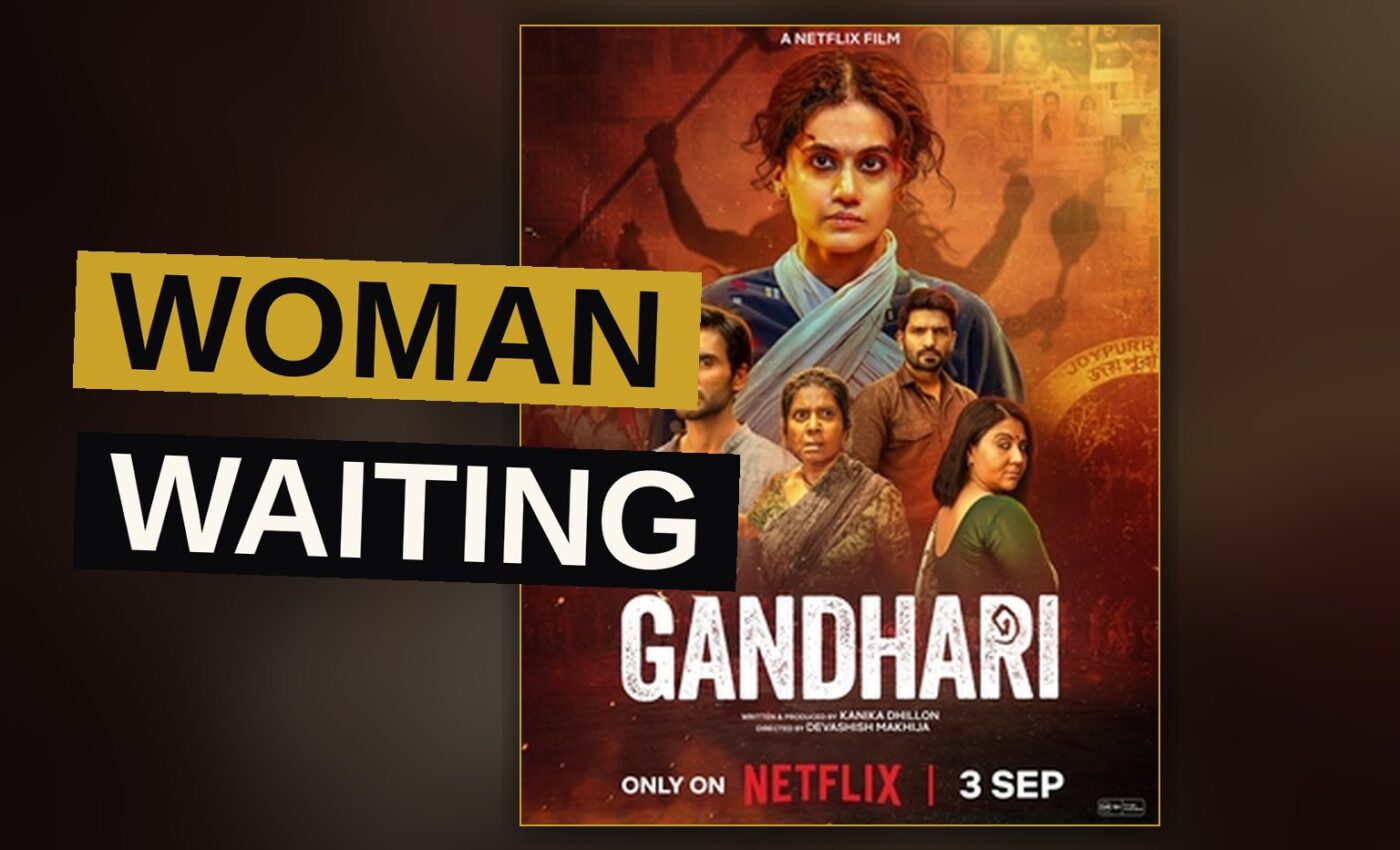
“Gandhari” is a film about a woman who spends her life waiting for a husband she never gets. That’s the whole plot, and it’s enough. Directed by Chaitanya Tamhane, the movie follows Gandhari, played by Radhika Madan, as she ages through decades of arranged marriage attempts that never pan out. There is no plot beyond that. There is no villain, no twist, no romance. There is only the slow accumulation of years, disappointment, and the quiet dignity of living a life nobody asked for.
It is a small picture. It is also, in its way, a very large one.
Trailer, via Kathha Pictures.
Gandhari’s Life, One Marriage Attempt After Another
The film opens with Gandhari as a young woman in her twenties, eager to marry and start a family. Her parents arrange a series of meetings, each one ending in rejection. The reasons vary: the man is too old, too poor, too ambitious. The film tracks her from her twenties into her fifties, showing how each failure reshapes her expectations and her sense of self.
Madan carries the entire weight of the performance. She plays Gandhari across decades, from hopeful to resigned to weary. The shifts are subtle. One scene shows her smiling at a potential groom while thinking about her childhood. Another shows her sitting alone in a room, staring at a wall. Madan makes both versions of Gandhari feel lived-in, not performed.
Tamhane directs with a documentary-like patience. Scenes are long, often shot in a single take. Characters talk over each other, interrupt, and forget what they were saying mid-sentence. This is not stylized cinema. It is observation, plain and unadorned.
The Arranged Marriage Machine
The film’s central tension is structural. Gandhari lives in a world where marriage is not a choice but a duty. Her parents arrange meetings, her aunt pushes candidates, and society expects her to produce grandchildren. The film does not judge this system directly. It simply watches it operate.
There is a scene near the middle where Gandhari’s mother lists all the men she has arranged to meet. Each name is a disappointment, each rejection a blow to the family’s reputation. The mother speaks matter-of-factly, as if arranging marriages is as normal as cooking dinner. Tamhane lets the absurdity sit.
The film’s political edge comes from this refusal to romanticize tradition. Gandhari is not a tragic heroine. She is a woman whose life is shaped by forces outside her control, and the film treats that shaping as a matter of fact, not fate.
Sound and Image
The cinematography is spare. Shots are wide, rooms are empty, faces are close. The color palette stays earthy: browns, yellows, greens. Nothing glows. Nothing dazzles. The film looks like a memory, not a spectacle.
The sound design is just as careful. Background noise bleeds in: children crying, neighbors talking, a television in another room. These details make the world feel lived-in. They also make Gandhari’s isolation more visible. She is surrounded by people and still alone.
A brief musical interlude stands out. Gandhari sings a traditional song during a wedding ceremony, her voice wavering with emotion. It is the film’s most tender moment, and it earns it.
A Quiet Ending
The film does not resolve anything. It ends with Gandhari in her fifties, still unmarried, still living with her parents, still carrying the weight of a life unlived. There is no epiphany, no sudden realization. There is just the final scene, which shows Gandhari doing something she has done her whole life: waiting.
This is a bold choice. Most films offer closure. “Gandhari” offers endurance. The ending respects its subject by refusing to tidy her up. It leaves her as she is: a woman who waited her whole life for a husband who never arrived.
What Works, What Does Not
- The lead performance is uniformly excellent across decades.
- The pacing is deliberate, sometimes to a fault.
- The political commentary is subtle but present.
- The ending is brave, though some viewers may find it unsatisfying.
The film’s weaknesses are structural. Without a plot, the middle sections can drag. Some scenes feel like padding. A few conversations repeat points already made. None of this breaks the film, but it slows it down.
The film is also limited in scope. It deals with arranged marriage, but it does not explore the broader social structures that support it. It shows Gandhari’s pain, but it rarely shows the systems that caused it. This is a deliberate choice, not a failure, but it means the film’s ambitions are smaller than its emotional range.
Release and Reception
“Gandhari” premiered at the Venice Film Festival in 2026, where it drew attention for its patient approach to character study. Reviews have generally praised the film’s restraint, though some critics have noted that its narrow focus limits its emotional payoff. The film has not yet been released commercially, so box office figures are unavailable.
| Event | Date |
|---|---|
| Venice Film Festival premiere | 2026 |
The film’s critical reception has been positive. Critics have singled out Madan’s performance and Tamhane’s direction, praising the film’s commitment to realism over spectacle. The film’s quiet approach has been compared to earlier works in the genre that similarly focused on character over plot.
The film’s themes resonate with audiences who have grown up in similar systems. The arranged marriage machine is a universal experience, even if the specific cultural context is Indian. The film’s refusal to romanticize tradition lands with particular force in countries where arranged marriage remains common.
Final Word
“Gandhari” is a demanding film. It asks viewers to sit with discomfort, to watch a woman age without resolution, to accept that some stories end without a happy ending. It is not an easy watch, but it is a necessary one.
The film’s strengths outweigh its weaknesses. Madan’s performance anchors a deliberately paced narrative that rewards patience. Tamhane’s direction is confident, even when the material slows down. The film’s political commentary is sharp, even when it stays hidden beneath the surface.
“Gandhari” is a minor masterpiece. It does not change the world, but it changes how we see one woman’s life. It is a film about waiting, but it is also a film about dignity. Gandhari never gives up, and neither does the film.