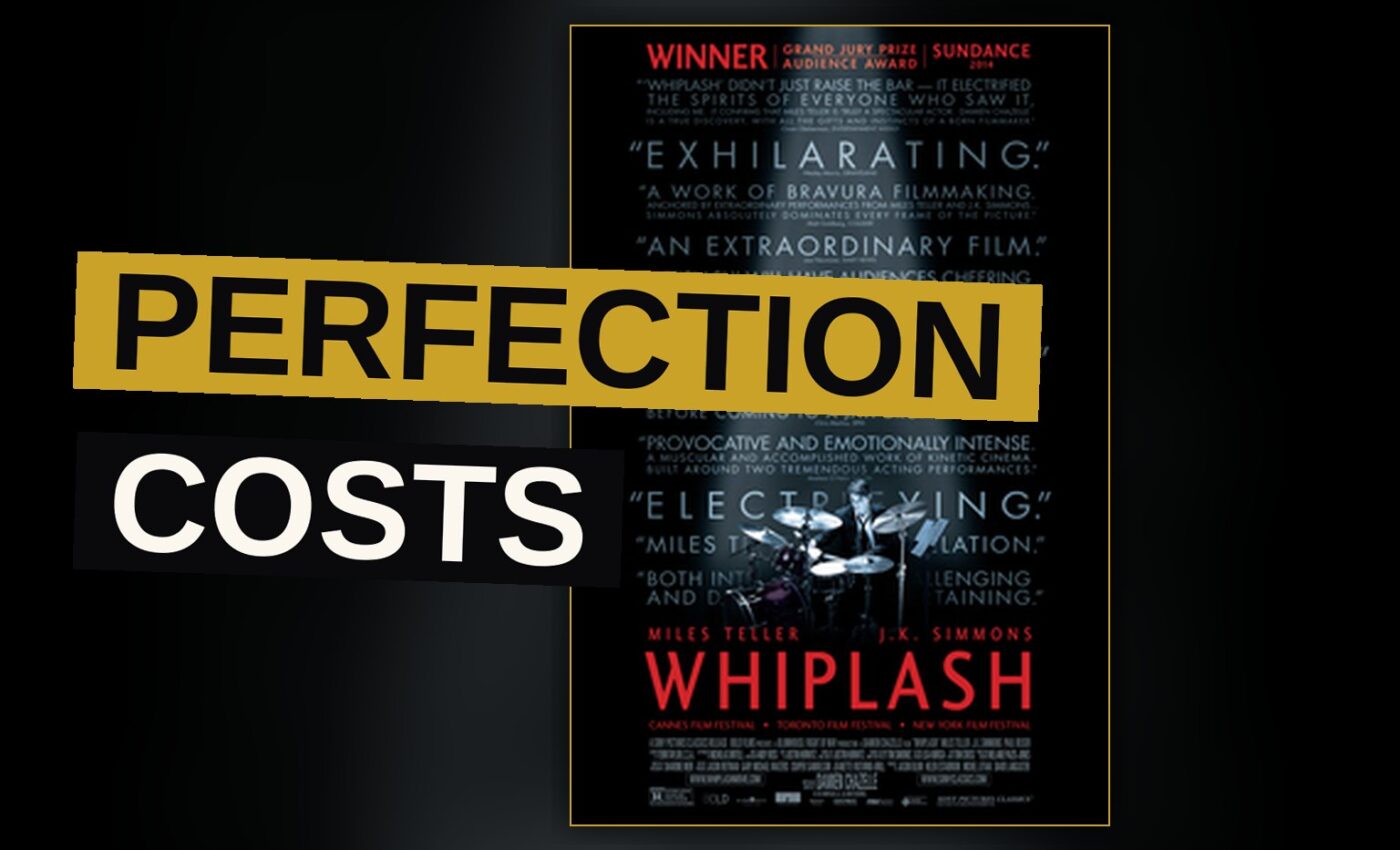
Whiplash is a film about ambition, obsession, and the cost of excellence. Directed by Damien Chazelle, it follows a young jazz drummer named Andrew Neiman (Miles Teller) who joins the New York Conservatory of Music and finds a mentor in Terrence Fletcher (J.K. Simmons), a demanding instructor whose methods are brutal and unyielding. The movie is a tight, tense character study wrapped in a drum solo competition. It is also a film about the pressure to be perfect, and how that pressure can destroy everything in its path.
The central conflict is simple: Andrew wants to be great, and Fletcher believes greatness comes from pain. Fletcher pushes Andrew harder than anyone has ever pushed him, and Andrew responds by pushing back, even when it means lying, cheating, and hurting those around him. The tension builds slowly, then breaks out in a series of intense confrontations that leave both men changed.
Trailer, via Sony Pictures Classics.
Miles Teller as Andrew Neiman
Teller carries the film with a performance that is physically exhausting to watch. He plays Andrew as a quiet, determined young man who is consumed by music. His eyes are always focused on the drum kit, and his hands move with a precision that feels almost mechanical. When he plays, you can feel the rhythm in your chest. When he is not playing, you see the strain in his face.
Teller has been compared to James Franco in his intensity, and the comparison holds. He is not just acting; he is embodying the character’s physicality. The scenes where Andrew practices for hours without stopping are some of the best in the film. You feel his exhaustion, his frustration, and his determination all at once.
J.K. Simmons as Terrence Fletcher
Simmons is the opposite of Teller’s restrained intensity. He plays Fletcher as a man who is always on the edge, a coach who believes that fear is the best motivator. He yells, he intimidates, and he humiliates. He is a genius at his craft, but he is also a monster. His performances are legendary, but they come at a price.
The scene where Fletcher delivers his speech about the history of jazz is a masterclass in acting. He is passionate, angry, and deeply committed to the music. But there is a cruelty in his passion that is unsettling. He believes that if you are not willing to suffer, you are not worthy of the music. That belief drives the entire film.
The Jazz Scene
The film opens with a famous drum solo, and it sets the tone for everything that follows. Andrew is performing a solo with the school band, and the camera tracks him as he plays. The music is fast, the tempo is relentless, and the tension is palpable. This is not just a musical number; it is a statement of intent. The film is telling you that this is about mastery, and mastery requires sacrifice.
The scene is shot in one continuous take, and it is a technical marvel. The camera moves with Andrew, capturing his hands, his face, and the sweat on his brow. It is a moment of pure energy, and it stays with you. Later in the film, there is another solo that is even more intense. It is a moment of triumph, but it is also a moment of terror. The film understands that the two are not separate.
The Cost of Perfection
Whiplash is a film about the cost of perfection. Fletcher’s method is to break down the student until there is nothing left but instinct. He tells Andrew that technique is not enough; you have to feel the music. He is right, but he takes it too far. He destroys Andrew’s relationships, his health, and his sanity. He turns him into a machine, and the machine is not happy.
The film is not a celebration of Fletcher’s methods. It is a warning. The characters are destroyed by their own ambitions, and the film does not let them off easy. Even when Andrew wins, he is hollow. He has achieved his goal, but he has lost everything else. The film asks a simple question: is it worth it? And it does not give an answer.
The Soundtrack
The music in Whiplash is as important as the actors. The film uses jazz standards, drum solos, and original compositions to create a sonic landscape that is both oppressive and beautiful. The sound design is impeccable. You can hear the cymbals crash, the bass hit, and the snare snap. It is a film that demands to be heard.
The film also uses silence effectively. There are moments where the music stops, and the tension is unbearable. These moments are just as powerful as the loud ones. The film understands that less is often more. It knows when to hold back and when to push forward.
The Comparison
| Element | Andrew Neiman | Terrence Fletcher |
|---|---|---|
| Method | Practice, patience | Intimidation, fear |
| Goal | Mastery | Genius |
| Relationship | Destroyed | Consumed |
| Outcome | Triumph | Ruin |
The film is structured around a series of competitions. Each one raises the stakes, and each one tests Andrew’s resolve. He wins some and loses some, but the losses hurt more than the wins. The film is a journey, and the destination is not pretty. It is a film about the price of success, and it is not a pretty picture.
The Final Solo
The climax of Whiplash is a drum solo that is performed live in front of a large audience. Andrew has to play a solo that no one has played before. He has to improvise, and he has to be perfect. The pressure is immense, and the film captures it with a single long take. The camera follows Andrew as he plays, and the music swells.
It is a moment of release, but it is also a moment of despair. Andrew has won, but he has lost. He has achieved his goal, but he has lost himself. The film ends on a note of emptiness. It is a film about the cost of perfection, and it shows you what that cost looks like.
Whiplash is a film that demands attention. It is not comfortable, and it is not easy to watch. But it is compelling, and it is unforgettable. It is a film about the pursuit of excellence, and it shows you what that pursuit costs. It is a film about the cost of perfection, and it is a film about the price of ambition.
The film is a masterpiece of tension, and it is a masterpiece of acting. Teller and Simmons give performances that are both technically flawless and emotionally devastating. The film is a tribute to the power of music, and it is a warning about the cost of chasing it. It is a film that you will remember for a long time.