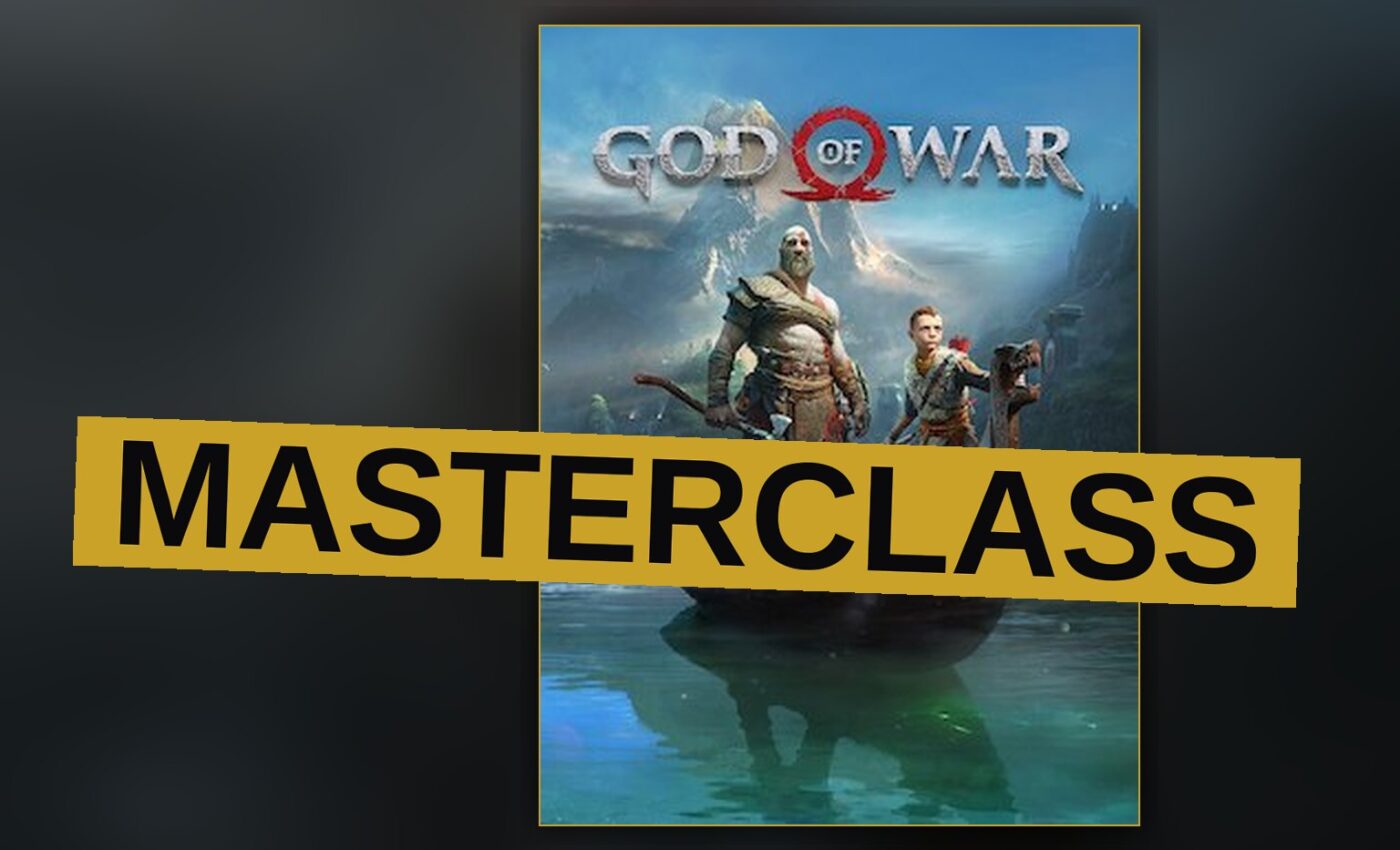
The 2018 God of War is a masterclass in reinvention. It takes a series known for relentless, spectacle-heavy rage and rebuilds it around a father and son carrying an axe through the frozen wilds. The result is a game that feels both intimate and epic, and it earns its place among the best action titles of its generation.
Trailer, via IGDBcom.
Kratos and Atreus on the Mountain
The core of God of War is the relationship between Kratos and his son, Atreus. The game opens with the pair scattering the ashes of Faye, Kratos’s late wife, on the highest peak in the realms. That journey is the spine of the story.
Kratos is no longer the screaming god of vengeance from the older games. He is quieter, gruff, and terrified of repeating his past mistakes. Atreus is a curious boy who does not fully understand his own nature. Their dialogue feels natural, and the silences between them carry just as much weight.
The writing treats the boy as a real character, not a sidekick. He learns to fight, to read runes, and to question his father’s brutal methods. The game earns its emotional beats because it spends hours building the bond before it breaks it.
Combat with the Leviathan Axe
Combat in God of War is a revelation. Kratos wields the Leviathan Axe, a weapon that can be thrown and recalled with a press of a button. The mechanic is simple, but it transforms every fight into a rhythm of ranged strikes and close-quarters blows.
Every swing has weight, and the sound design sells the impact. When Kratos throws the axe into a frozen enemy and calls it back, the return path can hit other foes. That small detail makes the battlefield a living space.
Atreus is not just a story device. He fires arrows during combat, and the player can command him to target specific enemies. This creates a constant flow of coordination. The combat is tough, but it never feels unfair. The game teaches you to use every tool, from the shield to the bare fists, and it rewards patience over button-mashing.
Exploring the Lake of the Nine
Midway through the journey, the game opens up. The Lake of the Nine is a vast body of water that connects several realms, and it is here that God of War shifts from a linear path to a wider world. The boat rides across the lake are quiet, meditative moments where Kratos and Atreus talk about their past and the world around them.
The lake hides side quests, hidden chambers, and dragon fights. None of it feels like padding. Each discovery feeds back into the main story or the lore of the Norse realms.
The world design is dense. The mountain, the lake, and the surrounding shores are packed with secrets that require revisiting with new abilities. This is a game that rewards curiosity.
The Stranger and the Opening Fight
The game announces its ambition early. About an hour in, a bald stranger arrives at Kratos’s home and demands a fight. The encounter is a brutal, cinematic brawl that spans a mountain cliffside.
The fight is a technical marvel. The camera never cuts away, and the action flows in one continuous take. Trees are smashed, rocks are thrown, and the ground breaks apart under the blows. It sets the tone for the rest of the game: personal, violent, and stunning to watch.
That fight also introduces the mystery of the Norse pantheon. The stranger is Baldur, though the game does not name him immediately. The slow reveal of the larger conflict is handled with restraint, and the story never drowns in exposition.
The Blades of Chaos Return
Late in the game, Kratos retrieves his old weapons, the Blades of Chaos. The moment is a powerful callback to the original trilogy. The blades are faster than the axe, and they chain enemies together with fiery combos. Their return is not just fan service; it changes the combat dynamic and gives the player a new toolkit for the final stretch.
The blades also carry emotional weight. They represent the violence Kratos tried to leave behind. The game uses them to force a confrontation with his past, and the scene where he takes them up again is one of the strongest in the story.
Foreshadowing at the Final Battle
The ending of God of War is a quiet triumph. After the final fight, Kratos and Atreus reach the peak and scatter the ashes. The moment is understated.
But then the game turns. A mural on the wall reveals that Atreus is Loki, and that Kratos is destined to die. The reveal is delivered without fanfare, and it changes the meaning of everything that came before. The game ends on a note of dread, setting up the follow-up that eventually arrived in 2022.
That ending is a risk. It leaves the story incomplete, but it also makes the journey feel larger than itself. God of War is not a closed chapter; it is the first part of a saga.
Technical Craft and Presentation
The game runs on a single continuous camera shot with no visible loading screens. That technical choice gives the world a sense of unity. The visuals are stunning, from the snow-capped peaks to the glowing halls of Alfheim. The score, composed by Bear McCreary, mixes a choir with a lone female vocal, and it fits the Norse setting perfectly.
The game performs well on PS4 and PC. The later PS5 version runs at a higher frame rate, but the core experience is identical. The loading times are short, and the fast travel system is a clever way to keep the player moving without breaking immersion.
God of War succeeds on every level, but some elements stand above the rest:
- The relationship between Kratos and Atreus, which anchors the story.
- The Leviathan Axe combat, which rewards precision and patience.
- The continuous camera shot, which gives the world a unified feel.
- The ending reveal, which reframes the entire journey.