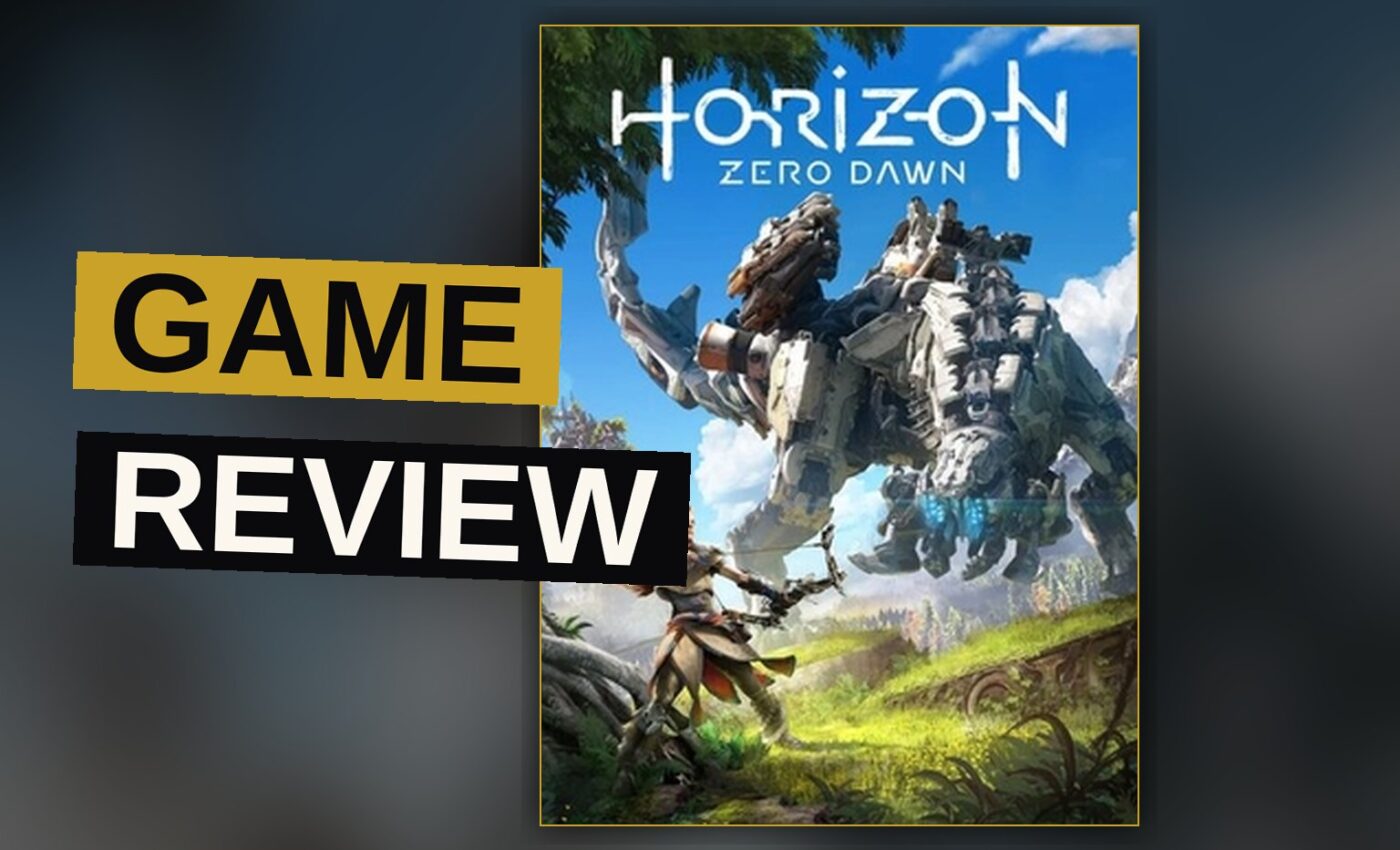
Guerrilla Games spent a decade making Killzone shooters. Then it pitched the riskiest idea it had. Horizon Zero Dawn, released in 2017 for PlayStation 4, traded trench warfare for a post-apocalyptic United States where robotic machines dominate the Earth and humans live in primitive tribes. Director Mathijs de Jonge called it the riskiest idea among those pitched. He was right to worry, and wrong to doubt the result.
Trailer, via IGDBcom.
Aloy and the Proving
You play Aloy, a young huntress cast out from the Nora tribe at birth and raised by a fellow outcast, Rost. She wins the Proving, a tournament meant to force the matriarchs to reveal her past, only for masked cultists to attack. Rost dies saving her from the cult leader, Helis. What follows is a hunt for origins that carries Aloy across a vast and dangerous land.
Bows, Tripwires and the Focus
Combat is ranged first. Aloy carries a spear for melee, but the bow does the work. Arrows tear components off machines and disable their weapons; others burn or stun. Tripwires, harpoons and slingshot explosives round out the kit, and weapons can be modified for damage or handling.
Her Focus, a small earpiece, scans machines for location, susceptibilities, level and loot. That information lands in an in-game journal.
The Derangement
The world runs on one clean idea: machines that mostly coexisted with humans turned hostile. The phenomenon is called the Derangement, and it produced larger, deadlier machines. Tribes range from the mountain-dwelling, matriarchal Nora to the Carja, desert city builders. The setting is the 31st century, and the ruins belong to the “Old Ones.”
What Zero Dawn Actually Was
The plot earns its length. Aloy learns the old civilization fell a thousand years ago when Faro Automated Solutions lost control of self-replicating, biomass-consuming military machines. The scientist Elisabet Sobeck, whom Aloy resembles, led Zero Dawn: an automated terraforming system meant to shut the machines down and restore life. The reveal reframes every ruin you have walked past.
A Curated Story, Not a Choice
Unlike many role-playing games that emphasize player choice, Horizon prioritized a more curated, personal story. That is the correct call. Aloy is a specific person with a specific past, and the game is stronger for refusing to let you author her.
Decima and the Colors
The engine, Decima, was built for Killzone: Shadow Fall and modified here. Guerrilla used vibrant colors to evoke adventure and hope despite the apocalypse. Anthropologists were consulted on the world’s decay; robotics experts shaped the machine designs. Jared Diamond’s non-fiction and Nausicaä of the Valley of the Wind and Princess Mononoke influenced the look.
Where It Stumbles
The open world can feel like a checklist. Campfires handle saves and fast travel, Tallnecks reveal map locations, and the side content rarely matches the main thread’s ambition. Melee is thin next to the bow.
None of that sinks it. Horizon Zero Dawn was Guerrilla’s first new intellectual property since Killzone in 2004, its first open-world game and its first role-playing game, and it landed. The machines are the best enemies in years, and the Sobeck story gives the hunting a reason.
By the Numbers
- Release year: 2017
- Developer: Guerrilla Games
- Publisher: Sony Interactive Entertainment
- Platforms: PlayStation 4, PC, PlayStation 5
- Genre: Action role-playing
- Perspective: Third person
- Modes: Single player
- Score: 8.9/10
Get the Notebook.
The day's best stories and every fresh verdict, in plain English, in your inbox by seven. One email a day, no more.