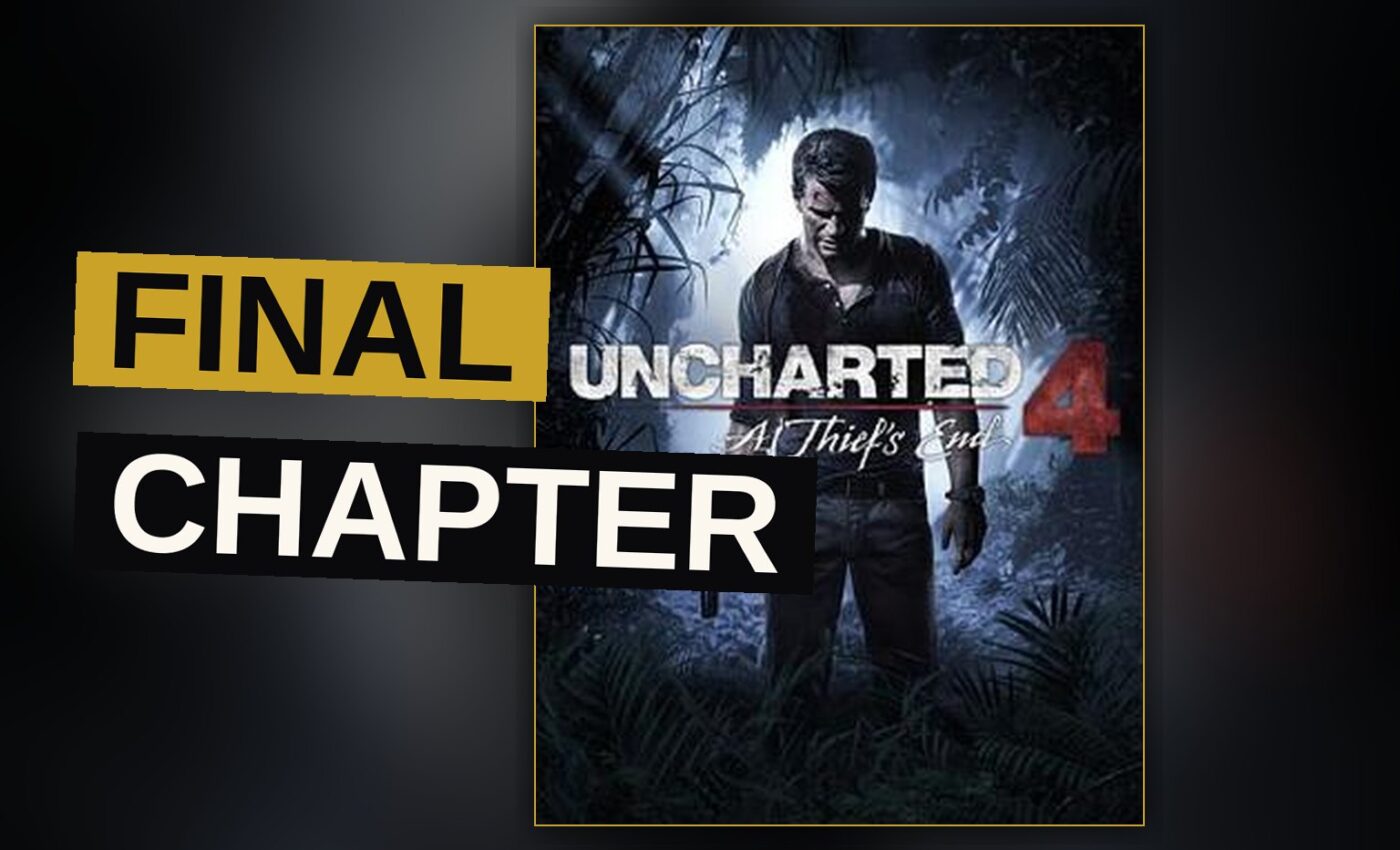
Uncharted 4: A Thief’s End closes Nathan Drake’s story with the biggest, most personal adventure in the series. It is a game about leaving the past behind, even when the past keeps pulling you back. The result is a blockbuster that feels like a farewell.
The game opens with Drake living a quiet life in New Orleans. He has traded treasure hunting for a normal job and a wife. Then his brother Sam shows up, and the past comes knocking. Sam claims a pirate treasure called Libertalia is the key to clearing an old debt. Drake says yes, and the lie he has told his wife Elena begins to unravel.
Trailer, via IGDBcom.
Into Libertalia
The story takes Drake and Sam to Madagascar, then to a chain of islands that once housed a pirate utopia. Libertalia is the game’s great setting, a ruined city built by pirates who tried to escape the world. The levels wind through cliffs, forests and flooded ruins, and the sense of a lost place is strong.
The plot is a road trip with shifting alliances. Sam is the driving force, but his motives stay unclear for a long stretch. Old rival Rafe Adler wants the treasure too, and his partner Nadine Ross runs a private army. The game keeps the three factions circling each other, and the writing earns the tension. Drake’s lie to Elena is the real conflict, and the game does not let it go easily.
The action is the smoothest the series has seen. Drake can swing, climb and slide with a new rope, and the grappling hook opens up the level design. Combat is still cover-based shooting, but the arenas give you more room to move. You can go loud or sneak through, and the game lets you switch between the two without friction. The jeep sections are a highlight, with real driving that feels heavy and grounded.
Madagascar’s Long Chase
One of the best stretches is a long chase through Madagascar. Drake drives a jeep through mud, over cliffs and into a city overrun by mercenaries. A truck chase follows, and the set piece is the kind of sequence the series is known for. It is loud, fast and absurd, and it works.
The game also slows down. There are quiet moments where Drake and Elena talk, or where he and Sam trade stories in a hotel room. These scenes give the shooting meaning. The voice acting carries the drama, with Nolan North as Drake and Emily Rose as Elena both giving their best work in the series. The script is sharp, and the banter feels natural.
The graphics are a technical peak. Faces show micro-expressions, light falls through trees, and water looks real. It is a game that still holds up a decade later. The animation is the real star: Drake moves with weight, and his hands find grips on rock and wood. The motion capture is seamless, and the performances land because the bodies sell them.
What the Ruins Reveal
The treasure hunt leads to a twist about the pirates who founded Libertalia. The game reveals that the utopia collapsed from within, and the ruins tell that story through notes and environmental detail. It is a quieter kind of discovery, but it fits the theme. The treasure is not the point. The people who chased it are.
The final act moves to a pirate ship graveyard and then to a cliffside fortress. The set pieces are huge, but the game keeps the stakes personal. Sam’s secret comes out, and Drake has to choose between his brother and his wife. The choice is not really a choice, but the game sells the moment anyway.
The epilogue is the right ending. It shows Drake years later, older and quieter, with a daughter who asks about his adventures. He tells her a story, and the game ends on a note of peace. It is a goodbye, and it earns it.
Performance and Legacy
Uncharted 4: A Thief’s End ran at 30 frames per second on PS4, with a 1080p resolution. The load times were long at launch, but later patches improved them. The game had an optional photo mode and a multiplayer suite that ran separately from the campaign. The multiplayer was solid, but the single player is the reason to play.
The game was developed by Naughty Dog and published by Sony Computer Entertainment. It launched on May 10, 2016, exclusively on PS4. It was the fourth main entry in the Uncharted series and the final one starring Drake as the lead. A standalone expansion, Uncharted: The Lost Legacy, followed in 2017, but it is a separate story.
The game sold well. Sony said it was the fastest-selling entry in the series, and it passed 8.7 million copies sold by 2017. The critical reception was strong, with reviewers praising the story, the visuals and the pacing. It won multiple Game of the Year awards from outlets and industry shows.
The score below is the published critical consensus.
Uncharted 4: A Thief’s End is a polished end to a beloved series. It is long, with a campaign that runs about 15 hours, and it never drags. The shooting is solid, the climbing is smooth, and the story pays off. It is not a revolution, but it does not need to be. It is the best version of what this series has always been.
The game is a masterclass in pacing, and it is worth playing for the quiet scenes alone. The action is exciting, but the moments between the action are what stay with you. Drake’s arc is complete, and the game lets him rest.
It is a rare thing for a blockbuster to end well. Uncharted 4: A Thief’s End does.
Key Facts
- Score: 9.3/10
- Platform: PS4
- Release date: May 10, 2016
- Developer: Naughty Dog
- Publisher: Sony Computer Entertainment
- Campaign length: About 15 hours
- Performance: 30 fps, 1080p
The game is a farewell worth taking.